
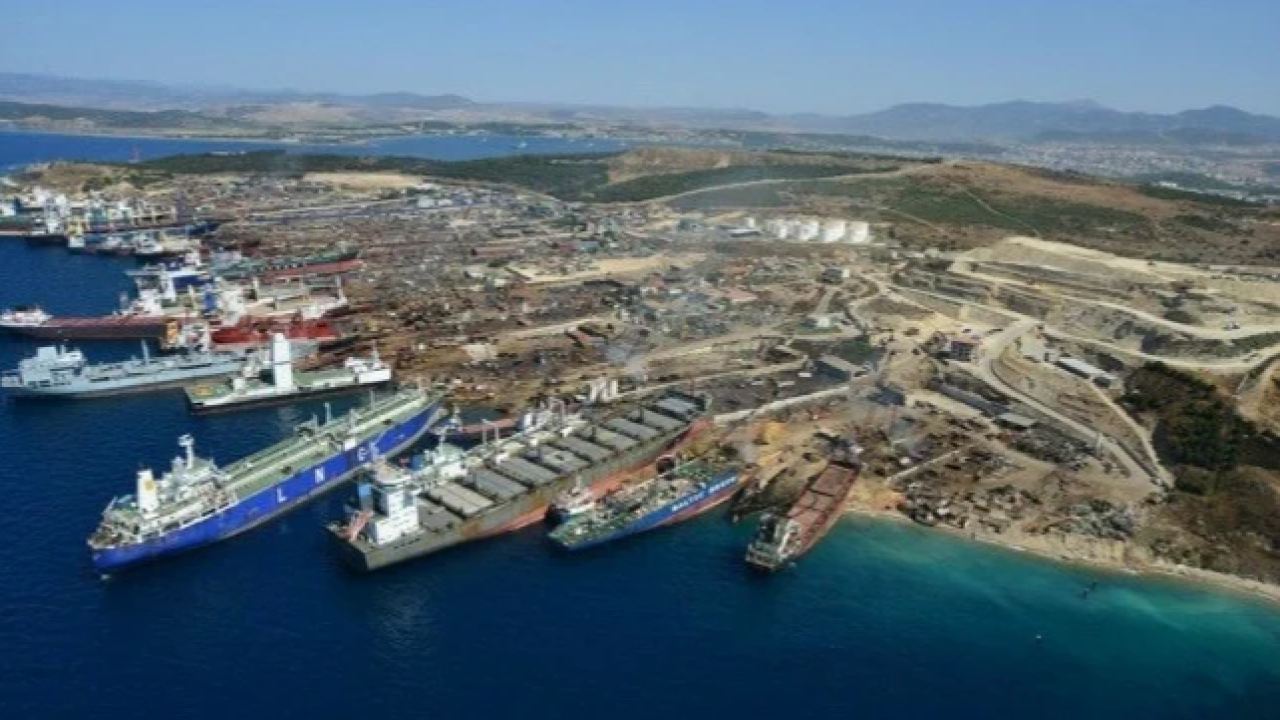
Container ship scrapping reached a 20-year low in 2025, with only 12 vessels dismantled amid strong demand and market conditions, says Alphaliner.
Container Ship Scrapping Hits Bottom in 2025
Red Sea guidance and a strong freight market lead to the retention of old tonnage in the system.
Record Low Recycling
In 2025, the scrapping of container ships fell to its lowest level in the last 20 years. According to a new report published by Alphaliner, the sector's efforts to retain capacity due to continuous guidance from the Red Sea have significantly hindered recycling decisions.
Alphaliner states that the high demand for tonnage and strong rental rates throughout the year have led shipowners to prefer taking advantage of profitable market conditions rather than disposing of their aging tonnage.
By the Numbers in 2025
According to the report, a total of 12 ships with a combined capacity of only 8,172 TEU were scrapped in 2025. Three more ships were sold but have not yet been dismantled. These figures sharply contrast with the 95,607 TEU sold for recycling in 2024 and the record 655,000 TEU recorded in 2016.
Currently, there are over 7,500 active ships in the sector, with the total fleet capacity approaching 34 million TEU.
Oldest and Smallest Ships on the List
The majority of the scrapped ships consist of the oldest and smallest elements of the fleet. The ages of the ships range from 20 to 45 years, with an average age calculated at 30 years. Ten of the 12 ships had a capacity of less than 1,000 TEU. The largest ship was the 45-year-old Horizon Enterprise, with a capacity of 2,400 TEU.
Analysts expect the recycling process to accelerate due to the need for efficiency and tightening environmental regulations, but current data shows that this expectation has not yet materialized.
BIMCO Warns of Capacity Surplus
The sector's trade group BIMCO included a recycling capacity of 750,000 TEU in its supply forecasts for the 2026-2027 period. BIMCO's Chief Maritime Analyst Niels Rasmussen emphasized that a recycling gap of approximately 1.8 million TEU has emerged due to recycling reaching only 272,000 TEU in the last five years.
Rasmussen warned that falling short of recycling targets could further exacerbate the capacity surplus in the market.
Order Book Swells
Another factor raising concerns about excessive supply is the unrelenting increase in new ship orders. Linerlytica reported that there were 1,267 ships in the order book by the end of 2025. The total order capacity exceeded 11.7 million TEU, with the ratio of the order book to the current fleet reaching 35%. Orders placed in 2025 increased by 36% compared to the previous year, with a total of 671 container ships ordered last year.
Evergreen's New $1.5 Billion Move
The order pace did not slow down in the first month of 2026 either. Evergreen Marine announced that it has placed orders for 23 new ships, with a total cost that could reach up to $1.5 billion. The focus of the orders is on feeder vessels ranging from 3,100 to 5,900 TEU.
The company had previously ordered 14 LNG dual-fuel ships of 1,400 TEU and 11 ultra-large container ships with a capacity of 24,000 TEU in 2025. This development came shortly after news of new orders linked to other major carriers, including MSC Mediterranean Shipping Company.
Experts believe that if the Suez Canal and Red Sea routes are reopened, the release of capacity currently used to balance long routes could make supply pressures even more apparent.
Source: SeaNews Türkiye


