For many years, international mail and postal parcels dispatched from China to Peru and the broader Latin American region have relied heavily on air transport.
For many years, international mail and postal parcels dispatched from China to Peru and the broader Latin American region have relied heavily on air transport.
While air freight holds an advantage in speed, it carries substantial costs, requires transit through multiple countries, and presents persistent challenges in overall timeline control and end-to-end cargo tracking - a longstanding pain point for postal export operations. As the Chancay Port sea route has continued to mature, a new logistics corridor to South America has been successfully established, delivering a transformative solution for cross-border sea-postal services and the outbound shipment of Chinese goods.
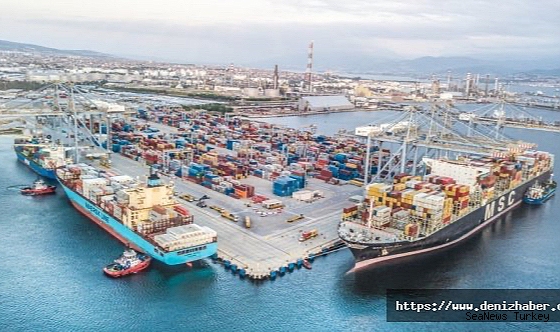
The inaugural ceremony for the direct Shanghai-to-Chancay Port sea freight service was formally held recently. The transnational postal sea-freight operation, jointly developed by COSCO SHIPPING Lines and Shanghai Post, has now been officially launched, with containers loaded with postal parcels departing the terminal and setting course for the South American continent thousands of miles away. This milestone marks the full activation of an official postal sea-freight corridor operating direct from Shanghai.
As a landmark outcome of deepened collaboration between two central state-owned enterprises, the corridor draws on the combined strengths of COSCO SHIPPING Lines' extensive global shipping network and Shanghai Post's established domestic and international postal infrastructure. To ensure the smooth execution of the inaugural voyage, COSCO SHIPPING Lines took a proactive coordination role, engaging terminals, customs authorities, and port agencies to resolve procedural bottlenecks at every stage - from domestic collection and container loading to transoceanic transit - enabling Shanghai Post to build an integrated "air-sea complementary" logistics system oriented toward South America.
Leveraging the Shanghai-Chancay direct express service, postal parcels now reach their destination in approximately 28 days by sea. Compared with the traditional third-country transit model, transit time is reduced by more than 20 days and transportation costs are significantly lower. The new corridor reduces reliance on air freight as the sole transport option, mitigates the uncertainty inherent in transit-heavy routing, and strengthens the stability of the postal cross-border supply chain - establishing a replicable and scalable model for the large-volume outbound shipment of postal parcels to Latin America.
The successful launch of this postal sea-freight corridor reflects a process of deliberate preparation rather than an overnight achievement. As early as the beginning of this year, COSCO SHIPPING Lines had completed a trial operation of its transport model in Peru, accumulating valuable practical experience ahead of the formal postal parcel sea-freight launch. At that time, local Peruvian policy permitted only air entry for e-commerce parcels, leaving the sea-freight import pathway for e-commerce goods entirely undeveloped. Faced with urgent demand from cross-border e-commerce clients for cost reduction and efficiency improvement, the COSCO SHIPPING Lines Chancay Working Group collaborated with the Peru shipping team to engage local regulatory authorities and Peru's national postal service through multiple rounds of coordination and negotiation.
Also leveraging the Shanghai-Chancay express service, the team pioneered a postal customs clearance pathway for e-commerce parcels arriving in Peru by sea. Upon arrival at Chancay Port, the first batch of e-commerce test cargo was transferred promptly to a designated facility and subsequently handed over to Peru's national postal service for customs clearance and last-mile delivery. This represented the first time Chinese e-commerce goods entered the Peruvian market via a "sea freight plus postal customs clearance" model - a breakthrough from zero in this domain, one that has established an entirely new logistics corridor for e-commerce across the South American region and delivered critical real-world validation for the scaled outbound shipment of further e-commerce volumes.
COSCO SHIPPING Lines has stated that it will continue to enhance its end-to-end logistics services, strengthen its cross-border sea-postal operations, and better serve the economic and trade ties between China and Latin America as well as the broader regional development agenda.