
The US-China rivalry over Greenland underscores the strategic competition for rare earth elements, impacting global supply security and Turkey's role.
The competition between the United States and China, shaped over Greenland, has moved rare earth elements to the center of a strategic competition area that could affect not only geopolitics but also the functioning of trillion-dollar sectors. The significant concentration of global production and processing capacity in a single country makes supply security a critical vulnerability issue. Turkey's Beylikova field emerges as a strategic potential that could influence global supply balances.
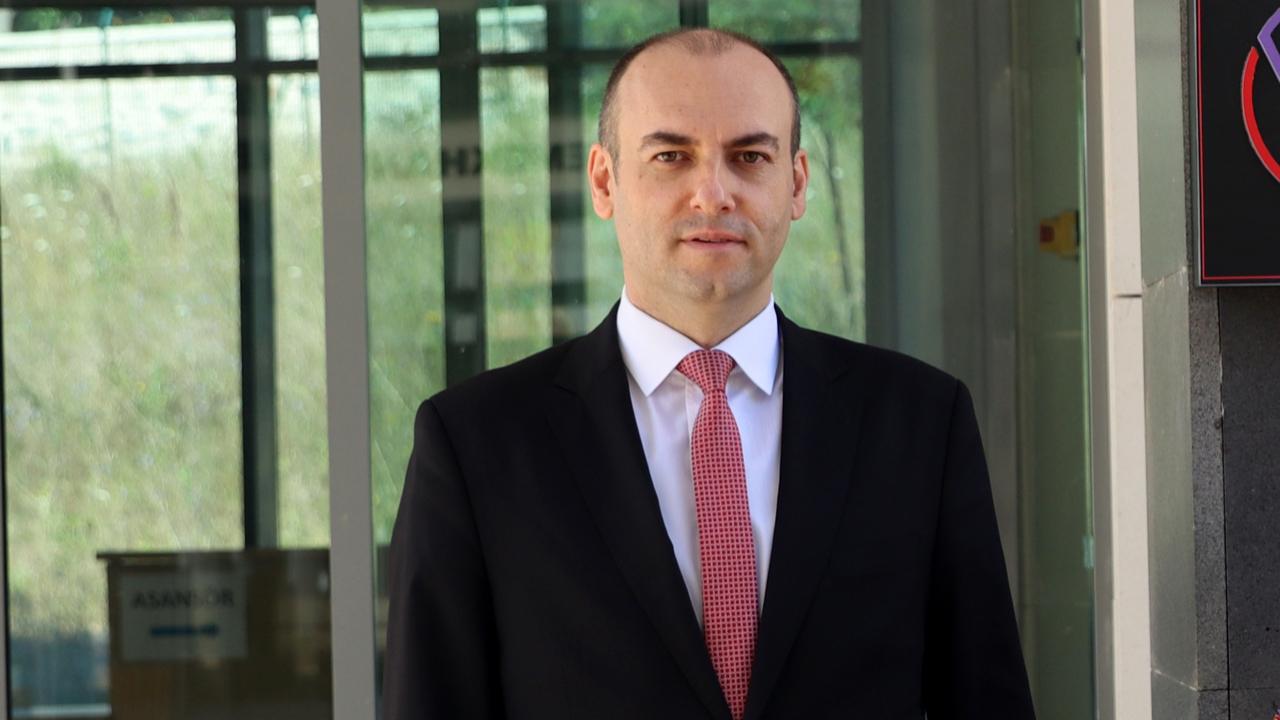
ISTANBUL – Şenol Vatansever, President of the Global Informatics Association (BİDER), stated that the increasing interest of the United States in Greenland should not be viewed solely as a geopolitical and military reflex, but rather in the context of global competition shaped by critical raw materials, advanced technology production, energy transformation, and high economic scale supply chains. Vatansever emphasized that rare earth elements have become strategic inputs that directly affect countries' technology production capacity, defense capabilities, and economic sovereignty, highlighting the critical importance of Turkey addressing this process from the perspective of industry, technology, and supply security.
Although the term 'rare' is included in their name, the actual 'rarity' of rare earth elements often stems not from their presence in the Earth's crust but from the limited availability of economically extractable deposits, environmental and technical challenges, and most importantly, the concentration of the processing chain in specific geographies.
The group commonly referred to as 'rare earth elements' consists of a total of 17 elements: Scandium, Yttrium, Lanthanum, Cerium, Praseodymium, Neodymium, Promethium, Samarium, Europium, Gadolinium, Terbium, Dysprosium, Holmium, Erbium, Thulium, Ytterbium, and Lutetium.
These elements play critical roles in a wide range of high technology applications, including permanent magnets used in electric motors and wind turbines, defense electronics, precision sensors, laser systems, optical applications, batteries, and energy storage components. Therefore, even a minor disruption in the supply chain can create a cascading effect in much larger industrial ecosystems.
According to international reports, the main vulnerability in rare earth elements is concentrated not in the existence of reserves but in the separation and refining stages. While many countries can carry out mining production on a global scale, the production of high value-added semi-finished and final products is largely controlled by a limited number of countries.
This situation turns rare earth elements into not just a subterranean resource but also a strategic industrial input. The discussion centers more on the questions of 'who separates, who refines, who transforms into product' rather than 'who has how much reserve.'
Vatansever noted that rare earth elements have transcended traditional mining discussions over the last decade, drawing attention to the concentration of global production, processing, and refining chains around a few countries.
According to international reports, approximately 60% of global rare earth element production and a significant portion of refining and advanced processing capacity are concentrated in a single country. This concentration is cited as one of the main dynamics that shifts supply security from the category of 'economic competition' to 'strategic vulnerability.'
According to the United States Geological Survey (USGS) Mineral Commodity Summaries data, in 2023, global mining production of rare earth elements reached hundreds of thousands of tons, with a large portion of this production concentrated in China. The United States and Australia also emerged as other leading countries in production.
The same data sets indicate that Greenland holds a strategic position among supply options outside of China, with a reserve potential of approximately 1.5 million tons. In this context, Greenland stands out not only as a mining site but also as an 'alternative basin' in the quest to diversify the supply architecture.
Rare earth elements play a critical role in a wide range of high technology applications, from electric vehicle motors to wind turbines, defense electronics to energy storage systems. International assessments emphasize that these elements are used as direct or indirect inputs in a large portion of high-tech products and that there are limited substitutes available in the short term.
The economic counterpart of this technological importance is also being discussed. International market research suggests that, although different magnitudes are used depending on the method and scope, the markets for rare earth elements and their associated magnets and intermediate products are expected to continue growing with the increase in energy transformation and advanced technology investments.
However, according to expert assessments, the strategic importance stems not from direct monetary size but from being critical inputs that enable the functioning of trillion-dollar sectors such as electric mobility, defense industry, energy transformation, aviation, and advanced electronics.
It is noted that potential supply disruptions in these elements, which appear to have a relatively limited market size, could create cascading effects in much larger-scale industrial and technology ecosystems; thus, 'small-looking figures' can pose 'big risks' on a macro scale.
Vatansever conveyed that the U.S. interest in Greenland is evaluated within the framework of a long-term strategy shaped by supply security in critical minerals rather than geographical location or military presence, recalling that the U.S. administration has clearly defined dependence on a single country for rare earth elements as a national security risk in policy documents published in recent years.
In the 2025 critical minerals list published by the USGS, rare earth elements are classified as critical, indicating that this classification is based on risk assessments regarding the impact of supply disruptions on the economy and national security.
The monetary dimension of this strategic approach is also noteworthy. According to USGS data, the annual import value of the United States in rare earth elements and related components hovers around hundreds of millions of dollars; however, it is emphasized that the focal point of the discussion is not this amount but rather the scale of the defense and technology ecosystems to which these inputs are linked.
In recent years, rare earth elements have evolved from being merely a commercial input to becoming a geopolitical leverage factor among major economies. Export restrictions, strategic stock policies, and alternative supply searches reveal that the competition in this field is now directly associated with national security and industrial policies, beyond market dynamics.
In this approach, Vatansever noted that Greenland stands out as an alternative and long-term reserve area against the China-centered supply structure, stating that public analyses indicate Greenland has gained strategic importance due to both its reserve potential and its position on Arctic logistics routes.
Şenol Vatansever summarized this situation with the following words: 'Greenland is not a geography for the U.S.; it is a strategic insurance area for critical technologies. The fragility experienced in rare earth elements is now a direct part of economic and technological competition, not military.'
Vatansever pointed out that China's weight in the global rare earth element chain stems not only from reserve size but also from the concentration in processing, refining, and productization capacity, indicating that international reports show China holds a significant share in global refining capacity.
He noted that export restrictions previously imposed by China led to significant disruptions in supply chains for high-tech producers such as the U.S., the European Union, and Japan, stating that such practices have created cascading effects in a short time, particularly in the defense, electronics, and energy sectors.
According to Vatansever, the reason the issue of rare earth elements has become so critical for Turkey today is due to a global transformation that is being raced against time. According to assessments by the International Energy Agency (IEA), annual investments in global energy transformation have exceeded $1.7 trillion.
A significant portion of these investments encompasses electric mobility, wind energy, and energy storage technologies that are directly dependent on rare earth elements. Therefore, the discussion of supply security is associated not only with mineral supply but also with the pace and cost of energy transformation.
According to publicly available international data sets, known rare earth element reserves are concentrated in specific countries. China, Vietnam, Brazil, Russia, and India stand out with high reserve sizes, while Australia, the U.S., and Greenland gain importance as alternative supply centers.
At the Arctic level, it is noted that the significant ice loss experienced over the last 30 years has made some sea routes periodically more accessible, directly affecting the cost and feasibility calculations of mining and logistics activities. This dimension makes Greenland a part of the competition not only with its underground resources but also with access and logistics parameters.
The European Union's high external dependence on critical raw materials accelerates the search for reliable and nearby suppliers for rare earth elements. Considering geographical proximity, industrial integration, and production capacity, Turkey is evaluated as a strategic supply partner in this search.
In evaluations by the European Commission, it is noted that the concentration in China for the refining of rare earth elements, especially those used in permanent magnets, has reached high levels, emphasizing that this situation has made processing capacity in energy transformation technologies a strategic threshold.
One of the main topics that has entered Turkey's agenda in this global context is the Eskişehir–Beylikova field. In a period where the supply chain is being rebuilt along the 'reserve–processing–product' line, large-scale fields like Beylikova are evaluated not only for their mining potential but also for their capacity to connect to industry.
It is stated that the rare earth element presence identified in Turkey, particularly in the Eskişehir–Beylikova field, has approximately 694 million tons of ore and 12–13 million tons of rare earth oxide content, according to publicly available official statements.
The question of 'which elements stand out in Beylikova, and why?' is answered in the language of technical reports due to the mineralogical structure and processing technologies that can vary from field to field. At this point, it is indicated that the critical aspect is to clarify how the content found in the field can be linked to separation, refining, and final product lines with specific efficiency before listing the elements one by one.
Vatansever stated that Turkey's goal in rare earth elements should not be limited to merely being in the 'top 5,' noting that countries focusing on separation, refining, and high value-added product production are leading in global competition.
This assessment was compiled by the Vatansever Platform and Digital Biz editorial teams, based on publicly available official statements and technical evaluations regarding rare earth elements in Turkey, as well as open-source reports published by the General Directorate of Mineral Research and Exploration (MTA), NASA, and NOAA, along with international market research and sector analyses (Grand View Research, Fortune Business Insights).
Vatansever emphasized that the issue of rare earth elements is not a mining topic for Turkey but rather a national technology, industry, and digital sovereignty program, stating that if acted upon with the right timing and the right program, Turkey could realistically aim for a position among the global top 3 in this field.
Source: SeaNews Türkiye


