Global container shipping faces tight supply-demand dynamics, driven by port congestion and pre-Golden Week cargo rush, impacting freight rates.
The global container shipping market remains tight, with supply-demand dynamics showing little improvement since mid-September. Key factors such as Asian port congestion, typhoon-related vessel delays, the pre-Golden Week cargo rush, and strong peak-season demand on US trade lanes continue to reduce effective capacity. As a result, the Shanghai Containerized Freight Index (SCFI) has risen to 3,590.05 points, with US routes leading the surge. Maersk reports declining schedule reliability at major Asian ports, with delays expected to impact future sailings.
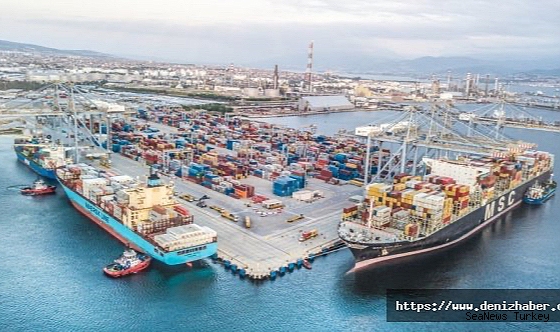
Global port congestion affects 4 million TEUs of capacity, with Chinese ports heavily impacted by typhoon-related disruptions. Waiting times range from seven to ten days in Shanghai, ten days in Ningbo-Zhoushan, and three to five days in Yantian. With the peak export season in full swing, these delays reduce operational availability, creating challenges for freight forwarders in securing stable bookings and managing schedules.
The US trade lane remains one of the most robust markets, with SCFI rates reaching $7,242 per FEU for West Coast routes and $10,324 per FEU for East Coast routes. US port volumes have hit record highs, driven by advance procurement of holiday merchandise. However, ongoing Asian typhoon disruptions and blank sailings during Golden Week add further strain, sustaining high rates and limited space availability.
European trade lanes are experiencing a correction, with spot rates declining, but supply chain pressures remain. Asian port congestion and blank sailings during Golden Week are expected to cause fluctuations in space availability. In contrast, Mediterranean routes face rate adjustments as carriers manage capacity, and Golden Week may introduce additional volatility.
Latin America and Panama Canal: Persistent Challenges
Latin American trade lanes face moderate demand but constrained capacity and high costs, with equipment shortages remaining a key issue. On the Panama Canal, reduced transit slots due to water restrictions are causing extended delays for vessels without reservations.
While rates vary across trade lanes, port congestion, weather delays, and capacity management continue to support pricing. For freight forwarders, priorities include planning for blank sailings, managing equipment availability, and building transit buffers. The market is expected to see rate oscillations rather than a broad decline, with localized rebounds likely if congestion persists.