
Panama Canal delays and typhoons in China disrupt global shipping, forcing carriers to skip ports and extend transit times to the US East Coast.
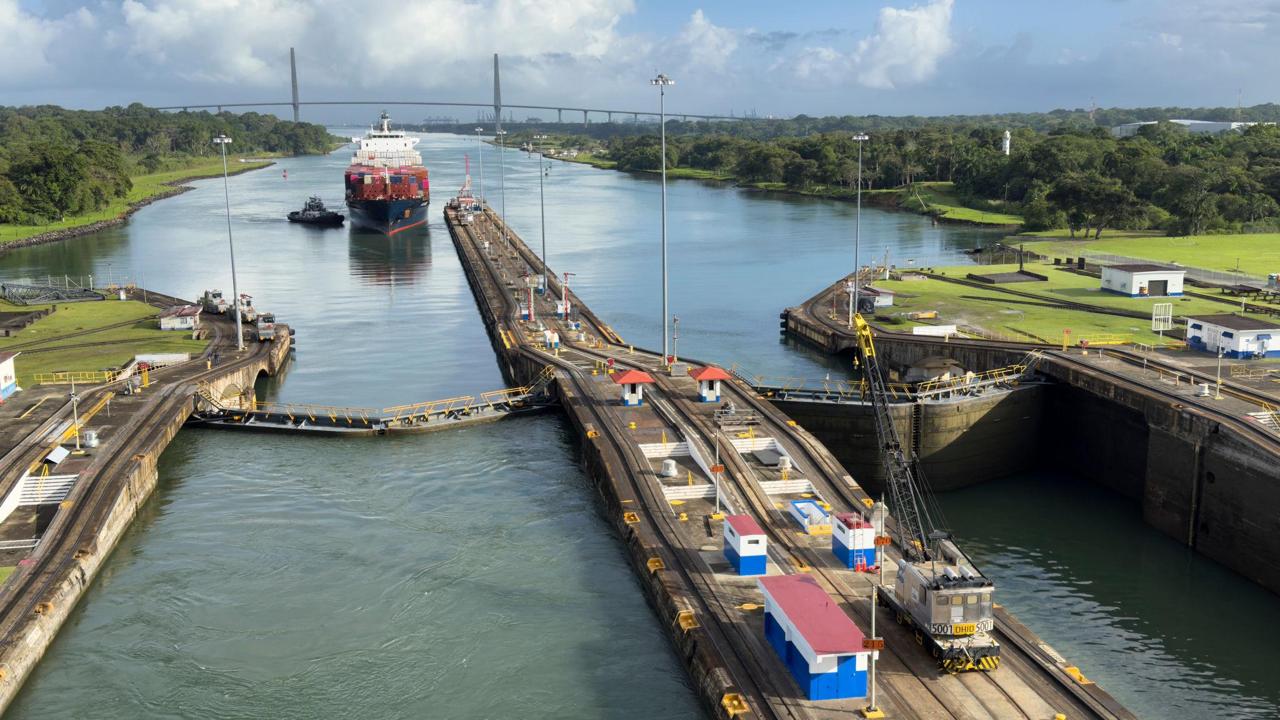
The two waterways that anchor global container trade are under strain simultaneously, and cargo owners are feeling the pressure directly. The Panama Canal, which handles roughly 5% of global maritime trade and about 40% of US container traffic, is tightening capacity as drought grips Central America. At the same time, a series of typhoons has snarled the largest container ports in China—Shanghai and Ningbo-Zhoushan alone moved more than 90 million TEU in 2024. Together, these disruptions are reshaping schedules across the trans-Pacific and East Coast trades, and the ripple effects will run through peak season.
Ocean carriers are moving vessels away from the Panama Canal and omitting typhoon-hit ports in China, extending transit times to the US East Coast. Several diversions illustrate the scale of the adjustment.
* OOCL Lilac (16,828 TEU): This vessel departed Xiamen and is sailing westbound through the Indian Ocean, skipping both the Panama Canal and its Shanghai call. The rerouting supports a roughly 30-day journey to the Port of New York and New Jersey, with arrival expected by the end of September.
* OOCL Lavender: On the same South Atlantic Express service, this ship waited nine days outside the Pacific locks of the Panama Canal before transiting and reaching New York-New Jersey—a clear signal of the congestion building at the waterway.
* CMA CGM Leo (11,356 TEU): After departing Shanghai, this vessel is bypassing Panama for a one-time transit through the Suez Canal, with arrival in Norfolk expected by October 1.
* Premier Alliance: Five vessels that would normally use the Panama Canal—three on the primary East Coast service and two serving the Gulf Coast—have been rerouted around the Cape of Good Hope. Those diversions can add 10 to 13 days of transit time to ships already delayed by severe weather in Asia.
Each of these moves is a schedule-recovery tactic. Yet skipped port calls leave cargo behind, which feeds further congestion and lengthens the queue for the next available sailing.
The pressure on Panama is rooted in water. Reduced rainfall driven by El Niño has pushed rainfall in the canal watershed to 34% below its historical average from May to August, forcing the Panama Canal Authority to conserve water through draft and slot restrictions.
The specifics matter for anyone booking space:
* Draft limits: The maximum authorized draft for Neopanamax vessels was reduced to 48 feet on September 2, with a further cut to 47.5 feet scheduled for October 1. Lower drafts mean vessels cannot load as heavily, so effective capacity per sailing falls.
* Transit slots: Daily Neopanamax slots have dropped to nine, while Panamax slots fell to 25 beginning September 3 and are set to decline again to 23 on September 15.
* Overall throughput: The Canal Authority has reduced total daily transits from 36 to 34, with a further reduction to 32 taking effect September 15.
The practical consequence is a two-tier calculation for carriers. Lighter cargo is increasingly prioritized for Panama transits, while heavier freight is being weighed against longer alternative routes. Waiting times for vessels without a confirmed reservation are rising, and slot auctions have grown fiercely competitive.
On the origin side, typhoons have disrupted operations at major Chinese gateways. Shanghai—the world's largest container port at 51.5 million TEU in 2024—is seeing loading delays of three to eight days, while Ningbo is running about four days behind. Congestion at these ports is expected to persist through September.
To recover schedules, some carriers are selectively omitting heavily affected ports such as Ningbo and Shanghai, a move that can add roughly four to seven days to some Asia departures. For cargo owners, that means booked space may not translate into a loaded box on the expected sailing, and containers can accumulate at origin.
Timing turns critical at the end of September. Taiwan's Moon Festival falls in late September, followed closely by China's Golden Week in early October. These back-to-back holidays reduce factory output and compress available shipping windows just as US holiday-season inventory needs to move. The overlap between canal restrictions, port congestion, and holiday closures narrows the margin for error on any single booking.