As Suez Canal traffic normalizes, analysts warn of oversupply and falling freight rates due to new vessel deliveries and restored routing.
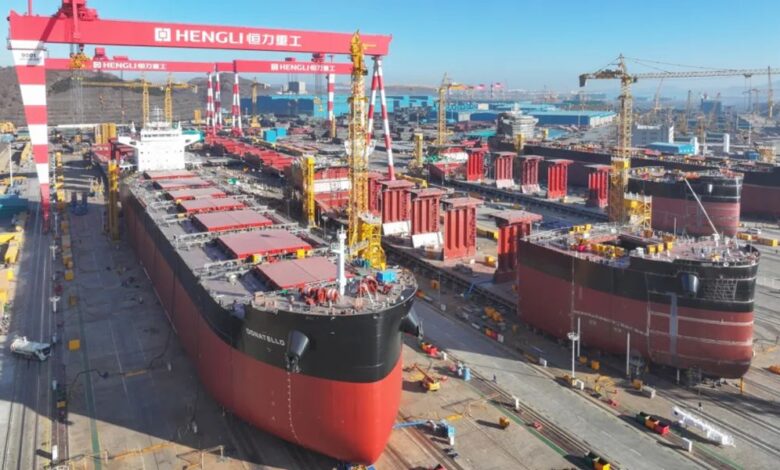
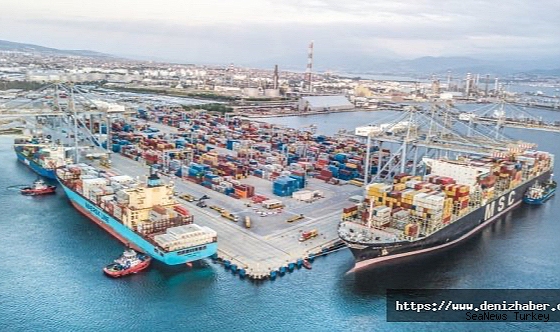
As traffic through the Suez Canal gradually returns to normal levels and a substantial volume of new vessel deliveries continues to enter service, industry analysts anticipate that the supply-demand balance will shift toward oversupply in the coming year, placing downward pressure on freight rates. The compounding effect of restored Suez capacity and new tonnage deliveries is intensifying market concern over supply-demand conditions heading into 2027.
It has been confirmed that ONE Continuity, a vessel built in 2008 and operated by Ocean Network Express on the Far East-Europe 1 service, transited the Suez Canal on 15 November. ONE indicated that it will continue to evaluate routing options across its individual services. 'Decisions on route adjustments are based on our assessment of the security situation in the region. The safety of our seafarers, vessels, and cargo remains our foremost consideration.'
The Suez Canal Authority has also confirmed ONE's return to this critical waterway. Authority Chairman and Managing Director Ossama Rabiee stated that three services operated by the Premier Alliance - comprising HMM, ONE, and Yang Ming - are planning to resume Suez Canal transits and discontinue routing via the Cape of Good Hope.
According to Drewry data, 57 container vessels transited the Suez Canal in both directions during the week ending 15 November, representing a 73 percent increase compared with the same period in 2025. Currently, 60 percent of Asia-Europe service capacity has returned to the Suez Canal routing. Meanwhile, the number of vessels transiting the Cape of Good Hope continued to decline last week, recording 126 sailings - the lowest weekly figure since January 2026. The inverse movement in transit volumes reflects a broader structural shift in liner networks away from deviation routing and back toward the Suez passage.
In its latest weekly report, shipping analysis firm Linerlytica noted that, since June, liner carriers' return to the Suez Canal has released more than 500,000 TEU of vessel capacity. The firm identified the Gemini Alliance - formed by Maersk and Hapag-Lloyd - as likely to be the first alliance to fully restore Suez Canal routing across all Asia-Europe services. 'Although Maersk and Hapag-Lloyd announced that this routing change would take effect in December and January, Maersk's vessels on the relevant services have been transiting the Suez Canal since October.' The accelerated pace of resumption ahead of official announcements suggests that the actual release of capacity may be progressing faster than the market had anticipated.
Beyond the additional capacity unlocked by restored canal transits, the global fleet is set to expand further in 2027. An analysis published by Xeneta in early November indicated that carriers are scheduled to take delivery of 2.9 million TEU of new capacity next year, against projected scrapping of only 500,000 TEU. Following fleet growth of 4.9 percent in 2026, the expansion rate is forecast to reach 6.8 percent in 2027. Xeneta Chief Analyst Peter Sand cautioned that a full resumption of Red Sea routing could trigger a significant decline in freight rates.
Greek-listed shipowner Euroseas has also raised a warning that a record wave of new vessel deliveries, combined with the normalization of Red Sea routing, will weigh heavily on supply-demand dynamics, presenting serious challenges for the market in 2027. The company stated in an earnings call: 'Regardless of when the return to the Suez Canal occurs, our modeling indicates that fundamentals will weaken in the second half of 2027 as the pace of new vessel deliveries accelerates further.' The company noted, however, that geopolitical variables retain the capacity to alter this outlook.
In a report issued in October, Maritime Strategies International observed that the return of vessel capacity to the market coincides with a period of peak global port congestion, a factor that has partially offset the expansion in effective supply. While port congestion remains elevated, it has begun to ease since September; should congestion continue to dissipate through the fourth quarter, this buffer effect will largely disappear. MSI noted that effective supply would increase accordingly, rendering the downward pressure on spot freight rates from the Red Sea resumption more pronounced.