
China's new shipping insurance regulations aim to improve cargo coverage and claims efficiency, addressing gaps in the insurance market.
When a shipment departs from a Chinese port, freight forwarders focus on booking, customs clearance, and loading progress, while cargo owners concentrate on arrival times. However, when cargo damage, a vessel accident, or a route disruption occurs en route, liability determination and compensation frequently prove more complex than the shipment itself. China has established itself as a global leader in maritime shipping and shipbuilding, yet its shipping insurance market has not kept pace with the industry's development. Recently, seven Chinese government departments have issued 17 joint measures that systematically address shipping insurance coverage—from vessels to cargo, and from conventional transport risks to cybersecurity.
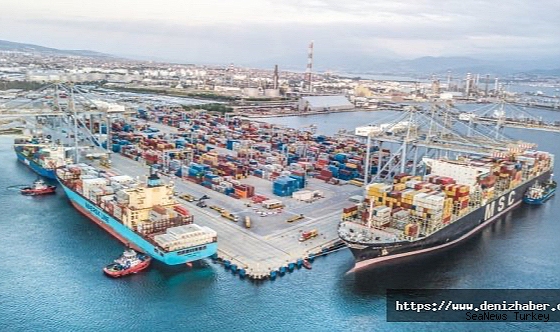
On November 6, 2026, the National Financial Regulatory Administration and six other departments of China jointly issued the Guiding Opinions on Accelerating the High-Quality Development of Shipping Insurance. This document proposes 17 measures and explicitly calls for the establishment of a modern shipping insurance system that is independently controllable, well-protected, and efficient in service. According to a November 18 report by People's Daily Overseas Edition, China accounts for approximately one-third of global international maritime cargo volume and more than half of global shipbuilding completions. However, its shipping insurance market represents only around 13 percent of the global total, highlighting a pronounced gap between the scale of maritime operations and the size of the insurance market.
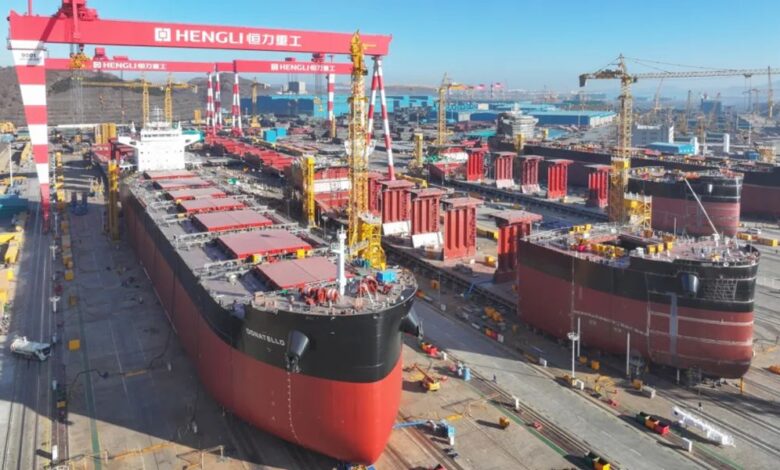
Data from the shipbuilding sector further underscores the rising demand for coverage. The Ministry of Industry and Information Technology reported on October 23 that China's newly received shipbuilding orders for the first three quarters of 2026 reached 175.29 million deadweight tonnes, a year-on-year increase of 163.2 percent, representing an 81.8 percent share of the global market. The growing proportion of high-value vessels—including green-powered ships, large container vessels, and LNG carriers—amplifies potential losses when incidents occur. The larger the vessel and the more complex the technology, the greater the exposure. Vessel insurance has historically covered hull damage, mechanical failure, and third-party liability. However, new-energy vessels now introduce battery systems and green fuel variables, while smart vessels face emerging risks such as cyberattacks and system misjudgments that existing products may not fully address.
The Guiding Opinions explicitly call for improving cargo transport risk protection mechanisms and guiding trading and logistics enterprises to strengthen risk awareness and enhance their capacity to independently arrange cargo transport insurance. Bulk commodities—including energy, ore, and grain—are directed toward comprehensive, fully valued transport insurance coverage. Export cargo such as new-energy vehicles, lithium batteries, and photovoltaic products is encouraged to utilize insurance to distribute transport risk. Additionally, high-value goods including electronics, precision instruments, and advanced equipment are targeted for strengthened transport risk protection.
Of particular relevance to freight forwarders is the document's explicit instruction to leverage the role of platform enterprises and freight forwarding companies in supporting foreign trade enterprises in purchasing cargo insurance and other forms of shipping coverage. In practice, freight forwarders are responsible not only for booking, customs clearance, and transport coordination but also serve as a critical point of contact through which many foreign trade enterprises access logistics services. Many small and medium-sized cargo owners have limited familiarity with cargo insurance, often directing their attention toward freight rates and transit times on the assumption that responsibility transfers to the carrier once goods are loaded. When cargo damage does occur, however, determining at which stage the loss arose, whether carrier liability applies, and whether compensation conditions are satisfied all require case-by-case assessment. Freight forwarders who proactively remind clients to confirm insurance arrangements at the time of booking—particularly for high-value shipments—contribute meaningfully to upstream risk management.
At the time of purchase, clients focus on premiums; once an incident occurs, their attention shifts to whether compensation will be paid and how quickly. An international maritime shipment may transit multiple countries and ports across an extended transport chain, making the investigation, evidence gathering, and liability determination for overseas cargo damage substantially more complex than domestic cases. For freight forwarders, clients typically seek information immediately following an incident, and even when ultimate compensation liability does not rest with the forwarder, subsequent coordination and communication can consume considerable time and resources.
The policy simultaneously expands insurance supply and designates claims service as a priority area. The Guiding Opinions encourage insurers to enhance large-risk underwriting capacity through commercial co-insurance and similar arrangements, and to accelerate product development and promotion in areas including cross-border e-commerce and bulk commodities. On the claims side, the measures propose exploring rapid settlement mechanisms for small-value cases and establishing coordination mechanisms for shipping insurance cases involving significant interests, complex relationships, or cross-border elements. The Guiding Opinions further encourage the application of blockchain technology to enable evidence traceability and preservation, and the use of Automatic Identification Systems and satellite remote sensing to strengthen risk monitoring. These measures address recognized operational challenges: the timely identification of risk, the rapid collection of post-incident evidence, and the reduction of repeated communication during the claims process.
From an international market perspective, disclosures at a thematic forum of the 2026 North Bund International Shipping Forum on October 20 indicated that China's cargo insurance premium income reached RMB 33.8 billion in 2025, representing approximately 18 percent of the global total, while vessel insurance premium income reached RMB 8.7 billion, representing approximately 12 percent. China's cargo insurance sector has achieved meaningful scale, yet its international market share and service capabilities retain room for advancement. The Guiding Opinions call for advancing the development of standardized shipping insurance terms, expanding the use of RMB within the shipping insurance sector, enhancing independent pricing capabilities, and strengthening overseas service networks. For cargo owners and freight forwarders alike, overseas service networks are of particular strategic importance: cargo insured within China may sustain losses in Europe, Southeast Asia, South America, or other markets. Where insurers lack local investigation, evidence collection, and claims resources, the resolution process for enterprises may remain protracted and resource-intensive.