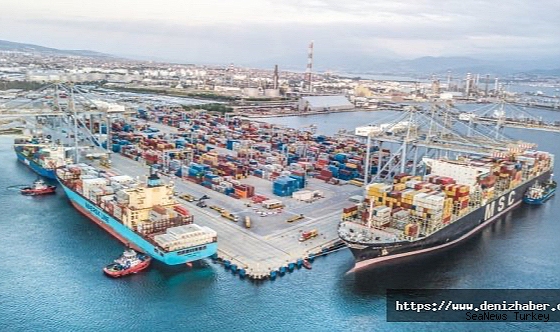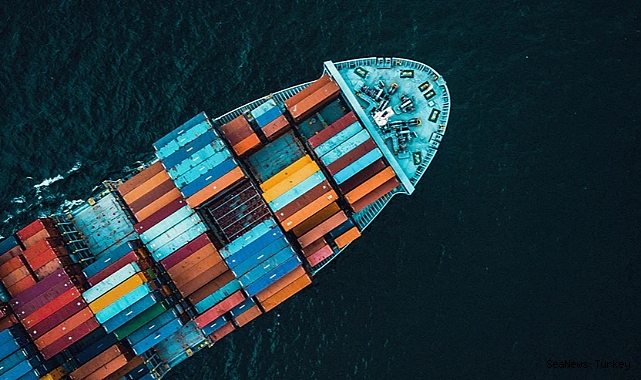

US West Coast ports hit a record 1.45 million TEU in imports for September 2026, marking a 17.6% year-on-year increase.
September 2026 marked a historic milestone for North American West Coast ports, with heavy-load import volumes reaching 1.45 million TEU - a 17.6 percent year-on-year increase that surpassed all prior monthly records for the corridor. According to the latest report from maritime data analytics firm Sea-Intelligence, the figure represents the strongest September performance ever recorded for the US West Coast. Behind the headline number lies a more complex picture: traditional consumer goods restocking underpinned much of the surge, while the quarter itself was characterised by sharp timing volatility and an intensifying concentration of cargo across a small number of gateway ports.
The record throughput was not evenly distributed. The ports of Los Angeles and Long Beach collectively absorbed 73 percent of all heavy-load imports entering the US West Coast, reinforcing the two gateways' dominant position within the transpacific trade lane. Shippers continue to favour the Southern California complex for its depth of liner service networks and inland distribution capability; however, the degree of concentration amplifies single-point vulnerability. Any operational disruption at either facility - whether driven by labour, equipment, or vessel scheduling - translates directly into constrained box pickup and return cycles with limited alternative routing. For freight forwarders, the elevated cargo volumes provide some negotiating leverage on peak-season capacity, but the absence of viable substitute gateways means that delivery risk remains acutely sensitive to performance at both ports.
The aggregate quarterly figures - total US West Coast throughput of 8.32 million TEU for Q3, up 2.6 percent year-on-year, with heavy-load imports of 4.12 million TEU rising 3.9 percent - obscure the volatility embedded within the period. Sea-Intelligence's month-by-month breakdown reveals a pronounced compression of volume into the final weeks of the quarter: heavy-load imports declined 3.9 percent year-on-year in July, stabilised marginally in August, then surged 11.3 percent month-on-month in September alone - the largest single-month sequential increase recorded for September since 2012. What would ordinarily constitute a gradual seasonal build was instead concentrated into a single spike, pushing yard capacity, chassis availability, and rail networks to their operational limits within a compressed window. The trade imbalance deepened further on the export side, with heavy-load exports growing only 1.8 percent and empty container exports rising just 1.1 percent - a widening asymmetry between inbound and outbound flows.
Sea-Intelligence applied a measured qualification to the 17.6 percent year-on-year growth figure, noting that the comparison period was distorted by an unusually weak base. US West Coast import growth fell by 12.5 percentage points between July and September of the prior year, compressing the denominator against which September's record is measured. The record status is not in dispute; however, the magnitude of the percentage increase should be contextualised against that base effect before being extrapolated as a signal of sustained demand acceleration. Market participants are advised to monitor subsequent months to assess whether volumes can be maintained at elevated levels, rather than treating a single month's outperformance as evidence of a durable upward inflection.
A parallel explanatory narrative has circulated within the industry - namely, that accelerating investment in artificial intelligence infrastructure has contributed to the volume surge at West Coast ports. Sea-Intelligence addressed this claim directly in a separate report, drawing on US Census Bureau container import data covering January 2022 through September 2026, disaggregated into seven commodity categories at the HS8 level across Asia-to-US trade lanes. The findings are unambiguous: high-value AI processors and IT hardware move almost exclusively by air freight, not ocean; and physical construction materials associated with data centre development showed import volumes that were, in Sea-Intelligence's assessment, essentially flat. If AI capital expenditure were a meaningful driver of seaborne import growth, the relevant commodity categories would reflect measurable uplift - the data does not support that conclusion.
The genuine drivers of September's record performance are found in conventional consumer goods: apparel, toys, games, sporting goods, and bicycles recorded strong growth, as did raw materials and intermediate inputs including plastics, paper, packaging materials, and general hardware. The US West Coast's historic September throughput is, in substance, the product of traditional retail restocking cycles rather than technology sector investment. The distinction carries strategic weight: it anchors the demand signal in consumer spending dynamics rather than the more capital-intensive and air-freight-dependent AI supply chain, and shapes the outlook for sustained volume performance in the months ahead.