
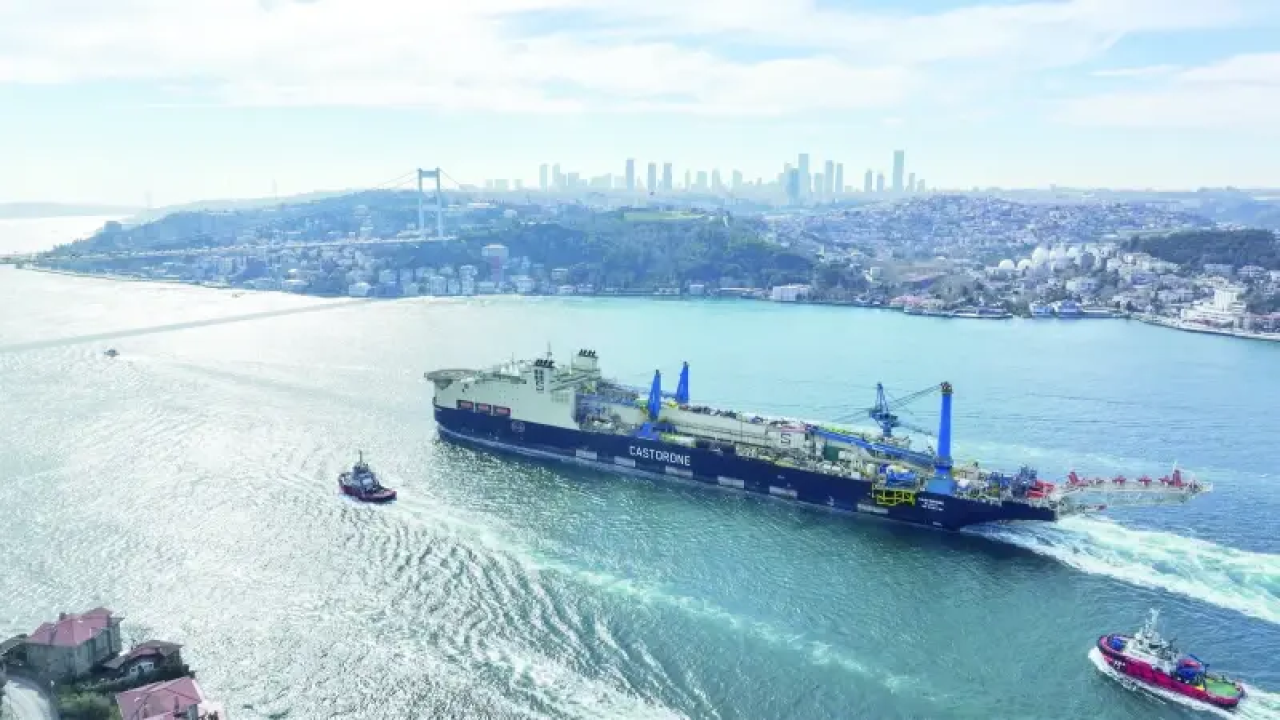
In 2025, 40,172 vessels transited the Bosphorus, a decrease from the previous year, yet it remains a crucial maritime route for global trade.
Referred to as the 'pearl of the world,' the Istanbul Strait continued to be one of the important transit points of global maritime trade in 2025. According to data from the Ministry of Transport and Infrastructure, the number of vessels passing through the Strait was recorded as 40,172 last year.
Despite a decrease of 1,191 vessels compared to the previous year, the activity level in the Strait, which is one of the busiest natural waterways in the world, remained high.
Daily, Weekly, and Hourly Density
The 2025 data clearly illustrates the density of traffic in the Strait.
On average, 110 vessels passed through daily, 772 vessels weekly, and 4 vessels hourly.
In other words, while daily life flows in Istanbul, a new vessel passed through the Strait almost every 15 minutes.
The Number Decreased, But Its Strategic Importance Remained
The decline in the number of transits was influenced by fluctuations in global trade, route optimization, changes in energy transportation, and the use of alternative routes. Nevertheless, the Istanbul Strait continued to be one of the most critical gateways for countries bordering the Black Sea to access global markets.
Oil tankers, bulk carriers, container ships, and military transits constitute the main components of the traffic in the Strait, while strict traffic planning for vessels carrying hazardous cargo also continued.
A Key Passage for Global Maritime Trade
The Istanbul Strait, which is open to international vessel transits under the Montreux Convention, holds critical importance not only for Turkey but also for the Black Sea hinterland, particularly for Russia, Ukraine, Romania, Bulgaria, and Georgia.
Source: SeaNews Türkiye


