The shipping industry grapples with rising costs and geopolitical tensions, leading to unprecedented profits amid a trade slowdown.
The global shipping market is progressively departing from the logic of traditional supply-and-demand cycles, entering an entirely new industry paradigm. Geopolitical conflict, extreme weather events, and transit route restrictions have converged into overlapping layers of uncertainty, sustaining a persistent deceleration in global trade flows and a steady escalation of logistics costs. Simultaneously, container liner operators and tanker owners are capturing unprecedented profit windfalls, as the industry undergoes a profound structural reconfiguration.
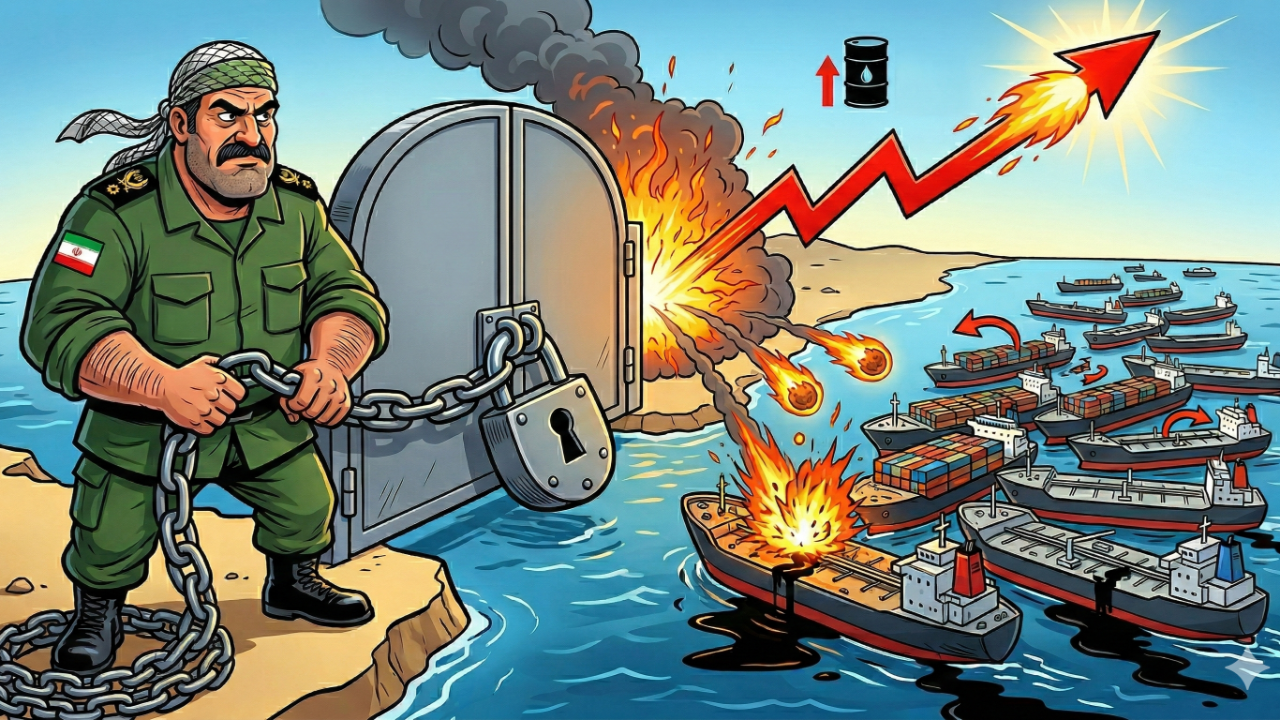
The US-Iran standoff, the protracted Russia-Ukraine war, and water-level restrictions imposed on the Panama Canal by El Nino weather conditions have collectively congested critical nodes in the global logistics network, directly driving a substantial decline in global trade flow efficiency. As trade decelerates, available market capacity continues to tighten - not only pushing tanker freight rates to historic highs, but also normalising the frequent imposition of surcharges by container shipping operators, fundamentally overturning the patterns of traditional shipping cycles.
Among seasoned industry practitioners, market disruption is no longer regarded as an isolated or unpredictable occurrence. It has evolved into the standard operating condition of the shipping industry. The strength or weakness of the current shipping market is no longer determined solely by economic supply and demand; geopolitical competition, maritime security risks, and global strategic uncertainty have become the dominant forces shaping market conditions.
Profiting from market uncertainty has long been an inherent characteristic of the shipping industry, but the intensity of the current market cycle has far surpassed all previous episodes. Data indicates that on 15 September, daily charter rates on the key VLCC route from Saudi Arabia and the Arabian Gulf to China broke through USD 1.1 million, setting an industry record. Industry insiders acknowledge that, even a few years prior, a daily tanker rate of one million dollars would have been virtually inconceivable.
Analysts within the industry further observe that the current super-cycle in tankers has comprehensively surpassed the shipping super-cycle of the 2000s, representing a market condition unprecedented in the history of tanker development. Reviewing modern shipping history, the only period of comparable top-tier profitability is the era of extraordinary earnings recorded by container liner companies during the COVID-19 pandemic.
From this juncture, global trade has formally established a new developmental norm: persistently declining transport efficiency and steadily rising total logistics costs. This exceptional industry cycle of elevated costs and elevated profits is the combined product of natural weather phenomena and deliberate geopolitical conflict.
Geopolitical conflict has not only disrupted global crude oil supply systems but has also produced a global shortage of refining capacity, with the supply gap for refined petroleum products continuing to widen, further compounding energy logistics and transportation pressures. As energy and logistics costs sustain their upward trajectory, global industrial and supply chains face mounting chain reactions. Rising prices for fuel oil, propane, and other energy commodities will directly increase heating costs for households across Europe and North America; surging diesel prices will, in turn, drive further price increases in fresh produce, daily consumer goods, and other essential commodities.
Notably, petroleum-based chemical raw materials underpin more than 70,000 product categories worldwide, with industries spanning coatings, textiles and apparel, and data centre cooling equipment all carrying significant exposure to these inputs. Confronted with persistent market volatility and elevated logistics costs, enterprises across the global industrial, food, coatings, beauty, and energy value chains are recalibrating procurement strategies - reducing individual order volumes, shortening delivery cycles, and mitigating the risk of high-cost inventory accumulation followed by price-driven losses, while incorporating substantial ocean freight costs as a core operational consideration.
Chemical industry practitioners candidly describe the sector's current dilemma: enterprises are reluctant to accumulate large inventories for fear of asset depreciation, yet equally reluctant to operate with zero stock for fear of business interruption. Operational uncertainty has intensified markedly. However, this anxiety across supply chains has not translated into pressure on shipping companies. For container liner operators and tanker owners, so long as cargo interests are willing to absorb high freight rates, shipping operations proceed steadily and industry profit margins continue to expand.
Annual monitoring data from international shipping analytics firm Xeneta offers a direct illustration of the rate-increase cadence adopted by shipping operators. Since the beginning of this year, major ocean carriers have initiated successive waves of surcharge collection, implementing emergency fuel surcharges, inland multimodal surcharges, and peak season surcharges in sequence. Following the escalation of US-Iran tensions at the end of July, a further round of emergency fuel surcharges was introduced - marking three distinct rounds of price increases within a single half-year period - with market volatility risk converted directly into carrier revenue and profit.
Xeneta Senior Analyst Emily Stausboll summarises the core shift with clarity: market volatility itself has become a reliable and recurring mechanism through which carriers collect fees and generate profit.
At present, none of the core factors driving this shipping market disruption - geopolitical conflict, weather anomalies, or transit route restrictions - show signs of abating. This signals that cargo interests may face sustained upward pressure on freight rates and surcharges for the foreseeable future. For investors in shipping enterprises, this unprecedented industry windfall equally tests whether the major carriers can plan rationally and deploy their record-level profits with discipline, in pursuit of long-term, stable corporate development.