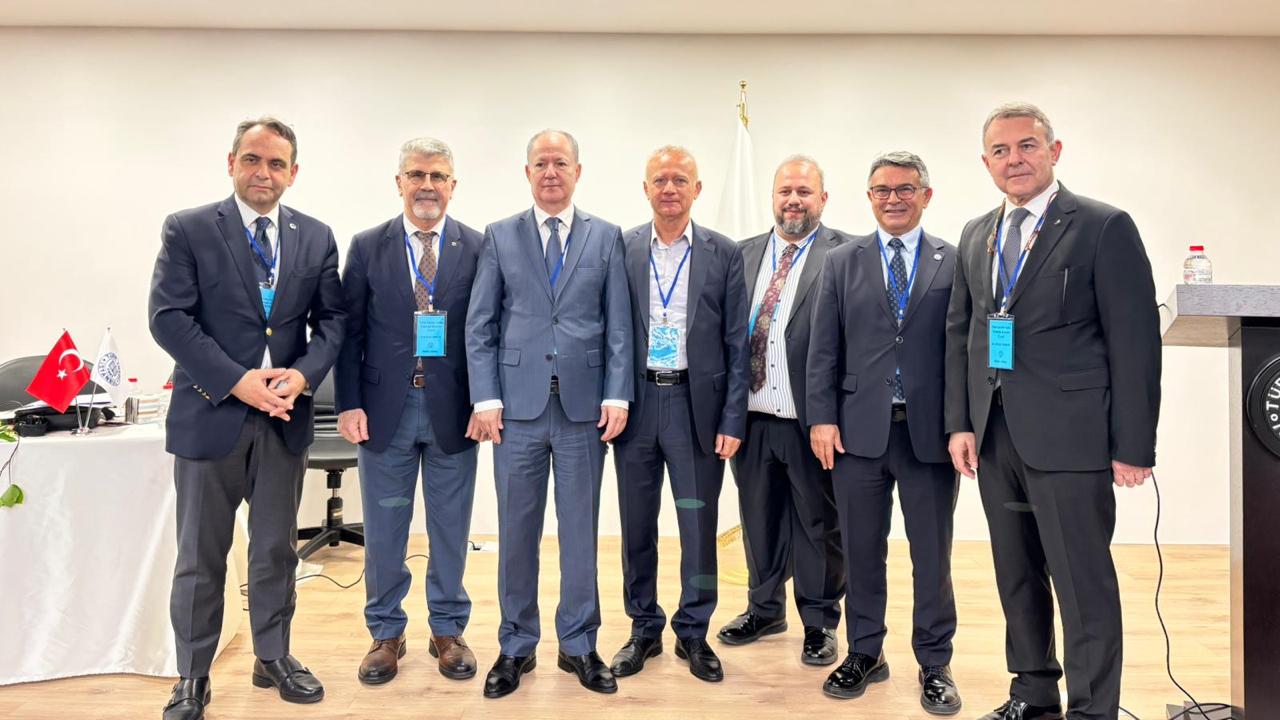
MTSO President Hakan Sefa Çakır highlights the challenges waste imports pose to Mersin Port, urging a review of waste management policies.
Hakan Sefa Çakır, the President of the Mersin Chamber of Commerce and Industry (MTSO), stated that the influx of waste through Mersin Port has increased operational intensity and imposed additional costs on exporters. Çakır called for a reassessment of waste import policies to maintain port efficiency.
Highlighting the environmental and economic impacts of waste inflows through Mersin Port, MTSO Board Chairman Hakan Sefa Çakır emphasized the need to reevaluate waste import policies.
Çakır pointed out that marine pollution, particularly the chemical pollution and microplastic risks caused by terrestrial pollutants originating from the Seyhan River, is not only an environmental issue but also an economic one. He stated, 'We will produce, we will grow, but we will never give up on a development model that is compatible with the environment. The economy of Mersin will grow by protecting nature, not against it.'
As one of Turkey's most important foreign trade gateways, Mersin Port is increasing its strategic importance with the rising cargo volume and growing logistics activity; issues of environmental sustainability, port efficiency, and waste management are also coming back to the forefront. Hakan Sefa Çakır, the Chairman of the Mersin Chamber of Commerce and Industry (MTSO), noted that the environmental pressure and operational intensity created by the waste cargoes arriving at the port need to be addressed carefully, stating that production and trade can only be carried into the future with an understanding that is compatible with nature.
'Every country should bring its own waste back into its economy.'
Chairman Çakır emphasized that waste management should be evaluated not only as a trade issue but also under the headings of environment, health, and sustainable development. He pointed out that the waste cargoes undergoing control processes create congestion in port operations, which results in new costs from both environmental and logistical perspectives.
Source: SeaNews Türkiye