Military enforcement and electronic interference are forcing commercial shipping in the Strait of Hormuz to operate outside traditional visibility frameworks.
Commercial shipping in the Strait of Hormuz is being forced to operate outside traditional visibility frameworks due to military enforcement and electronic interference, reports Athens' Safety4Sea.
Windward stated that its update shows that despite the partial suspension of Project Freedom, conditions never returned to normal. Instead, traffic across Hormuz and the Gulf of Oman has been shaped by GPS jamming, AIS suppression, dark fleet activity, and targeted pressure on energy infrastructure.
AIS-visible traffic collapsed over the past month, while satellite imagery revealed substantial vessel movement under dark conditions. Windward identified concentrations of non-transmitting ships near Larak Island, Kharg Island, Bandar Abbas, Fujairah, and the northern corridor.
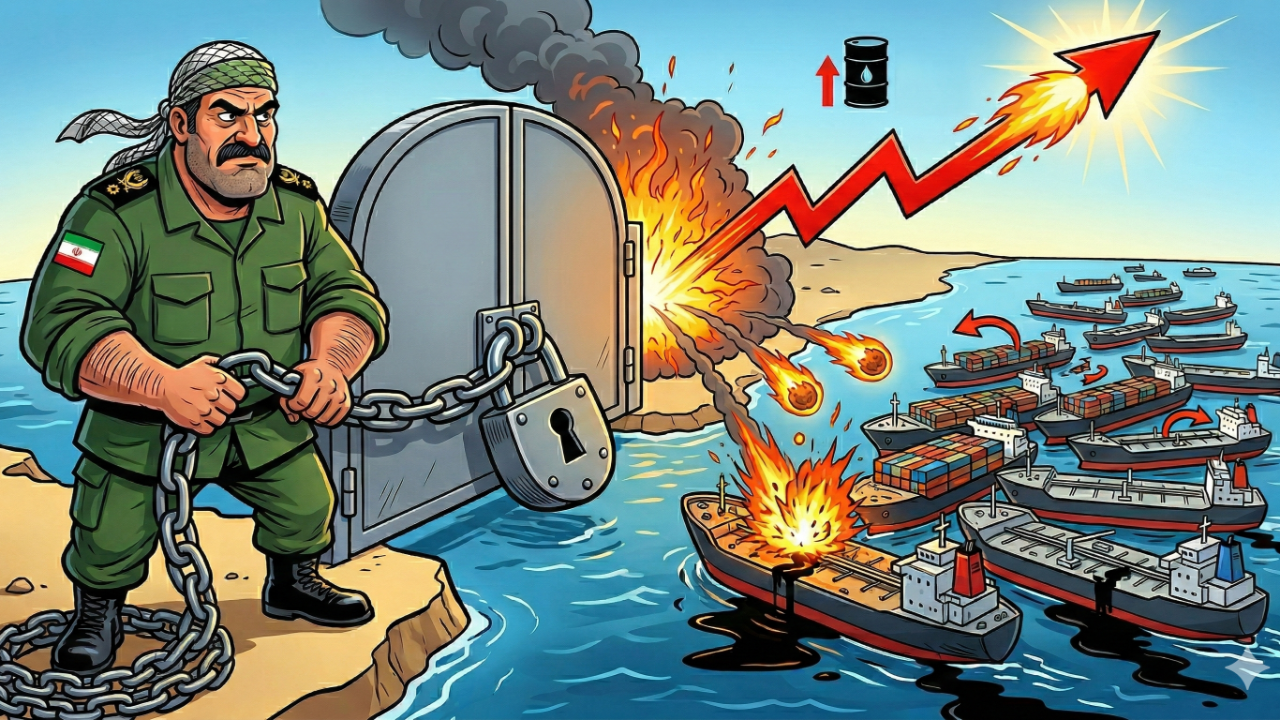
The security environment has become increasingly militarized. Iran-linked attacks on shipping and energy sites in Fujairah, IRGC fast craft deployments, expanded VHF warnings, and continued US interdiction have reinforced Hormuz as an operational pressure zone despite the ceasefire.
Windward noted that dark vessel activity surged nearly 600 percent between April 19 and May 3. Satellite imagery showed covert transits through Hormuz, while Kharg Island continued secret VLCC loading. GPS jamming affected about 470 vessels near Fujairah and Khor Fakkan in one day.
US enforcement remained active after Project Freedom was paused, including the disabling of the Iran-flagged tanker M/T Hasna. Iran-linked routing also shifted toward Lombok and Sunda to avoid visibility around Malacca.
The outlook remains defined by degraded visibility and persistent military pressure. Operators are adapting by transiting under reduced visibility, while Iran-linked networks rely on covert loading, ship-to-ship transfers, and extended AIS blackouts.
Windward indicated that the disconnect between AIS traffic and satellite-detected movement suggests Hormuz is entering a longer-term phase where commercial shipping continues but outside traditional monitoring frameworks. Satellite-based intelligence is now critical for operational awareness.