
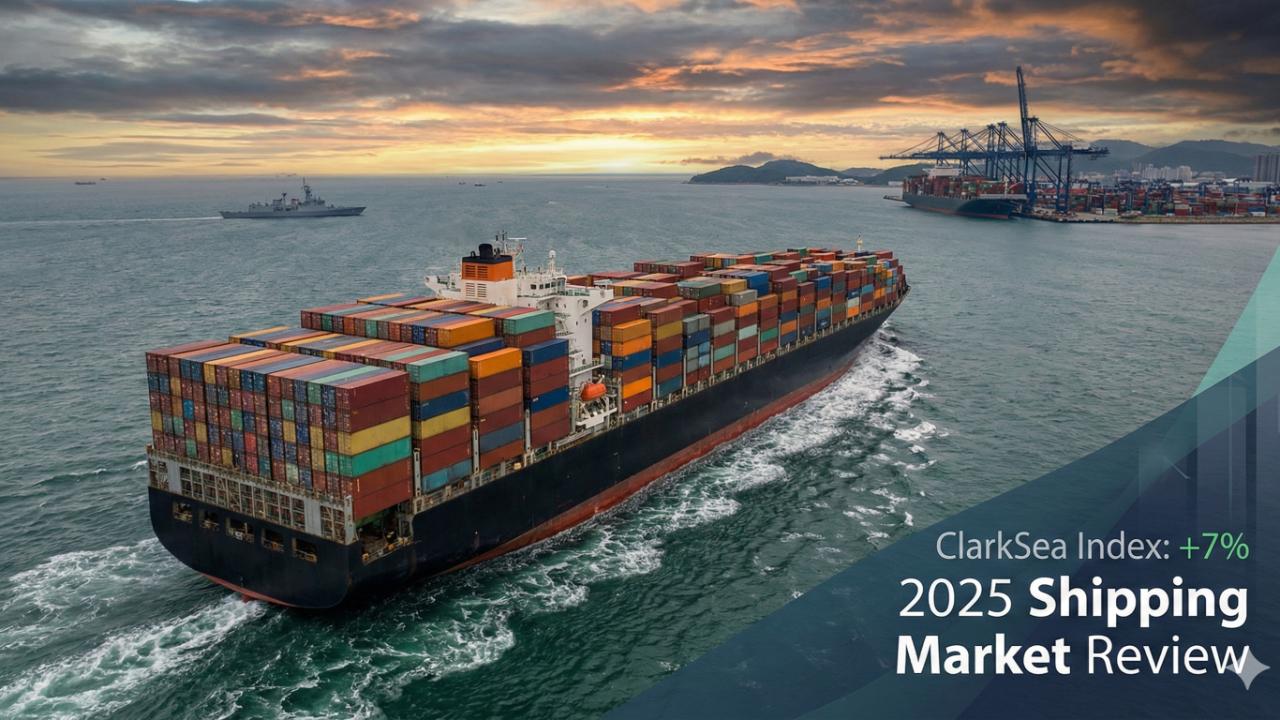
The maritime sector saw a 7% growth in 2025, driven by resilience amid geopolitical tensions and evolving supply chain dynamics.
The global shipping sector closed the year 2025 with unexpected financial resilience amidst geopolitical uncertainties and supply chain complexities. According to a comprehensive report published by Clarksons Research, the ClarkSea Index, which reflects the overall earnings performance of the sector, increased by 7% compared to the previous year, reaching an average daily rate of $26,836. The sector managed to finish the year positively, particularly due to improvements in the tanker and dry bulk markets in the second half of the year, along with strong performance in container shipping.
Despite changes in trade flows and timing caused by imposed tariffs, global trade dynamics maintained a growth trend. The maritime trade volume expanded by 1.1% in 2025, reaching a total of 12.9 billion tons. Although this growth rate fell short of the 2.2% increase in 2024, concentrated demand in the second half of the year, particularly in oil and dry bulk shipping, supported the sector. The need for vessels to change routes due to security issues in the Red Sea and the transportation of Russian oil on longer routes due to sanctions were among the key factors sustaining ton-mile demand. However, ton-mile growth declined from 6.2% in the previous year to 1.5%.
The container market exhibited the most remarkable performance in 2025. Despite fluctuations in freight markets, the chartering index recorded a significant annual increase of 39%. This increase was influenced by a 4% growth in container volumes and capacity constraints caused by disruptions on the Red Sea route. On the energy transportation side, the picture appeared more complex. While the weighted tanker index remained stable year-on-year, significant divergences occurred within sub-segments. The crude oil market was quite active during the winter months, with VLCC (Very Large Crude Carrier) earnings rising by 39%, supported by increased OPEC volumes and a low order book. In contrast, product tankers (MR) lost 23% in value but still managed to stay above the trend. On the gas side, while the VLGC index increased by 18%, LNG spot earnings experienced a sharp decline of 31% year-on-year despite surprising activity in the fourth quarter.
The car carrier market, which had broken records in previous years, faced a sharp correction in 2025 due to the delivery of a significant newbuild fleet. Although trade volume increased by 8%, the rising supply of vessels led to a 50% annual drop in prices. The dry bulk market started the year weakly but recovered to close the year with an average decline of 8%. Although Capesize vessels performed strongly in the second half of the year, some easing was observed in December.
The global fleet grew by 3.5% in 2025, reaching a capacity of 2.5 billion dwt. The new ship order book rose to 447 million dwt ($567 billion), marking a 13% increase and testing the highest levels seen since 2008. Shipyard productions increased by 6% in terms of 'Compensated Gross Tonnage' (CGT), while record years were experienced in LNG and car carrier deliveries. In terms of geographical distribution of orders, Chinese shipyards maintained their absolute dominance in the market, accounting for 63% of the orders placed during the year, while South Korea's market share stood at 21%. The new ship price index showed only a slight decrease of 2%, indicating that shipyards maintained long-term occupancy rates despite capacity increases.
The second-hand ship trading market rebounded after a sluggish first half of the year, witnessing a 9% increase in prices, bringing the total value of the global fleet to $1.6 trillion. Scrap ship demolition activities, although starting from a low base, increased by 30% to reach 11.6 million dwt. One of the biggest challenges facing the sector was the increasing regime of sanctions. According to the report, there are currently 933 tankers with a capacity of 111 million dwt (16% of the fleet) specifically listed on sanctions lists, deepening the 'shadow fleet' conundrum. On the environmental regulation side, it was noted that discussions regarding emission regulations at the International Maritime Organization (IMO) stalled in October, but investments in green technology continued unabated.
Source: www.denizhaber.com


