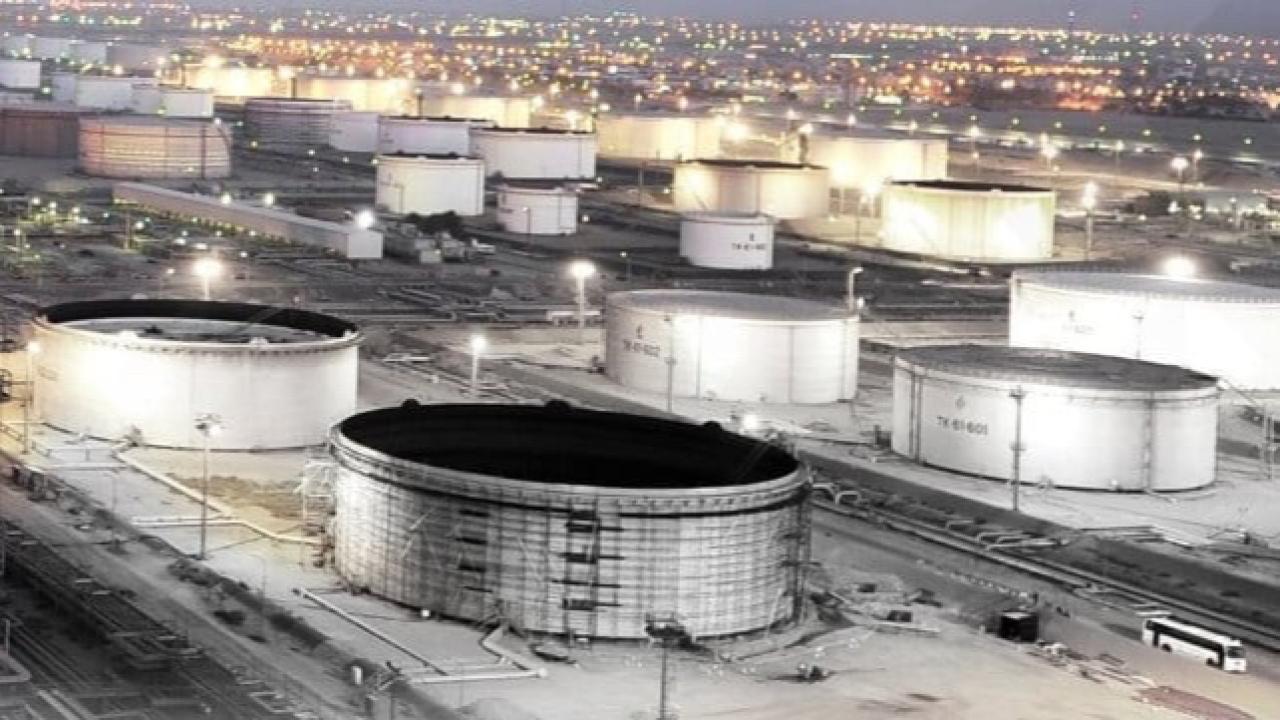
Kuwait's oil output faces potential halts due to Strait of Hormuz tensions, raising concerns over regional supply and prices.
Tensions in the Strait of Hormuz in the Middle East have begun to directly affect oil production. Kuwait's national oil company has confirmed concerns that production could come to a complete halt within a few days due to limited storage capacity and announced a plan to gradually reduce production.
In a statement, Kuwait Petroleum Company (KPC) indicated that the decision was purely a precautionary measure and that the situation would be reviewed regularly. While emphasizing that the supply of oil to the domestic market is secure, the company stated, 'We are fully prepared to restore production levels as soon as conditions allow.'
Analysts note that the anticipated shutdown occurring a few days earlier than expected is due to KPC's preference to reduce production at certain sites early in order to preserve remaining storage capacity. According to experts, reactivating wells with reduced production can be accomplished much more quickly and easily compared to completely shut-in wells.
Iranian attacks have brought maritime traffic to a standstill.
The crisis deepened following Iranian attacks in the Strait of Hormuz. The Tehran administration attacked at least two vessels in the strait following the closure order issued last week. In response, a significant number of Western vessels withdrew from the region.
Currently, the number of vessels passing through the strait is quite limited. It has been reported that some of the vessels that are transiting have turned off their AIS transponders, and most of these are not tankers.
In contrast, Iran has not completely halted its oil exports. The National Iranian Oil Company (NIOC) continues its loading operations at Kharg Island and is using tankers referred to as a 'shadow fleet' to maintain minimal supply to customers in Asia.
According to data from TankerTrackers.com, Iran has also begun using the Jask oil terminal located in the Gulf of Oman on the eastern side of the Strait of Hormuz for shipments.
Production in Iraq has sharply declined.
Kuwait is not the only producer affected by the crisis. According to Reuters, the Iraqi government has ordered the shutdown of wells in the country's largest oil fields due to insufficient empty tanker tonnage and full storage capacity.
Following this decision, Iraq's oil production has plummeted from 4.3 million barrels per day to 1.3 million barrels per day. At this stage, the only viable market for Iraqi oil is seen as domestic consumption.
Warning of $150 oil prices.
Qatar's Energy Minister Saad al-Kaabi stated that the supply contraction in the Middle East has begun to reflect on prices, warning in an interview with the Financial Times that if the Strait of Hormuz remains closed, oil prices could rise to as much as $150 per barrel within a few weeks.
Al-Kaabi also expressed that if the crisis continues, major oil exporters in the Gulf Cooperation Council (GCC) may be forced to declare a force majeure.
Source: SeaNews Türkiye