The U.S. faces challenges to its military dominance as global dynamics shift, raising questions about its hegemonic status and strategic approach.
One of the most ancient issues in international relations theory is not what power is, but how it should be used. A broad intellectual line extending from Clausewitz to Morgenthau, from Sun Tzu to Mearsheimer agrees on this fundamental axiom: military power ultimately retains its highest strategic value as long as it is not used. Power is like a sword; as long as it remains in its sheath, it is deterrent, but the moment it is drawn, it tests both itself and its wielder. The issue of aircraft carriers in the United States is precisely the most dramatic test of this axiom in the contemporary world order.
The Concept of Potential Power and the Doctrine of Sea Dominance
The doctrine of sea dominance formulated by Alfred Thayer Mahan in the late 19th century has constituted the backbone of American strategic thought. According to Mahan, whoever controls the oceans controls world trade; whoever controls world trade determines the course of global politics. The most concrete manifestation of this doctrine in the 20th century has undoubtedly been aircraft carriers. Since World War II, the American navy has built a capacity for unrivaled power projection in the world's seas with eleven nuclear-powered aircraft carriers—each of which is essentially a floating airbase.
However, it is important to note a critical point here: the strategic value of these aircraft carriers has largely stemmed from their existence as a 'potential threat.' Throughout the Cold War, American aircraft carriers patrolled from the Mediterranean to the Pacific, from the Indian Ocean to the North Atlantic. However, their primary function was not to engage in actual conflict, but to deter rival actors through their mere presence. The deployment of an American aircraft carrier strike group to any region constituted a diplomatic message in itself: 'We are here, and our intervention capacity is intact.' The effectiveness of this message paradoxically derived from the fact that this capacity had never been fully tested.
In the international relations literature, this situation is conceptualized as the 'paradox of deterrence.' Deterrence works only as long as the threat remains credible yet unexecuted. The moment the threat is put into action, it either succeeds in completely neutralizing the rival—which is rarely possible—or it fails, thereby eroding the deterrence itself. The second scenario severely undermines the legitimacy of power and its perceived capacity.
The Weapon-Dollar Coalition
To accurately grasp the strategic function of aircraft carriers, it is necessary to go beyond the purely military dimension of American hegemony. With the collapse of the Bretton Woods system in 1971 and the abolition of the dollar's convertibility to gold, the U.S. gained an unprecedented global economic privilege. Since that date, the 'petrodollar' system, which ensured that world energy trade—especially oil transactions—was conducted exclusively in U.S. dollars, has transformed into a mechanism that finances the structural budget deficits of the American economy, channels global savings into U.S. Treasury bonds, and grants Washington unrivaled economic leverage.
However, the sustainability of this system was not solely based on financial rules or diplomatic agreements. In this structure, conceptualized as the 'Weapon-Dollar coalition,' the ultimate guarantee of the dollar's status as the global reserve currency was American military power. The acceptance of energy trade in dollars by oil-producing states—especially Gulf monarchies—in exchange for a security umbrella constituted the foundation of this coalition. Therefore, American aircraft carriers have served not only as military platforms but also as floating guarantors of the dollar's global inviolability and the international financial order.
From this perspective, the strategic value of 'not using' aircraft carriers is understood much more clearly. As long as these ships patrolled the seas as a potential threat, they simultaneously maintained both military deterrence and the petrodollar cycle. However, the moment power is put to use, not only military deterrence but all economic hegemony built upon that deterrence also comes under risk.
The primary dynamic that fundamentally transformed the global balance of power in the first quarter of the 21st century has been the rise of the People's Republic of China. China has emerged as a serious threat to American hegemony, not only in terms of economic size but also in military modernization, technological innovation, and regional influence projection. Particularly, the construction of artificial islands in the South China Sea, anti-access/area denial (A2/AD) strategies, and advancements in hypersonic missile technology have laid the groundwork for questioning American naval superiority.
At this point, a rupture has occurred in American strategic thought. For decades, aircraft carriers were seen as tools of 'sustainable hegemony.' However, as the sustainability of this hegemony became questionable in the face of China's growing capacity, American decision-makers—especially within the framework of the Trump doctrine—began to ask a different question: 'Will we continue to bear the cost of deploying such an expensive navy in the world's seas, or is it time to actually reap the returns on this investment?'
At first glance, this question seems like a rational cost-benefit analysis. The construction cost of each Gerald R. Ford-class aircraft carrier is approximately $13 billion; annual operating costs, including escort ships and air wings, reach billions of dollars. For the American taxpayer, these figures create a tangible expectation of return. Trump's 'let's reap the fruit' approach is precisely the political expression of this expectation.
However, this approach is based on a strategic illusion. The 'fruit' of aircraft carriers is their non-use. Their existence as potential power contributes to the stability of the global order, secures maritime trade routes—these are all strategic gains achieved through the 'non-use' of these ships. These gains are inherently invisible; just like the value of an insurance policy is not appreciated unless damage occurs.
The Litmus Test Effect
The most striking case demonstrating the collapse of the doctrine of potential power has occurred in the context of the Israel-Iran tension. The United States, in coordination with Israel, has deployed aircraft carriers and fifth-generation fighter jets like the F-35 in military operations against Iran. This move signifies the transformation of power that has been maintained as a potential threat for decades into a kinetic element—namely, an actual instrument of war.
The results have been extremely instructive from a strategic perspective.
The financial dimension of this operation, dubbed Operation Epic Fury, has dramatically highlighted the cost of converting potential power into kinetic power. According to CSIS analyses, the bill for just the first 100 hours of the operation amounted to $3.7 billion, with daily average spending reaching $890 million. This massive resource consumption has led to the dangerous depletion of the U.S.'s most critical munitions stocks—Patriot and THAAD interceptors, Tomahawk cruise missiles—forcing the Pentagon command to warn political will about the global vulnerability that this kinetic display of power would create for the U.S. The reality that those advocating 'let's reap the fruit' failed to account for is that once the fruit is picked, it is consumed, whereas potential power—just like the tree itself—continues to bear fruit as long as it remains standing.
However, the most devastating consequence has not been the financial cost but the asymmetrical vulnerabilities that emerged on the ground. Iran's relatively low-cost hypersonic and ballistic missiles have posed a significant threat to the world's most expensive and sophisticated war platforms. The potential of a missile costing a few million dollars to inflict serious damage—even incapacitate—a billion-dollar aircraft carrier has manifested as a striking example of asymmetric warfare. This situation has compelled the U.S. Navy to keep aircraft carriers outside of Iran's missile range, avoiding proximity to the Strait of Hormuz.
What is happening here confirms one of the most fundamental predictions of strategic theory: power is tested the moment it is used; when tested, its vulnerabilities are revealed. Aircraft carriers have created the perception of being 'unsinkable' as long as they remain as potential threats. This perception formed the basis of deterrence. However, when the vulnerability of these platforms against hypersonic missiles became visible in an actual conflict environment, the 'unsinkable' myth collapsed, and along with it, the deterrence capacity itself was eroded.
From a legal perspective, the situation becomes even more intriguing. Under international maritime law, the freedom of navigation of aircraft carriers in the open seas is guaranteed by the United Nations Convention on the Law of the Sea (UNCLOS). However, participation of an aircraft carrier in active combat operations against a state fundamentally alters its legal status. An aircraft carrier operating as a potential power is a maritime platform protected by international law; an aircraft carrier conducting operations as a kinetic force is a legitimate military target. This legal distinction forms the normative basis of the strategic distinction.
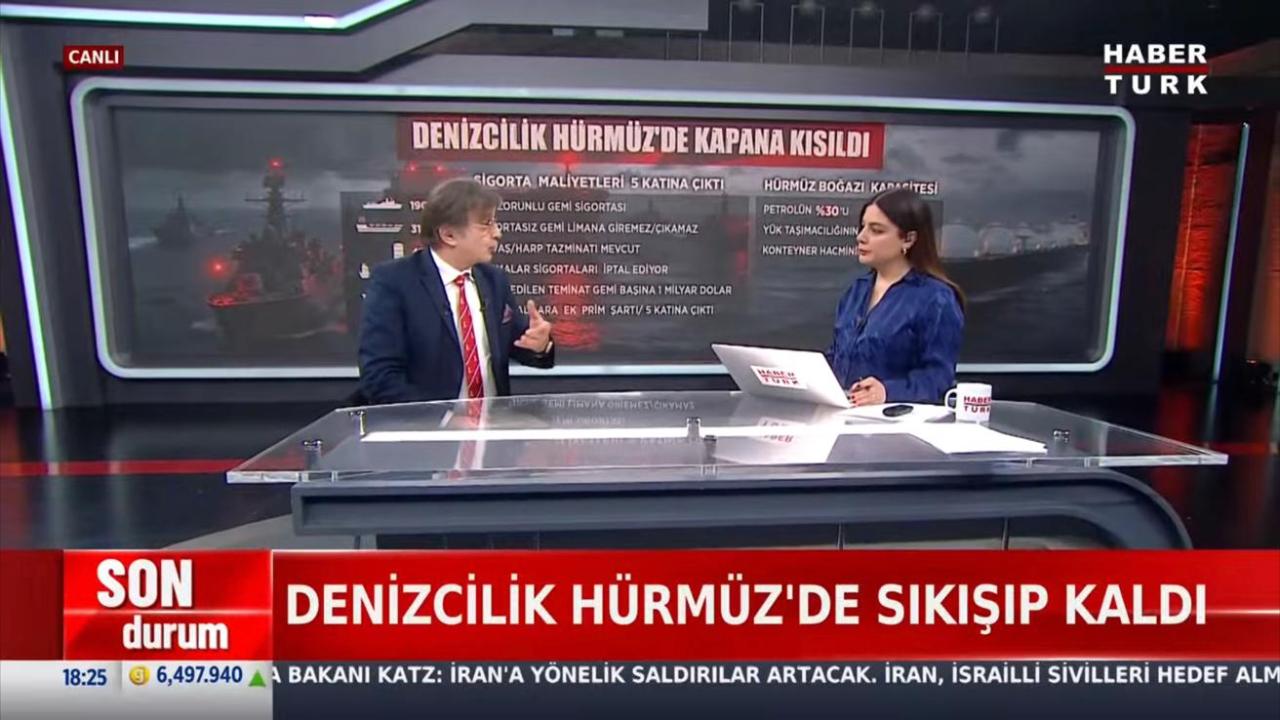
Moreover, the threat posed by Iran's missile capabilities to aircraft carriers has also brought back to the forefront the critical importance of the Strait of Hormuz for international maritime trade. Control of this narrow waterway, through which approximately one-fifth of the world's oil trade passes, is no longer subject to the will of the U.S. Navy. This situation requires in-depth analysis not only from a military perspective but also in terms of energy geopolitics and global trade law.
A similar situation applies to the F-35 Lightning II program. Marketed as the most expensive weapon system in history, the total cost of the F-35 program exceeds $1.7 trillion. This aircraft has been presented as a 'game changer,' an undisputed tool for air superiority. However, it has been demonstrated in operations against Iran that the F-35's stealth capability does not provide absolute superiority against advanced defense systems.
This situation points to a broader strategic issue: technological hubris. The American defense industry has been built on the assumption that technological superiority alone guarantees strategic superiority for decades. However, the asymmetric warfare paradigm has fundamentally shaken this assumption. The correlation between the size of a state's defense budget and its strategic effectiveness has ceased to be linear. As seen in the case of Iran, missile technologies developed with a relatively modest defense budget can neutralize platforms with astronomical costs.
The Discussion of Hegemonic Transition
All these developments have reignited the discussion of 'hegemonic transition' in international relations theory. Robert Gilpin's theory of hegemonic war, Paul Kennedy's thesis of 'imperial overstretch,' and Giovanni Arrighi's analysis of systemic accumulation cycles all point to the same conclusion: hegemonic powers accelerate their own decline by excessively using their military capacities—particularly in ways that weaken their economic foundations.
The United States, as the guarantor of the global order it has built since World War II, owes the sustainability of this order largely to the 'potential' nature of its military power. During the Cold War, the NATO umbrella, nuclear deterrence, and conventional power projection—all functioned based on the principle of 'non-use.' The doctrine of Mutual Assured Destruction (MAD) is the purest form of this principle: nuclear weapons are deterrent precisely because they cannot be used.
However, in the 21st century, American decision-makers have shown a tendency to deviate from this ancient strategic wisdom. The invasion of Iraq (2003) was the first major manifestation of this deviation; a regime was changed through the use of potential power, but the ensuing chaos and instability declared the limits of American power to the world. The twenty-year war in Afghanistan was the second; a $2 trillion expenditure and thousands of losses ultimately ended with the Taliban regaining power. Now, the Iranian theater presents the most striking example of this deviation in the maritime power dimension. Each case clearly reveals the strategic cost of converting potential power into kinetic power.
At this point, it is necessary to mention Thucydides' Trap. As conceptualized by Graham Allison, the likelihood of a rising power (China) clashing with the existing hegemon (the U.S.) is historically high. However, there is a variable not accounted for in Allison's model: the hegemon's premature and unnecessary expenditure of its own power. The United States has weakened its hand in the larger game by spending the deterrent capital it should have preserved for potential strategic competition with China on a relatively lower-priority actor like Iran. This is akin to a strategic blunder of sacrificing a queen in a preliminary round before the final match of a major chess tournament.
Does the world stand on the brink of a hegemonic transition today? It is not yet possible to provide a definitive answer to this question. However, it is possible to make this observation: the United States has made a historical mistake by transforming the military capacity it should have preserved as potential power into a kinetic tool, significantly expending its deterrent capital in the process.
Perhaps the heaviest cost of this kinetic adventure has been incurred not directly on the battlefield but in the global geo-economic realm. Iran's establishment of a paid passage mechanism for tankers transiting through the Strait of Hormuz and the announcement that these passage fees will be collected exclusively in Chinese Yuan is a de facto declaration of the collapse of the petrodollar system analyzed at the beginning of this article. The axiom that 'global energy trade is in dollars,' protected for decades under the shadow of aircraft carriers, has now lost its value in a context where these ships wait a thousand miles offshore to escape Iran's missile range. China's long-established regional integrations through the Belt and Road Initiative and alternative payment infrastructures to SWIFT have turned into a practical global financial alternative in this crisis. The waste of American military power in the kinetic domain has ironically created the strategic vacuum necessary for China to establish its economic hegemony.
The necessity for aircraft carriers to be kept outside of Iran's range is not only a tactical retreat but also a sign of a strategic paradigm shift. The validation of the vulnerability of these platforms, which are seen as 'untouchable' in the eyes of the global public, is fundamentally transforming the global perception of American power. This transformation, when considered alongside China's claims in the South China Sea, Russia's maneuvers in the Black Sea, and the increasing confidence of regional actors, provides strong evidence that the transition to a multipolar world order is accelerating.
Indeed, Turkey is positioned in one of the geographies where this transformation is felt most acutely. From the Eastern Mediterranean to the Persian Gulf, from the Black Sea to the Red Sea, the erosion of American naval power directly affects regional power balances. Turkey's efforts to develop its own naval capacity—such as the multi-purpose amphibious assault ship project TCG Anadolu—should be interpreted not only as national defense investments but also as strategic responses to the changing global maritime power map.
An ancient Chinese proverb states: 'The warrior who draws his sword the least is the one most feared.' The United States has drawn its sword. And history has rarely shown mercy to those who draw their sword too early.
The issue is this: power is not a fruit tree; the fruit that is picked from its branch is consumed. Power is more like a shadow—it appears large from a distance, but shrinks as one approaches. American aircraft carriers cast a massive shadow from afar. Now, however, the world is beginning to see the real dimensions behind the shadow. And once seen, what has been seen cannot be unseen.
Source: SeaNews Türkiye