Commerce Secretary Algernon Yau emphasizes the need for Hong Kong to diversify trade networks as AI-driven export growth may slow.
Hong Kong must actively expand its trade networks rather than 'wait for luck to come our way,' Secretary for Commerce and Economic Development Algernon Yau Ying-wah said on Sunday. He cautioned that the artificial intelligence boom behind the city's recent export surge may gradually slow.
Speaking on a radio program, Yau noted that Hong Kong's export growth rate in September was the highest monthly figure in more than 40 years. He attributed the jump to a higher re-export volume equivalent to 1.4 times the city's gross domestic product, lifting Hong Kong's annual re-export trade value to more than HK$700 billion.
'Re-export trade acts as a ballast point for our export sector, stabilizing overall exports,' Yau said.
Yau explained that while AI development has driven the current upward trend, it may lose momentum over time. He stressed that the city needs to find new opportunities to maintain its position as an international trade hub.
'We must closely monitor overall global trends, and in turn make preparations regarding how to strengthen ourselves, how to adjust our strategies, and how to expand our trade networks ... we cannot simply wait for luck to come our way,' he said.
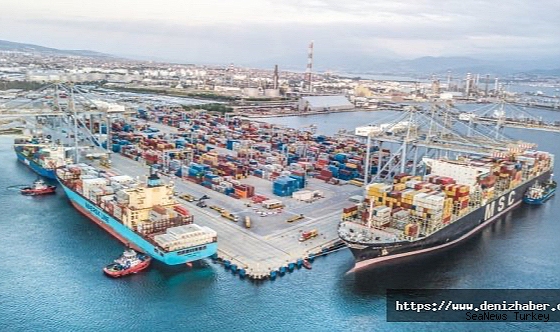
Yau highlighted that re-exports account for 75 percent of Hong Kong's air cargo volume and 80 percent of its sea freight. 'A lot of re-export trade goes from mainland China through Hong Kong,' he noted.
The sector also creates demand for finance, legal services, accounting, and certification. Yau stated that re-export trade alone supports between 100,000 and 200,000 jobs.
To raise the city's competitiveness, Yau suggested that Hong Kong should align with the country's 15th five-year plan to strengthen its status as an international trade center.
'It starts with our closely interconnected financial center, maritime center, aviation hub, and innovation and technology sector ... and to keep pace with international advancements in AI,' he said.
Yau also pointed to the exhibition industry as a growing contributor to the local economy. Authorities stated earlier that the Hong Kong Convention and Exhibition Center and AsiaWorld-Expo hosted more than 360 convention and exhibition events in 2025.
Those events drew 2.51 million visitor arrivals for meetings, incentive travel, conventions, and exhibitions, with about 60 percent staying overnight. Yau mentioned that each overnight exhibition visitor spent about HK$9,000 (US$1,100), calling them a 'major driving force' for the domestic economy.
He added that a recent yacht show in Discovery Bay attracted more than 3,000 ticketed visitors, many of them from mainland China. Yau expressed hope that the city could host more annual yacht events alongside its car and aircraft shows to create 'strong momentum for the industry's growth and, in turn, boost tourism and other sectors.'
'Everything is closely interconnected. When exhibitions succeed, they stimulate retail, dining, and other areas, potentially leading to business transactions or intellectual property deals,' he said.
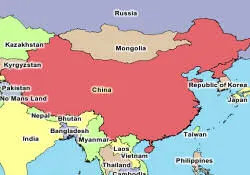
Yau highlighted Central Asia as a diversification market. He mentioned that a Kazakhstan fund is preparing to issue bonds in Hong Kong. He added that an airport company in Uzbekistan has signed a cooperation agreement with a Hong Kong firm to help develop the airport there.
The developments follow a five-day trip to Kazakhstan and Uzbekistan in June led by Chief Executive John Lee Ka-chiu. By the end of that visit, government and business representatives had signed 96 cooperation agreements and memorandums of understanding.
'We are also keeping a close eye on [Central Asia], hoping to explore and develop new markets, and have more cooperation with new economies,' Yau said.
Taken together, Yau's remarks signal a deliberate push to reduce reliance on AI-driven demand. This push spans re-export logistics, professional services, the exhibition sector, and new partnerships in emerging markets, all aimed at reinforcing Hong Kong's long-term role in global trade.