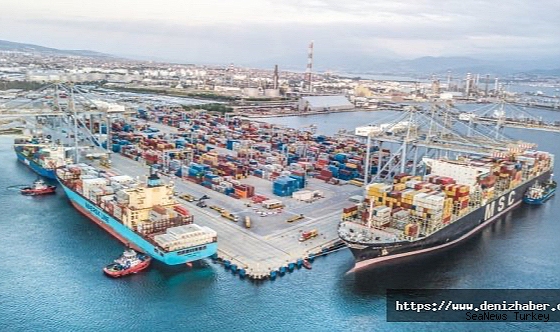
Hong Kong's port throughput rose 24.9% in September 2026, marking a positive trend for the year after previous declines.
The Port of Hong Kong handled 1,185,000 TEU in September 2026, up 24.9% year on year. This gain builds on a 22.1% rise in August and lifts cumulative throughput for the year into positive territory.
The Port of Hong Kong has previously handled more than 20 million TEU in a single year. September's total of 1,185,000 TEU was 24.9% higher than a year earlier, according to the Hong Kong Maritime and Port Development Board (HKMPDB). This result followed August's throughput of 1,278,000 TEU, which was up 22.1% year on year.
Together, the two months brought January-September throughput to 9.95 million TEU, up 2.8% from the same period in 2025. This reverses a first half in which volume ran 3.0% below the prior year. The turnaround places the port on course for its first annual increase since 2017.
Part of September's increase reflects a weak comparison base. Typhoon disruption reduced Hong Kong's volume in September 2025 to an implied level of about 949,000 TEU, so some of this year's 24.9% growth comes from recovery against a depressed month rather than new demand.
August points to a more durable improvement. Its comparison month had no gale signal, and its 22.1% rise came from an undistorted base of roughly 1.05 million TEU. The recovery therefore started before the typhoon-affected comparison came into play. That timing suggests the upturn reflects real growth in cargo moving through the port, not merely a statistical quirk.
The increase has not been spread evenly across the port. The gains sit mainly outside the two Kwai Tsing terminals that COSCO Shipping Ports (CSP) reports. Hong Kong's recent growth is therefore being driven by other terminal operators and cargo-handling channels across the port.
For cargo owners and the forwarders who route their freight, this split matters. Where volume grows inside a port affects berth availability, yard congestion, and schedule reliability. It also shapes the choice of carriers and services calling at each facility.
The 2026 result stands out against Hong Kong's longer-term record. HKMPDB figures show the port's annual throughput has risen in only one year since 2015. That year was 2017, when volume grew by 4.8%.
The port's full-year position now looks secure. Hong Kong handled 12.995 million TEU in 2025. For 2026 to finish below that total, fourth-quarter volume would need to fall more than 8% short of the same quarter last year.
Based on the cumulative figures, the port handled about 3.32 million TEU in the fourth quarter of 2025. To stay level with last year, Hong Kong needs about 3.05 million TEU in the final three months of 2026. That works out to an average of just over 1.0 million TEU per month. August and September averaged more than 1.23 million TEU, so the port would need a sharp and sustained drop in activity to miss the mark.