HMM's Q3 2026 results show a 34% operating margin, with significant revenue and profit growth, surpassing competitors Maersk and ONE.
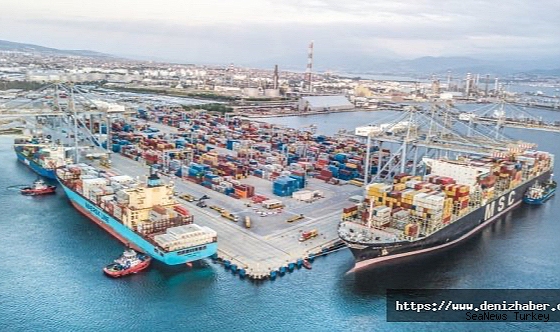
South Korea's HMM has reported its financial results for the third quarter of 2026, posting quarterly revenue of KRW 4.13 trillion (approximately USD 3.1 billion), a 52% increase year-on-year. Operating profit reached KRW 1.39 trillion (approximately USD 1.04 billion), up 370% year-on-year, while net profit climbed to KRW 1.54 trillion (approximately USD 1.15 billion), representing a 405% increase over the same period last year. These figures translate to a quarterly operating margin of approximately 34% - a level that, according to Korean media reports, exceeds the margins reported by Maersk's ocean segment (20.6%) and ONE (21.6%) for the same period. The result marks HMM's highest single-quarter operating profit since Q3 2024, nearly tripling the KRW 354.1 billion recorded in the preceding quarter.
The primary driver behind HMM's margin advantage is freight rate performance. Korean media reported that the average Shanghai Containerized Freight Index stood at 3,407 points in Q3, compared to 1,481 points in the same period last year - an increase of more than 100%. Crucially, HMM's cost base did not rise in proportion. The company explained to Korean media that fixed costs remained broadly stable, meaning the bulk of the rate increase flowed directly to the profit line. While bunker costs rose amid geopolitical tensions, freight rate gains outpaced fuel cost increases, absorbing the incremental expense. This divergence between rapidly rising freight rates and a largely stable cost structure forms the central logic behind the significant margin expansion achieved in the quarter.
One notable feature of the financial results is that net profit of KRW 1.54 trillion exceeded operating profit of KRW 1.39 trillion. According to Korea Financial News, the difference is attributable primarily to interest income generated by HMM's substantial cash reserves. The scale of profitability is such that the company's accumulated liquidity is itself producing material returns - a reflection of the cash generation capacity built during the current freight rate upswing. While this structural contribution may diminish if freight rates decline, it provided meaningful additional support to the current period's earnings.
Within the container segment, Q3 revenue reached KRW 3.60 trillion and operating profit KRW 1.25 trillion, representing year-on-year increases of 53.6% and 335.3% respectively. HMM indicated that its hub-and-spoke network - connecting major ports with regional bases - has been deployed strategically to capture higher-yield cargo. This network model supports improved vessel utilization and per-box revenue during periods of rising rates, though it places corresponding demands on transshipment coordination and feeder service integration.
A second growth vector has emerged from HMM's bulk operations. For the first three quarters of the year, the bulk segment recorded operating profit of KRW 378.4 billion, an increase of 418.5% year-on-year. Its share of total group operating profit expanded from 6.4% in the same period last year to 18.8% - approaching a threefold increase within twelve months. This transformation reflects deliberate structural repositioning: HMM explained to Korean media that, beginning in the second half of last year, it reduced exposure to short-term charter arrangements and increased the proportion of longer-term, higher-quality contracts, stabilizing bulk revenues against spot market volatility. Fleet scale has expanded in parallel, growing from 44 bulk vessels at the end of Q1 last year to 60 vessels at the end of Q3 this year, a 36% increase, with a further 22 vessels under construction that will bring the fleet to 82 upon full delivery. The vessel type portfolio has also broadened beyond dry bulk carriers and tankers to include car carriers, gas carriers, and multipurpose vessels. HMM, an organization built on container shipping, is actively developing its bulk division as a second profit engine - one positioned to provide a degree of offset should container freight rates soften.
HMM's medium-to-long-term strategic plan, announced in July of this year, targets cumulative investment of KRW 29 trillion by 2030, expanding the fleet to 166 container vessels and 110 bulk carriers. The latest financial results reaffirm that plan. KRW 6 trillion has been deployed in the current year alone, with cumulative investment exceeding KRW 12 trillion since March of last year. Alongside the results, HMM announced its shareholder return framework: according to Korea Financial News, the company has committed to allocating at least 30% of annual net profit to dividends and share buyback cancellations through 2030, superseding the previous reference of a 5% dividend yield. The formalization of this profit distribution commitment in a public announcement reflects the company's confidence in the durability of its cost structure and cash flow management.
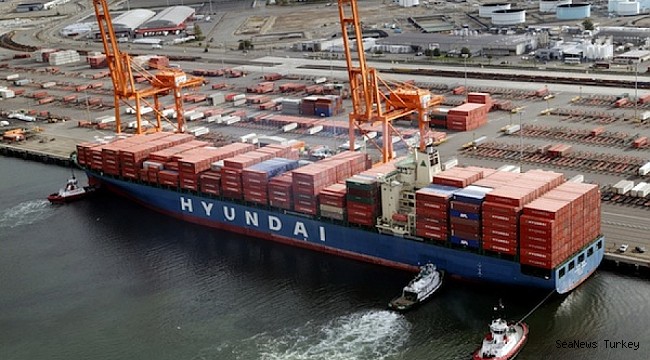
According to Alphaliner data, HMM currently ranks eighth globally by capacity, operating 97 vessels with 1.034 million TEU of deployed capacity, with a further 44 vessels and 328,000 TEU on order. The delivery of this newbuilding program will materially increase capacity on European and emerging market trade lanes. For freight forwarders and shippers, HMM's fleet expansion and the structural strengthening of its bulk division carry implications for capacity availability and freight rate dynamics on relevant trade corridors. The pace of newbuilding deliveries, lane deployment decisions, and the evolving profit composition between container and bulk operations warrant continued attention.