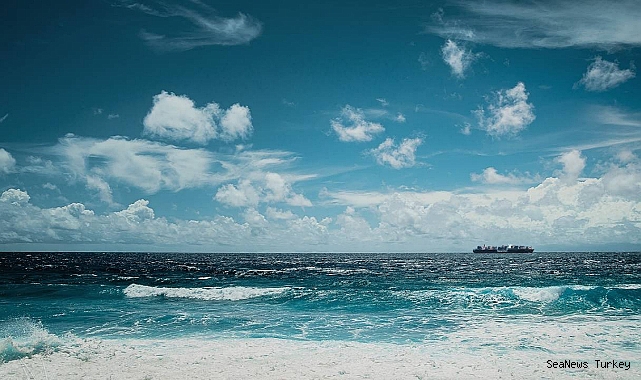
HMM Platinum, fire-damaged, awaits port approval at Ngqura, causing uncertainty for cargo owners as salvage operations continue.
The fire-damaged containership HMM Platinum remains offshore South Africa while it waits for permission to berth at the Port of Ngqura, as reported by Southern Africa Freight News. The Transnet National Ports Authority (TNPA) has confirmed that it received a request for the vessel to enter the port. Clearance still depends on consultations with the relevant authorities and on the availability of berths, equipment, and operational resources. For cargo owners with goods aboard, the delay extends uncertainty over cargo condition, release timelines, and financial exposure.
TNPA has not confirmed when, or whether, HMM Platinum will be allowed to berth at Ngqura, the deepwater port in the Eastern Cape's Nelson Mandela Bay. The vessel remains outside South African port limits.
Durban was initially considered as a possible port of refuge, and other South African options were explored afterward. TNPA has now confirmed that the current request concerns Ngqura.
The Liberian-flagged vessel was sailing from Kattupalli, India, to Santos, Brazil, when a fire reportedly broke out in a container off southern Madagascar in early October. All 24 crew members were reported safe.
HMM Platinum is carrying approximately 2,300 containers. Salvage specialist SMIT is assisting the vessel under a Lloyd's Open Form agreement. This standard international salvage contract is traditionally based on the 'no cure, no pay' principle.
In an October 23 update, HMM stated that firefighting operations had reached the final dampening-down stage. The company indicated that further measures and investigations would follow once the fire was fully extinguished.
The extent of damage to the vessel and its cargo remains unconfirmed. However, containers stowed close to the fire may have suffered heat, smoke, or water damage. Until the vessel reaches port and an assessment is carried out, cargo owners have limited visibility into the condition of individual shipments.
Cargo interests are expected to provide salvage security before affected cargo can be forwarded or released. Salvage security is a financial guarantee covering each cargo owner's share of the salvor's reward, typically arranged by the cargo insurer.
Claims specialist WE Cox has also indicated that a general average declaration remains possible. General average is a long-standing maritime principle. Under it, extraordinary costs incurred to save a vessel and its cargo from a common danger are shared proportionally among the ship and cargo interests. If general average is declared, cargo owners could be required to provide additional security toward these shared costs, even if their own containers were not damaged.
These obligations carry practical consequences for shippers, importers, and the forwarders who manage their freight. Owners with goods aboard HMM Platinum face potential delays in onward delivery to Brazil, added costs, and pressure on customer commitments and inventory planning. Cargo interests are likely to benefit from early contact with their insurers and logistics partners. This can help confirm cover, prepare the required security, and reduce the time between the vessel's arrival in port and the release of cargo.