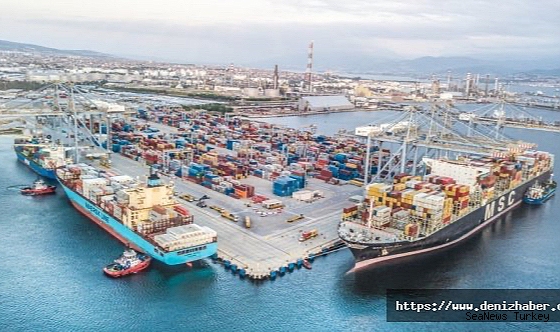
HHLA sees a 5.4% increase in container volumes to 6.3 million TEU in 2025, despite supply chain challenges, with a focus on efficiency and sustainability.
Hamburg-based port operator HHLA (Hamburger Hafen und Logistik) reported higher container volumes and revenue in 2025, with activity rising despite supply chain disruptions, as reported by the Netherlands' Fresh Plaza.
HHLA operates major seaport terminals in Hamburg, Tallinn, Trieste, and Odessa.
HHLA chief executive Jeroen Eijsink stated that the company achieved operational growth in a difficult market and will focus on reliability, efficiency, and sustainability in 2026. He noted that automation is boosting efficiency and strengthening sustainable processes.
Revenue in the Port Logistics subgroup rose by 10.1 percent to US$1.87 billion, while EBIT increased by 22.8 percent to $157.6 million. However, profit after tax fell to $1.2 million due to tax-related effects.
Container handling volumes grew by 5.4 percent to 6.3 million TEU, with Hamburg terminals up by 4.8 percent to six million TEU. Traffic rose with the Far East, South America, Africa, Australia, and the Middle East, while North American volumes declined.
Route changes linked to Red Sea disruptions lifted cargo volumes with European ports, including the UK, Belgium, Spain, and the Netherlands. Feeder traffic increased with Finland and Poland, but declined with Estonia, Latvia, and the UK.
International container terminal throughput rose by 19.2 percent to 339,000 TEU, supported by growth in Italy and resumed activity in Odessa. Segment revenue in container operations rose by nine percent to US$918.8 million, while EBIT fell by 6.4 percent to $80.5 million due to higher personnel costs.
Intermodal transport volumes increased by 10.9 percent to two million TEU, with rail up by 11.2 percent to 1.7 million TEU and road up by 8.7 percent to 263,000 TEU. Intermodal revenue rose by 12.0 percent to US$867.9 million, while EBIT climbed by 23.9 percent to US$112.9 million, with margins improving to 13.0 percent.
Operational challenges persisted, linked to construction work on transport routes and high utilization levels at North German ports.