Guangzhou Nansha Phase IV terminal begins foreign trade operations, enhancing the Greater Bay Area's international trade capabilities.
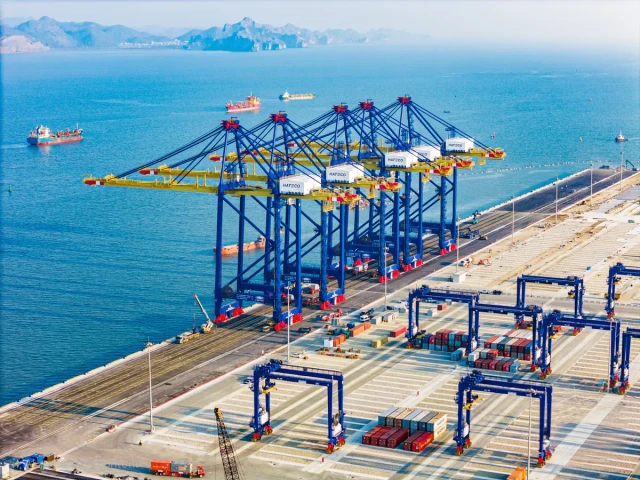
Guangzhou Nansha Phase IV fully automated terminal has officially commenced foreign trade vessel operations, marking a substantive advance for the first purpose-built fully automated terminal in the Guangdong-Hong Kong-Macao Greater Bay Area within the domain of international trade.
The operation not only validated the system stability and collaborative capability of the automated terminal under foreign trade conditions, but also demonstrated the exemplary potential of the next generation of intelligent ports, injecting new momentum into the development of a world-class port cluster in the Greater Bay Area.
Foreign trade business at Nansha Port has maintained a positive trajectory throughout the year. From January to September, foreign trade container throughput at Nansha Port grew 19 percent year-on-year. To date, the port has opened 220 container liner routes, of which 185 are international trade routes, with the route network continuing to expand and outward radiating capacity advancing steadily. The densification of routes and the growth in foreign trade container volumes have provided the cargo foundation for the fully automated terminal to absorb international trade operations, while simultaneously raising the bar for port operational efficiency, customs coordination, and equipment reliability.
To ensure the smooth handling of foreign trade vessels and the efficient clearance of cargo, Guangzhou Port Group strengthened communications with shipping companies, inspection authorities, and port-related units, conducting multiple rounds of in-depth coordination. The Nansha Phase IV operations team planned each stage in advance: the operations team mapped critical nodes along import and export mainlines in accordance with the actual operating conditions of the automated terminal, refined core processes, and optimized the end-to-end customs clearance workflow; the technical team focused on port supervision requirements, conducting joint commissioning and stress testing of automated equipment to ensure reliable system and equipment performance; and functional departments coordinated closely across safety and environmental compliance, personnel scheduling, and service support to underpin the stable and orderly conduct of foreign trade operations.
In the specific operational process, loading and unloading operators transitioned from the frontline to an intelligent control center, leveraging technologies including automatic anti-sway and anti-twist systems, vessel profile scanning, intelligent container landing, and OCR recognition to execute precise intelligent container handling. The automated information system interconnects quay cranes with automated guided vehicles to achieve efficient interaction. The automated guided vehicles employ intelligent algorithms and the BeiDou Navigation Satellite System to independently plan optimal routes, rapidly transferring containers to the designated yard areas, where automated rail-mounted gantry cranes complete intelligent stacking with precision. The system is also capable of automatically generating the optimal operating sequence based on vessel stowage plans and real-time yard conditions, reducing equipment idle running and wait times, and converting the advantages of automation into perceptible gains in efficiency.
The successful completion of this foreign trade vessel operation confirms that Nansha Phase IV has formally attained the capability to handle international trade vessels, further consolidating and elevating the comprehensive foreign trade service capacity of Nansha Port, and providing stronger support for hinterland enterprises seeking access to global markets. For freight forwarders and foreign trade enterprises, the assumption of international trade operations by the automated terminal necessitates close attention to the procedural requirements governing port declaration, inspection, container pick-up and return, and transport coordination. Parties are advised to confirm workflows with the terminal, shipping companies, and customs brokers in advance to fully realize the efficiency gains that this new capability delivers.
Looking ahead, Guangzhou Port Group will seize this milestone as an opportunity to deepen cooperation with global shipping enterprises, work in concert with port stakeholders to optimize customs clearance services, and elevate Guangzhou's standing as an international shipping hub - demonstrating greater ambition in supporting the Greater Bay Area's foreign trade economy and advancing the construction of a new development paradigm.