The easing of major bottlenecks in container shipping may reshape supply and demand, impacting freight rates globally.
The global container shipping market is experiencing significant changes as key bottlenecks begin to ease, potentially reshaping supply and demand dynamics. Improved conditions in the Suez Canal, Panama Canal, and Strait of Hormuz are expanding effective capacity, but these developments could also intensify pressure on freight rates.
One major shift is the gradual restoration of Red Sea and Suez Canal routing. According to maritime consultancy Sea-Intelligence, 27% of Asia-Europe capacity that had been rerouted around the Cape of Good Hope has returned to the Suez Canal. With carriers like Maersk and CMA CGM reinstating services, and further stability in the region expected, capacity on this trade lane could increase by roughly 10%.
Meanwhile, the Panama Canal is seeing improved transit efficiency following restrictions caused by drought. Rising water levels and enhancements to the lock system are restoring capacity, benefiting trade routes serving the US East Coast and Caribbean. In the Strait of Hormuz, while disruptions in container shipping have been limited, easing tensions in the region could further stabilize energy transport and related trade flows.
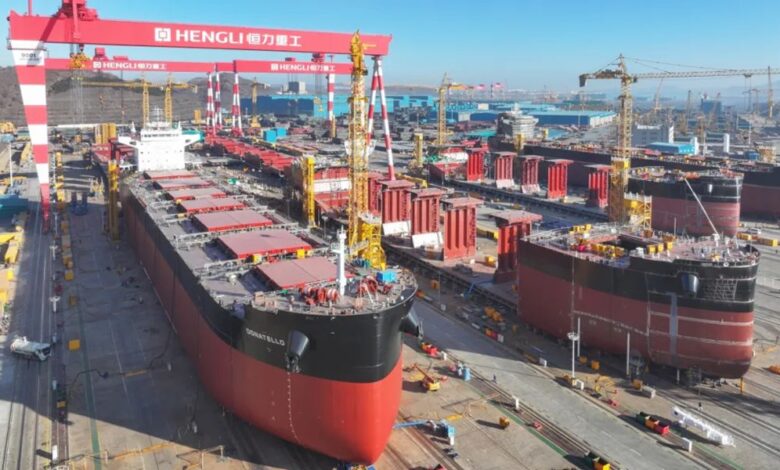
However, rising supply poses challenges. The global container ship orderbook remains elevated, with numerous newbuild vessels set to enter the market over the coming years. If demand growth fails to match this influx, the industry could face oversupply. Carriers may respond by cutting sailing frequencies, reducing speeds, or retiring older vessels to manage capacity.
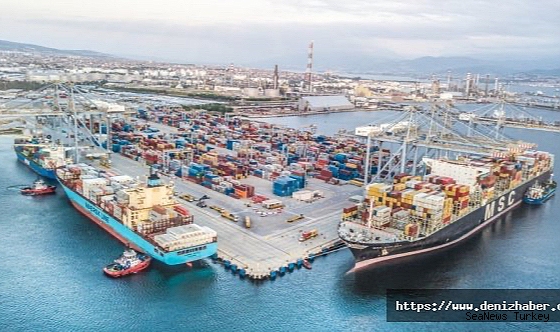
Port congestion remains a key factor that could act as a short-term buffer. As more vessels resume Suez Canal transit, European ports, already experiencing delays, could see further congestion. This would slow vessel turnaround times and absorb some excess capacity. Additionally, carriers are likely to continue using tools like blank sailings and slow steaming to regulate the market.
Freight rates are expected to face downward pressure as capacity increases, especially on routes to Europe and the Mediterranean. However, the extent of rate changes will depend on demand recovery and carrier strategies. With the container shipping market transitioning from supply constraints toward rebalancing, the coming months will be shaped by the pace of new capacity deployment and supply-demand adjustments.