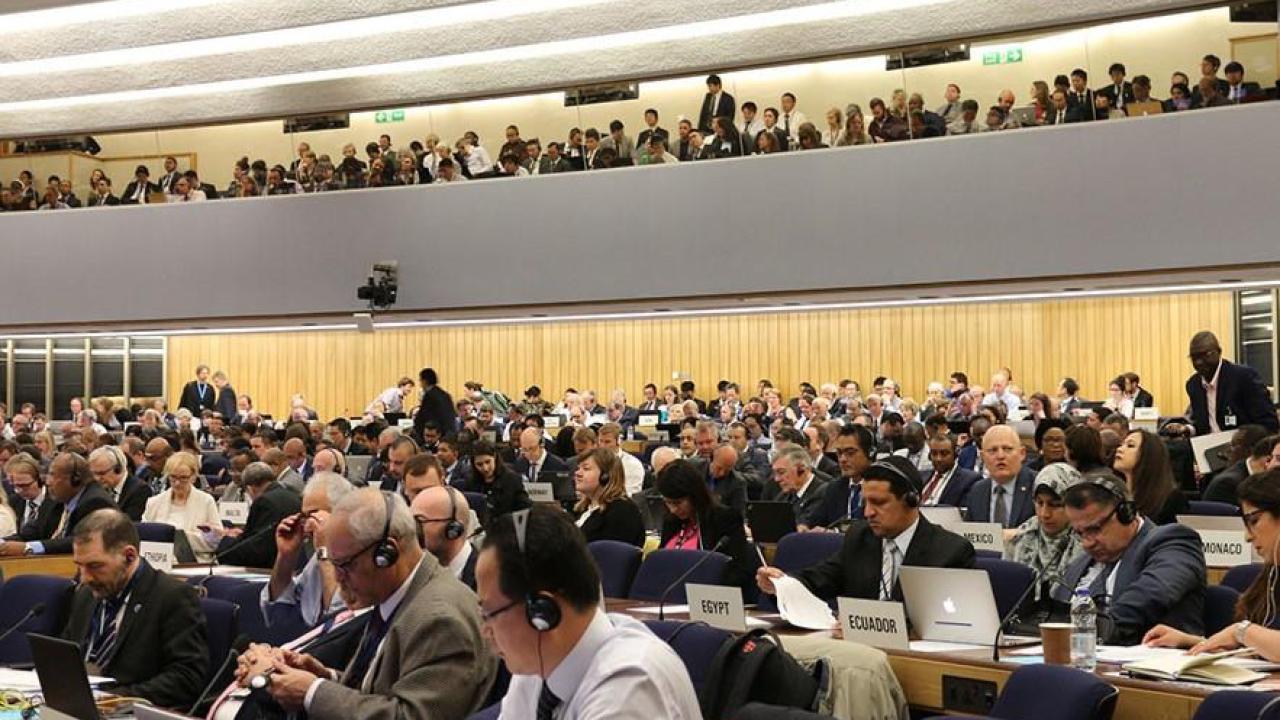
In June, the IMO made strides in marine protection, safety, and decarbonization, addressing key issues like emissions and plastic pollution.
The International Maritime Organization (IMO) continued its efforts in June towards the protection of the marine environment, strengthening maritime safety, and achieving decarbonization goals in shipping. Significant progress was made in various areas, ranging from negotiations on reducing greenhouse gas emissions to combating marine plastic pollution, from alternative fuels to enhancing maritime safety capacity, as outlined in the latest developments published by the IMO.
During the 84th session of the IMO Marine Environment Protection Committee (MEPC), topics such as reducing greenhouse gas emissions from ships, preventing marine plastic debris, ballast water management, biofouling, and underwater noise were discussed. It was decided to hold intersessional meetings to achieve broader consensus on medium-term measures being carried out under the IMO Net-Zero Framework.
The Committee also approved the establishment of a new Emission Control Area in the Northeast Atlantic and endorsed the 2026 Strategy and Action Plan aimed at reducing marine plastic debris from ships. In this context, the goal of reducing plastic waste discharge from ships to zero by 2030 was reaffirmed.
With the support of the IMO, a workshop held in Mozambique addressed the preparations for the establishment of a National Maritime Security Committee to strengthen inter-agency cooperation. The event, which involved public institutions, resulted in the creation of a roadmap for information sharing, joint planning, and the development of coordinated response capacity.
This activity was carried out as part of a regional project funded by the European Union and jointly implemented by the IMO, INTERPOL, and the United Nations Office on Drugs and Crime.
The IMO participated in the Asia and Pacific Maritime Safety Agencies Presidents Meeting held in Honiara, Solomon Islands, sharing technical cooperation activities and efforts for environmental protection. The meeting highlighted topics such as empowering women in maritime, the welfare of seafarers, maritime safety, and combating marine plastic pollution.
Participants were invited to support the theme of the 2026-2027 World Maritime Day, 'From Policy to Practice: Enhancing Excellence in Maritime.'
The IMO continued its capacity-building activities for decarbonization in the maritime sector by organizing national workshops in Vietnam and the Philippines in collaboration with the World Maritime University. The discussions focused on improving greenhouse gas emission data, preparing national action plans, and developing regulations aligned with IMO targets.
Activities conducted under the SMART-C GHG Project, financed by the Republic of Korea, aim to contribute to the implementation of the 2023 IMO Greenhouse Gas Reduction Strategy by participant countries.
A technical seminar held at the IMO Headquarters addressed the current and future applications of methane-based fuels such as LNG, biomethane, and e-methane in the maritime sector. The event evaluated the sustainability of fuels, safety aspects, and their contributions to emission reduction.
The seminar was conducted as the fourth technical event organized under the IMO Future Fuels and Technology Project.
Under the GloLitter Partnerships Project led by the IMO and FAO, progress has been made in preparing a Port Waste Management Plan for Tanjung Priok Port in Indonesia. The feasibility process for establishing port waste reception facilities has been initiated, aiming to prevent the discharge of plastic waste from ships into the marine environment.
As part of the GloNoise Partnership activities conducted by the IMO, national workshops held in various countries assessed the impacts of underwater noise from ships on marine ecosystems. Approximately 200 participants engaged in discussions on measurement methods, data collection processes, and mitigation measures.
The URN Toolkit developed in this context is planned to be completed within the year and made available for use by IMO member states.
Continuing its efforts to protect the marine environment, enhance maritime safety, and ensure the sustainability of international maritime transport, the IMO will also continue its technical cooperation and regulatory activities aimed at transforming the global maritime sector in the upcoming period.
Source: SeaNews Türkiye