Container fleet growth is set to exceed demand in 2027, intensifying supply pressures and impacting freight rates and shipping strategies.
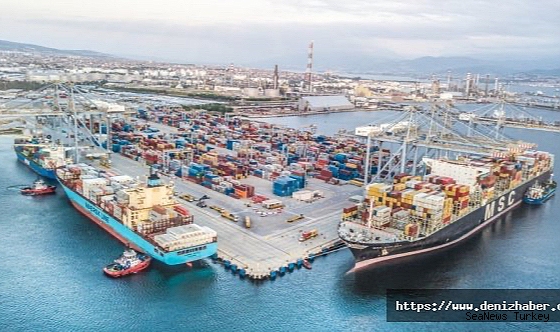
The global container fleet has already surpassed 34 million TEUs, and the pressure on shipping capacity is set to intensify. According to BIMCO's latest Container Shipping Market Overview & Outlook, published on September 23, 2026, under the headline 'Supply pressure is mounting,' fleet expansion is set to accelerate sharply next year, reshaping the supply-demand balance that cargo owners rely on for stable rates and reliable schedules.
BIMCO expects container fleet capacity to grow by 4.6% in 2026 before accelerating to 9% in 2027. This acceleration reflects a substantial order book, which now exceeds 14 million TEUs, equivalent to around 42% of the existing fleet. With recycling activity expected to remain low, BIMCO anticipates that new vessel deliveries will translate almost directly into faster overall fleet growth rather than being offset by scrapping.
For shippers managing high volumes across global trade lanes, expanding capacity carries a clear implication. A market weighted toward oversupply typically eases upward pressure on freight rates, strengthening the negotiating position of cargo owners entering long-term contracts. Freight forwarders structuring service packages for diverse client bases, and importers focused on controlling total landed costs, stand to benefit from the same dynamic.
Demand has remained relatively strong during 2026. BIMCO reports that global container volumes rose 5.1% year-on-year during the first seven months of the year. Robust growth in trades outside the Persian Gulf more than offset lower volumes to and from South and West Asia.
Exports from East and Southeast Asia accounted for more than half of the year-to-date increase. Head-haul and regional volumes climbed 6.3%, while back-haul volumes remained unchanged. As a result, ship demand has again grown faster than overall cargo volumes, a pattern that has helped absorb incoming capacity for now.
Current market conditions are also supported by continued rerouting around the Cape of Good Hope. Longer sailing distances absorb additional vessel capacity, tightening effective supply, while some vessels remain unavailable within the Persian Gulf. Together, these factors have helped keep the market in balance despite the growing fleet.
For cargo owners, this rerouting has meant longer transit times and the need for more careful inventory planning. The extended distances have also kept effective capacity in check, supporting rate stability even as new ships enter the water.
A gradual return of container services to the Suez Canal could significantly change the supply-demand balance. Some liner operators have already begun returning services to Suez routings.
BIMCO estimates that if gradual normalization continues during 2027, ship demand growth could end five percentage points below its current forecast. Once routings fully normalize, ship demand could be around 10% lower than under a scenario in which Cape of Good Hope routing remains the preferred option. Such a shift would release substantial vessel capacity back into the market at the same time as the fleet continues to expand.
Shorter Suez routings would cut transit times and could ease the cost burden of longer voyages. For importers focused on speed to market and cash flow, faster passage is a welcome prospect. Yet the same normalization would add capacity to an already-expanding fleet, reinforcing the downward pressure on rates.
BIMCO continues to assess two scenarios for the Strait of Hormuz. The first assumes the Strait remains effectively closed throughout 2026 and 2027. The second assumes normal transit conditions throughout 2027. Under both scenarios, BIMCO expects ship supply to grow faster than demand in 2027.
The consistency of that conclusion across both scenarios underscores the scale of incoming capacity. Regardless of how conditions in the Strait develop, the fleet is set to expand faster than the cargo available to fill it.
Demand also faces wider economic risks. Higher energy prices are weighing on consumer confidence in the United States and the European Union, while growth in Chinese retail sales volumes has slowed. These pressures could temper demand at precisely the moment supply accelerates.
Against this backdrop, accelerating vessel deliveries and a possible return to shorter Suez routings could weaken the container shipping supply-demand balance during 2027. For shippers, forwarders, and importers alike, the outlook points to a market shifting in favor of cargo interests. The mounting supply pressure BIMCO describes is not merely a statistic on fleet growth—it is a signal to review contract strategies, sharpen risk management, and position supply chains to capture the advantage that a well-supplied market can deliver.