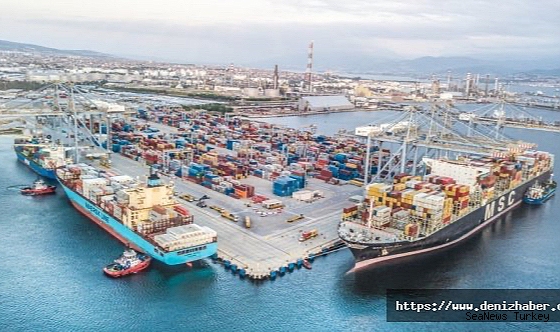
Port of Santos sets a record with 538,200 TEUs in August 2026, marking a 3.9% increase from last year and reinforcing its role in Brazil's trade.
The Port of Santos, Latin America's largest port complex and the gateway for roughly a quarter of Brazil's foreign trade, handled 538,200 twenty-foot equivalent units (TEUs) in August 2026, the highest monthly container volume in its history, according to data released Friday, September 25, by the Santos Port Authority (APS).
The August container total rose 3.9% from the same month in 2025, reinforcing Santos as a reliable anchor for shippers managing high-volume, time-sensitive supply chains across global markets.
Total cargo throughput reached 125.9 million metric tons in the first eight months of 2026, up 3.1% from the January–August periods a year earlier. Outbound cargo totaled 93.1 million tons, a 2.9% rise from 90.5 million tons, while inbound volumes climbed 3.6%, from 31.7 million to 32.8 million tons.
The monthly picture proved more mixed. In August alone, total throughput reached 16.4 million metric tons, a slight year-over-year decline of 0.5%. Outbound cargo eased 0.7%, from 12.1 million to 12.0 million tons, while inbound volumes edged up 0.2%, from 4.38 million to 4.39 million tons.
Container throughput at Santos totaled 4 million TEUs from January through August, also a record for the first eight months of a year. The figure stood 3.9% above the corresponding period in 2025. A TEU, or twenty-foot equivalent unit, is the standard measure used to gauge container traffic and the capacity that shippers and forwarders rely on to plan routing and inventory flows.
Liquid bulk throughput reached 1.6 million metric tons in August, up 6.3% from the same month in 2025. For the year through August, liquid bulk totaled 13.4 million tons, up 9.3% and a record for the period.
Dry bulk cargo reached 64 million metric tons in the first eight months of 2026, up 2.7% year over year and the highest volume recorded for the period. Soybeans accounted for 49.5% of dry bulk movements, followed by sugar at 19.9% and soybean pellets at 11.9%.
The Port of Santos accounted for 28% of Brazil's foreign trade flows in the first eight months of 2026. China remained the leading trading partner, representing about 31.8% of the international trade transactions handled through the port as either an origin or destination.
Sao Paulo state held the largest share of foreign trade moving through Santos, with trade involving the state totaling $30.3 billion, or 50.9% of the total. The APS reported this state-level breakdown for the first quarter of 2026.
The consecutive records across container, liquid bulk, and dry bulk categories position Santos as an increasingly dependable node in Brazil's trade infrastructure, offering the capacity and reliability that cargo owners, forwarders, and importers require to keep goods moving and commitments intact.