CMA CGM and RSGT's $434 million deal boosts Jeddah Terminal 4, enhancing Red Sea trade and global supply chain reliability.
A major shift is underway at one of the world's busiest maritime crossroads. CMA CGM Group, the French shipping and logistics giant operating across more than 160 countries, has moved to deepen its presence in Saudi Arabia through a landmark agreement with Red Sea Gateway Terminal (RSGT) and the Saudi Ports Authority (Mawani). The transaction, valued at approximately US$434 million (SAR 1.6 billion), establishes a joint development and operating agreement for Terminal 4 at Jeddah Islamic Port, positioning both organizations to expand container capacity along a trade lane that carries a substantial share of global commerce.
For cargo owners weighing reliability, cost, and visibility across their supply chains, the development signals meaningful change at a strategic chokepoint linking Asia, Europe, and Africa.
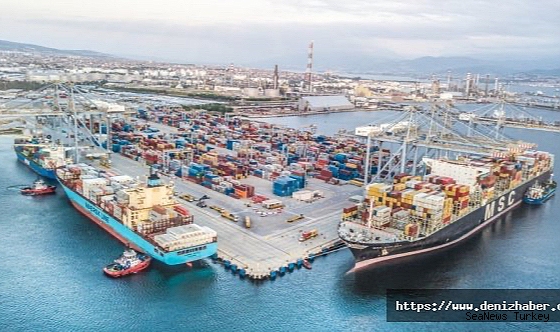
Under the definitive agreements signed in Paris, CMA CGM and RSGT will jointly develop and operate Terminal 4 as a dedicated container facility within RSGT's existing concession at Jeddah Islamic Port. The project represents an initial investment of approximately US$434 million to construct a state-of-the-art facility featuring new deep-water berths and 10 new ship-to-shore gantry cranes designed to accommodate Ultra Large Container Vessels (ULCVs).
The partnership pairs CMA CGM's global network of shipping lines, terminals, and inland logistics with RSGT's established operational position at Jeddah. The new Terminal 4 development is expected to add up to 2.6 million TEUs of annual handling capacity, lifting throughput, sharpening operational efficiency, and reinforcing the port's role as a primary regional transshipment hub.
Jeddah Islamic Port ranks among the most important container gateways in the Middle East. Its position on the Red Sea places it directly on the shipping corridor connecting the Suez Canal to the Bab-el-Mandeb Strait, a route that traditionally handles a large volume of trade between Asia and Europe.
The significance is straightforward. Goods flowing between manufacturing centers in Asia and consumer markets in Europe frequently pass through this corridor. A well-run, high-capacity terminal in Jeddah reduces dwell times, streamlines transshipment, and offers carriers a dependable hub to consolidate and redistribute cargo across the region.
For shippers, that translates into practical advantages:
- Faster transshipment between mainline and feeder services serving the Red Sea, the Gulf, and East Africa
- Greater route flexibility as carriers add capacity and connections through a strengthened hub
- More predictable transit at a critical waypoint on the Asia–Europe trade lane
Capacity is the headline benefit. By combining CMA CGM's fleet and network with RSGT's terminal infrastructure, the partnership aims to increase the volume of containers the facility can process without adding congestion. Additional berth availability and continued investment in automation are intended to keep cargo moving even during seasonal demand spikes.
Reliability follows from capacity. When a terminal operates with headroom rather than at its limits, vessels spend less time waiting for a berth, and cargo spends less time sitting on the quay. For cargo owners managing tight delivery windows and long-term customer commitments, reduced port dwell time directly supports on-time performance.
The alignment between a carrier and a terminal operator also matters. When the company moving the cargo holds a direct operational stake in the facility handling it, the incentives to keep operations efficient and berths available are closely matched. That coordination can shorten the gap between vessel arrival and cargo release.
CMA CGM has pursued a consistent strategy of investing in terminals along its core trade lanes, building an integrated network that pairs ocean services with port and inland assets. The Jeddah investment fits that pattern, extending the group's presence at a gateway central to Saudi Arabia's Vision 2030 ambitions to become a leading global logistics center.
The recent disruptions in the Red Sea region have reminded shippers how sensitive this corridor is to instability. Investments that expand capacity and improve terminal resilience help build redundancy into the network, giving carriers and their customers more options when conditions change.
For cargo owners, several outcomes are worth watching:
- Route optimization as a strengthened Jeddah hub opens additional connections across the Red Sea, the Middle East, and East Africa
- Cost control driven by improved terminal productivity, which can ease the port-related charges that feed into total landed cost
- Supply chain stability supported by a hub built to absorb volume and adapt to shifting trade flows
This transaction is more than a routine expansion at a single port. It reflects a deliberate effort to reinforce one of the most strategically important links in global trade at a moment when reliability along the Red Sea has never been more valuable to businesses moving goods worldwide.
For shippers, the practical measures matter most: dwell times, berth availability, transshipment speed, and predictable schedules. A better-capitalized, higher-capacity Jeddah terminal, backed by a carrier with a direct stake in its performance, points toward a more dependable gateway for cargo crossing between East and West. As CMA CGM and RSGT advance this partnership, the goal is clear: to build a hub capable of protecting the value, timing, and security of global supply chains.