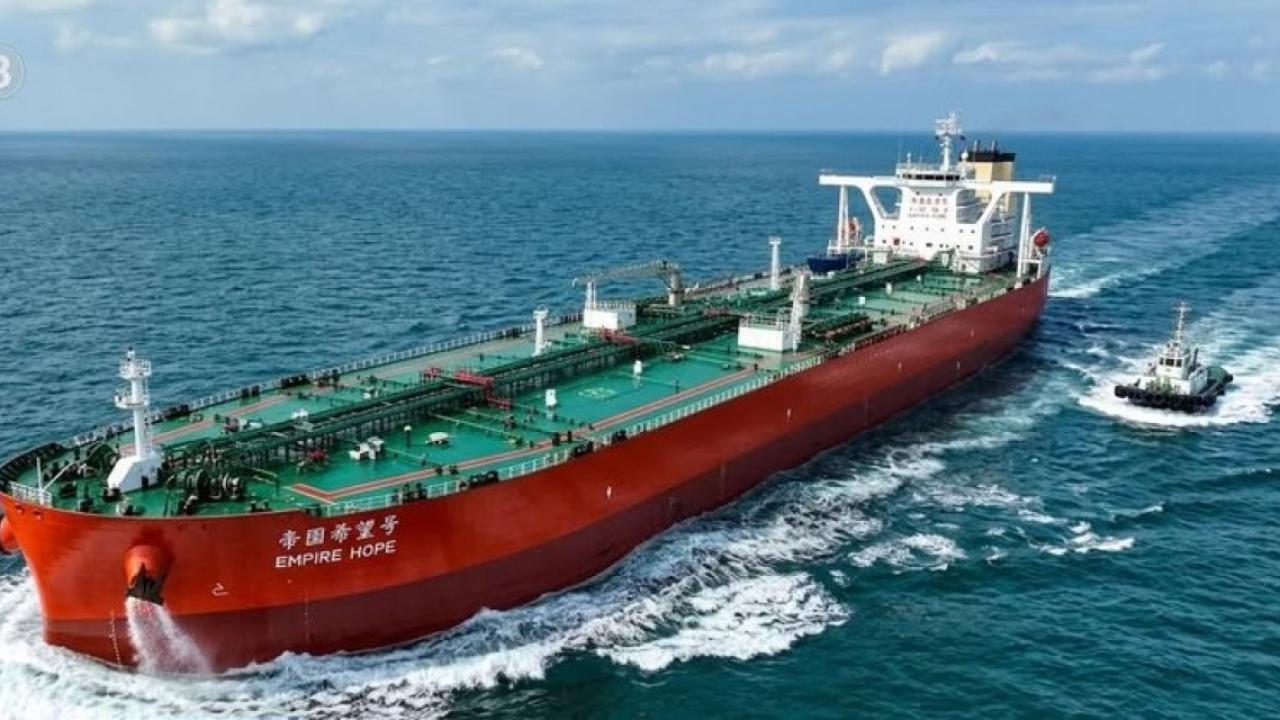
Security risks in the Red Sea drive global shipping via the Cape of Good Hope, keeping container freight indices elevated.
Due to the ongoing security risks in the Red Sea, the routing process of global shipping operators (Maersk, MSC, CMA CGM) around the Cape of Good Hope continues to keep container freight indices (SCFI) at high levels.
The Shanghai Containerized Freight Index (SCFI), published by the Shanghai Shipping Exchange, stood at 3,062.95 points in the week of July 24, 2026. Although the index decreased by 17.36 points compared to the previous week, it maintained its position above 3,000 points. At the end of June, the SCFI had reached 3,239.64 points, marking a rise for nine consecutive weeks.
The high trend in the freight market is not solely due to increased demand. The need for ships to navigate around the Cape of Good Hope instead of the Suez Canal due to security issues in the Red Sea extends voyage times and requires more vessels to maintain the same weekly service frequency. Thus, the effective container capacity in the market is decreasing.
This situation is particularly pronounced on the Asia-Europe route. According to Flexport's market assessment in mid-July, a significant portion of the canceled voyages in Asia-Europe services is linked to the capacity pressure created by the longer routes via the Cape of Good Hope. The company notes that longer transit times via the Cape of Good Hope should also be taken into account in the third quarter.
The routing decisions of Maersk, MSC, and CMA CGM are closely monitored.
The routing decisions of leading global container shipping operators Maersk, MSC, and CMA CGM are critically important for the market's capacity balance.
In March, Maersk temporarily redirected some of its services from the Suez Canal to the Cape of Good Hope due to the deteriorating security situation. The company stated that it would prioritize the Suez route if transit through Bab el-Mandeb became safe again.
However, with a partial change in security conditions in August, new steps began to be taken towards returning to the Suez Canal. On August 10, Maersk announced that it would restart another container service through the Red Sea and the Suez Canal under its Gemini network in collaboration with Hapag-Lloyd. Previously, attempts had also been made to resume Suez transits on some routes.
This development does not mean that the Cape of Good Hope route has been completely abandoned. If security risks increase again, carriers may redirect their routes back to the south of Africa. Therefore, instead of a rapid return of freight rates to previous levels, a sensitive and volatile outlook influenced by security developments is emerging in the market.
Effective capacity pressure is reflected in freight rates.
The Cape of Good Hope route significantly extends voyage times compared to the Suez Canal. This situation leads to ships being at sea for longer periods and creates a need for additional capacity to maintain the same number of weekly sailings.
Flexport reported in June that carriers continued to use the Cape of Good Hope route due to the crisis in the Red Sea, and these long routes were reducing weekly available capacity. During the same period, it was noted that the SCFI had risen consecutively for six weeks.
While the SCFI value at the end of June had risen to 3,239.64 points, by the end of July, the index had declined to 3,062.95 points. Although this decrease indicates that the upward momentum in the freight market has weakened somewhat, the index remaining at high levels suggests that capacity and route risks have not completely disappeared from the market.
Eyes are on security developments in the Red Sea.
The course of the container market in the upcoming period will largely depend on the speed at which carriers return to the Suez Canal. If security conditions improve permanently, the capacity pressure created by the Cape of Good Hope route may decrease, potentially exerting downward pressure on freight rates.
Conversely, a resurgence of attacks and security risks in the Red Sea could redirect carriers back to the Cape of Good Hope. In such a scenario, extended transit times could reduce the effective use of ship capacity, triggering a new wave of increases in freight rates.
Therefore, the SCFI's movement around the 3,000 points mark stands out as one of the significant indicators showing that the impact of the Red Sea crisis on container shipping has not yet completely dissipated.
Source: SeaNews Türkiye