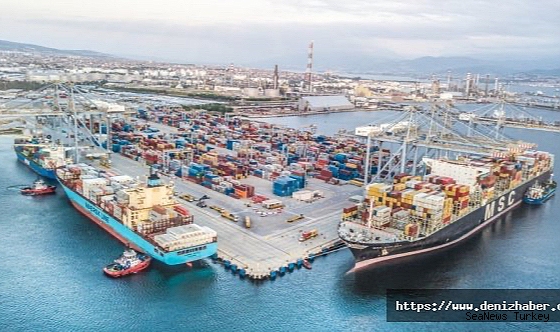
Alphaliner forecasts that 27,500 TEU container ships could be viable by the 2030s, surpassing the current Megamax-24 capacity.
Shipping consultancy Alphaliner has revived its 'Gigamax' vessel concept, forecasting that container ships of roughly 27,500 TEU could become commercially viable during the 2030s. This projection would push past the 24,000-TEU 'Megamax' ceiling that has defined the largest ships for much of the past decade, with direct implications for the freight rates, sailing schedules, and network reliability that cargo owners depend on.
In its latest weekly report, Alphaliner attributed the shift to advances in ship design, rising fuel costs, and carbon pricing mechanisms. The firm first floated the 'Gigamax' idea in 2021 and says renewed market optimism at the 32nd SMM trade fair in Hamburg, Germany, has brought it back into focus. Chinese shipyards, according to Alphaliner, have fielded fresh inquiries from major carriers about very large newbuildings.
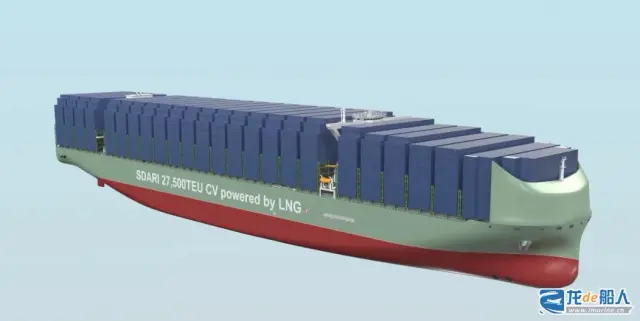
The proposed 'Gigamax-25' would measure approximately 414 meters in length and 63.3 meters in beam, compared with about 400 meters by 61 meters for today's largest Megamax-24 ships. Alphaliner says the design would use a 25-row container layout and an additional cargo hold area at the bow to carry more than 27,000 TEU. The vessel would run on a liquefied natural gas (LNG) dual-fuel propulsion system and be designed for a service speed of 18 knots or below.
According to Alphaliner, the optimized design would burn only slightly more fuel than a 20,500-TEU Megamax while carrying roughly 7,000 additional TEU - a ratio that could lower the per-container cost of moving goods on high-volume trades.
A central point in the analysis is that the larger dimensions would not necessarily require major terminal upgrades. Alphaliner estimates that the extra 14 meters of length and 2.5 meters of beam could be accommodated at many terminals that already handle 24,000-TEU ships, drawing on existing crane reach, berth length, turning basins, and fairway depth. That assessment matters for shippers and forwarders planning around port rotations, since fewer infrastructure constraints support steadier schedules.
Alphaliner named Danish carrier Maersk, currently the world's second-largest liner operator, as the company most likely to trial the Gigamax-25. The consultancy noted that Maersk is the only carrier among the top eight that has never ordered a 24,000-TEU ship. The average capacity of its 31 largest vessels is about 19,600 TEU, so a move to Gigamax-25 tonnage could lift its core fleet capacity by roughly 40 percent.
Maersk's 'Gemini Cooperation' hub-and-spoke network, which concentrates main-line services on fewer port calls, is also better suited to operating very large ships, Alphaliner said. The firm cited Mediterranean Shipping Company (MSC) and COSCO Shipping as additional candidates.
Vessels of this size are not purely theoretical. At the 2024 SMM, the Shanghai Ship Research and Design Institute (SDARI), part of China State Shipbuilding Corporation, unveiled a 27,500-TEU LNG dual-fuel container ship design and received an Approval in Principle (AiP) from classification society DNV.
The renewed interest in ship size comes as the global fleet approaches a symbolic threshold. Data from the Baltic and International Maritime Council (BIMCO) showed the global container ship fleet standing just 8,000 TEU short of 34 million TEU in early September, with 46 ships totaling 286,000 TEU due for delivery that month - enough to carry the fleet past the 34-million mark.
Reaching that level would mark 10 million TEU of capacity added in about five and a half years, according to BIMCO figures. By comparison, the industry took slightly more than ten and a half years to grow from 14 million to 24 million TEU. The global orderbook has climbed to a record 1,795 vessels totaling 14.7 million TEU, with orders of 10,000 TEU and above accounting for 68 percent of the total.
For cargo owners and the forwarders serving them, that supply pipeline points toward continued capacity growth on major trade lanes - a trend that historically eases rate pressure and supports the reliability of long-term service commitments, provided demand keeps pace.