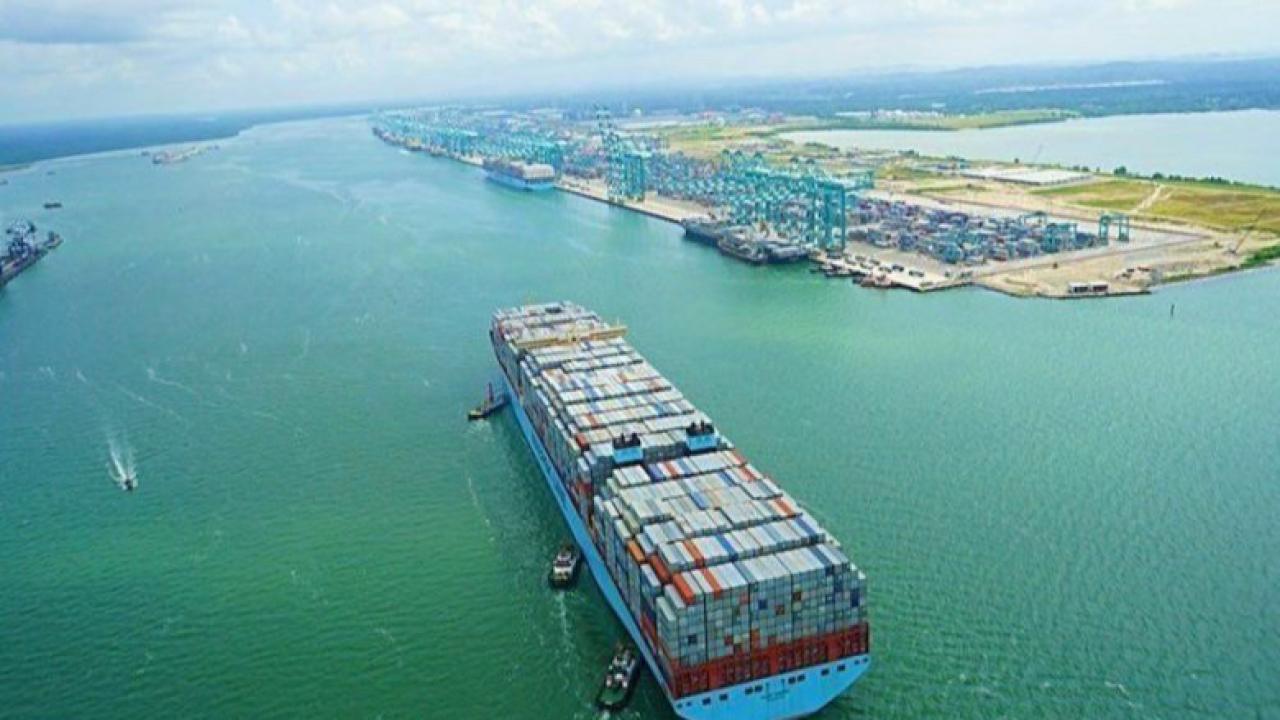
Container shipping shifts from major ports to regional hubs, enhancing connectivity and resilience amid changing global dynamics.
A New Era in Container Shipping: Regional Hubs Are Replacing Major Transshipment Ports
The 'hub-and-spoke' model that has been employed in global container shipping for decades is undergoing a significant transformation. Shipowners have begun to shift their focus from Asia's largest transshipment ports to regional ports that are closer to production centers.
According to an analysis by Sea-Intelligence based on the Port Liner Shipping Connectivity Index (PLSCI) data from the United Nations Conference on Trade and Development (UNCTAD), the temporary route changes necessitated by the Red Sea crisis are now evolving into a permanent network structure.
The company's assessment indicates that container lines prefer to transport their cargo through smaller regional transshipment ports and export gateways instead of concentrating on mega transshipment centers like Singapore, Port Klang, and Tanjung Pelepas.
Sea-Intelligence stated, 'The Q2 2026 PLSCI data indicates a definitive restructuring of maritime shipping networks. Line operators are now actively moving their networks away from centralized structures, going beyond crisis management.'
Connectivity of Major Ports is Declining
The data reveals a decline in connectivity at Asia's leading transshipment ports.
The connectivity index of Singapore Port dropped from 1,876.95 in Q4 2025 to 1,833.94 in Q2 2026. Malaysia's two major transshipment hubs, Port Klang, saw a decline of 5% from its peak, while Tanjung Pelepas experienced a drop of over 7%.
China's largest container ports, Shanghai and Ningbo, also ranked among the ports experiencing connectivity loss on a quarterly basis.
Regional Ports Are Gaining Prominence
In contrast, smaller-scale ports are achieving significant gains.
Vietnam's Haiphong Port increased its connectivity to 690.29 points in the second quarter, marking a growth of 5.1% compared to the previous quarter. Sea-Intelligence notes that this increase is influenced by the China+1 production strategies and the growing integration with South China supply chains.
Laem Chabang in Thailand and Pipavav, Ennore, and Visakhapatnam ports in India are also among the ports benefiting from the diversification of transport networks. Djibouti Port in East Africa has also become one of the centers increasing its connectivity.
New Distribution in the Middle East
A similar trend is observed in the Middle East.
As the dependency on traditional transshipment centers decreases due to the impact of the Red Sea crisis, carriers have started to concentrate on certain alternative ports. The connectivity of Jeddah Port in Saudi Arabia increased by 14.9% on a quarterly basis, while Khor Fakkan Port in the United Arab Emirates recorded a remarkable increase of 189%. Fujairah Port, which previously did not rank in container connectivity, has re-entered the list.
Flexibility Surpasses Economies of Scale
According to Sea-Intelligence, this change has now moved beyond a temporary response to geopolitical crises.
The company indicates that as major transshipment centers approach their capacity limits, shipowners are directing excess capacity to smaller regional transshipment ports and preferring ports closer to production centers.
Experts suggest that the concentration strategy that has formed the basis of container shipping for decades in a few giant ports is being replaced by a new model focused on supply chain resilience, operational flexibility, and proximity to production centers.
Source: SeaNews Türkiye