
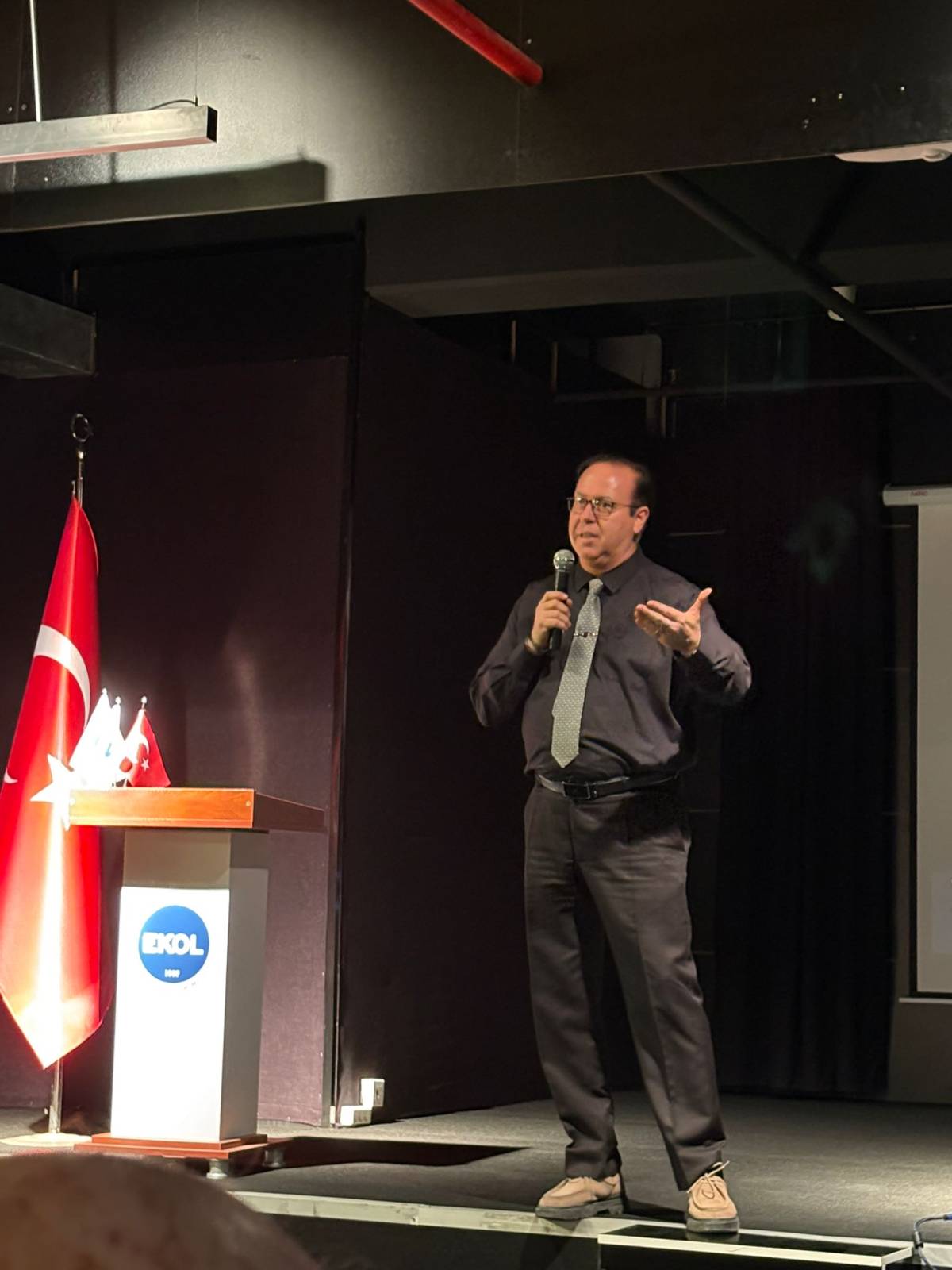
Savaş Karakaş highlights Turkey's submarine tragedies, sharing human stories and historical lessons at the Ekol Maritime Training Center.
At the Ekol Maritime Training Center, maritime documentarian and producer Savaş Karakaş discussed significant submarine disasters in Turkey's maritime history, including the Refah, Atılay, and Dumlupınar incidents. The event featured a conference and documentary screenings that narrated the human stories behind these tragedies.
The conference attracted representatives from the maritime sector, students, and numerous guests from the maritime community. In his opening speech, Ekol Maritime Training Center Director Mutlu Arslan emphasized that Savaş Karakaş offers a multifaceted perspective on maritime issues, drawing from his extensive knowledge and experience in diving, boat handling, and maritime safety.
Arslan noted that the wrecks found in Turkish waters are not merely piles of metal but silent witnesses to maritime history. He highlighted that the starting point of Karakaş's program, "Sudaki İzler" (Traces in the Water), focuses on these wrecks and the human stories that have unfolded around them, while also raising environmental awareness regarding issues such as mucilage and the protection of marine ecosystems.
In his keynote address, Karakaş stressed that the wrecks lying on the seabed are not just rusted metal pieces: "You see a black mass on the seabed, a rusted hull, a twisted propeller. But what about the people on those ships?"
Karakaş shared striking details about the Refah Disaster, stating that the names and experiences of the surviving sailors have rarely been told. He recounted how 32 sailors who survived Refah learned that their comrades were torn apart by sharks after being thrown into the sea. These sailors received treatment for severe trauma at a military hospital in Mersin, and many had to leave the Naval Forces.
He pointed out that during the most intense days of World War II, they set sail with an old ship that lacked adequate technical equipment, and some of the surviving sailors fought for survival for about 48 hours on wooden debris and wreckage. Karakaş highlighted the names of survivors, including Kemal Dağdaşan, Masum Latif Şen, Ziya Löbo, and Ömer Öney, noting that three of them returned to duty on the Atılay Submarine a year later.
Following Karakaş's speech, participants watched a documentary on the Atılay and Dumlupınar submarines, revealing some of the most tragic events in Turkish maritime history and conveying the human stories of the wrecks and their crews. The screening emphasized the starting point of Karakaş's "Sudaki İzler" program and the unknown aspects of maritime history.
After the documentary, Karakaş elaborated on the historical perspective, stating that the Atılay Submarine experienced a fateful intersection with the sinking of the Midilli and Yavuz ships 24 years prior while conducting exercises over a World War I minefield. He remarked, "Being a mariner requires not only learning about today; it necessitates a 360-degree perspective that can analyze the past and future of the seas."
Karakaş emphasized that merely recalling the Dumlupınar disaster with phrases like "May the homeland be blessed" is insufficient. He pointed out that the technical and command errors, negligence, and historical lessons behind maritime accidents are often overlooked.
He also mentioned other maritime tragedies, such as the Üsküdar Disaster (1978), where 300–350 students lost their lives with no survivors, and the Ertuğrul Frigate (1890), which sank due to a storm, resulting in 500 casualties. Additionally, he discussed the events surrounding Yavuz and Midilli during World War I in the Dardanelles Strait, highlighting the risks taken by the Ottoman Navy and the technical errors involved.
According to Karakaş, it is not enough to settle for stories of heroism; the causes of accidents, lessons not learned, and technical errors must also be understood and applied. This approach is vital for developing correct maritime policies and profiles for seafarers.
The conference concluded with the documentary "Reflections from the Depths" after Savaş Karakaş's narratives. Participants had the opportunity to closely observe the unknown aspects of Turkish maritime history and the truths that need to be learned from maritime culture.
Source: www.denizhaber.com


