
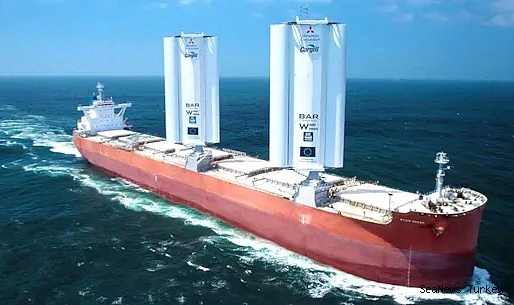
DNV’s latest white paper reveals wind-assisted propulsion can cut fuel costs and emissions, offering a vital path for maritime decarbonization.
This extensive news piece is based on the 4 February 2025 “GLOBAL NEWS” article by Ariane Morrisseytitled “INTERVIEW: DNV REPORT FINDS WIND PROPULSION CAN BE A ‘COST-EFFECTIVE’ COMPLIANCE SOLUTION.” It also draws heavily on the white paper published by DNV, which evaluates the role of wind-assisted propulsion systems (WAPS) in helping ships meet present and future greenhouse gas (GHG) regulations, including the IMO’s EEDI, EEXI, and CII measures, as well as the European Union’s Emissions Trading System (EU ETS) and FuelEU Maritime legislation.
Introduction: Maritime Decarbonization at a Crossroads
The shipping industry has increasingly come under scrutiny for its contributions to global greenhouse gas emissions, which account for a considerable share of anthropogenic CO2 and other GHGs. International bodies like the International Maritime Organization (IMO) and regional regulators such as the European Union (EU) are intensifying their efforts to regulate emissions, pushing vessel owners, operators, and other stakeholders to invest in new technologies and operational optimizations to reduce their environmental footprint.
Against this backdrop, wind-assisted propulsion systems (WAPS), including rotors, suction wings, rigid or soft sails, and kites, have emerged as promising solutions. They harness the power of the wind to complement or partially replace conventional engines, thereby reducing fuel consumption and cutting carbon emissions. The DNV white paper that forms the basis of this report offers a comprehensive view of why WAPS could become critical in meeting upcoming carbon-intensity requirements and offsetting the rising cost of compliance.
Overview of Key Regulations Shaping the Sector
The impetus for innovation in shipping often comes down to regulations. Several rules, guidelines, and market-based measures are converging to reshape how ships are designed, built, and operated:
EEDI (Energy Efficiency Design Index) – Mandates a specific design efficiency threshold for newbuild vessels. EEXI (Energy Efficiency Existing Ship Index) – Extends energy efficiency requirements to existing vessels, compelling owners to retrofit or adopt new operational measures. CII (Carbon Intensity Indicator) – Assigns ships a performance rating (from A to E) based on their carbon emissions per transport work, driving owners to continuously improve efficiency. EU ETS (Emissions Trading System) – Brings maritime emissions under Europe’s cap-and-trade framework, requiring shipping companies to purchase allowances for the CO2 they emit. FuelEU Maritime – Encourages or mandates the use of low-carbon fuels within EU waters, further adding financial and operational pressures on ships running on heavy fuel oil or marine gas oil.
DNV’s new white paper contends that wind-assisted propulsion can help manage or alleviate the cost burdens of these measures. By reducing fuel consumption and emissions, ship operators may need fewer carbon allowances under the EU ETS and could more easily comply with EEXI or CII thresholds.
Key Findings from DNV’s White Paper
In the “GLOBAL NEWS” article published on 4 February 2025, author Ariane Morrissey reports that DNV’s white paper highlights the following major points:
Fuel Savings Potential: Operators and technology providers have reported annual fuel savings in the range of 5% to 20%. Exact figures depend on the vessel type, route, average speed, and the specific WAPS technology deployed. Cost-Effectiveness: When accounting for fuel expenditures, EU ETS compliance costs, and the operational expenses linked to wind technologies, DNV simulations project that wind-assisted propulsion can lower total annual costs by anywhere from 1% to 12%, depending on the scenario. Compatibility with Future Fuels: Reducing overall fuel consumption is crucial as the industry transitions to more expensive low-carbon or zero-carbon fuels. By incorporating WAPS, shipowners can reduce the quantity of these costlier fuels required to operate, thereby improving the business case for alternative energy adoption. Regulatory Synergy: For vessels operating within EU waters or subject to global IMO regulations, wind propulsion can serve as a direct compliance tool. Its ability to lower overall GHG emissions means that ships may meet or exceed their EEXI or CII targets, while also circumventing some of the financial penalties under EU ETS.
Deep Dive into DNV’s Simulation Models
The classification society’s white paper conducted extensive modeling on two different vessel profiles to illustrate wind propulsion’s cost benefits over the period 2026 to 2044:
A 3,600 DWT General Cargo Ship (Short-Sea)
Operating exclusively within Europe, where a robust ETS mechanism applies and wind conditions can vary significantly along coastal routes. The analysis considered multiple WAPS installations, including rotor sails, suction sails, and wing sails, in varying numbers. According to DNV, annual costs decreased by 4% to 12% when WAPS systems were implemented, compared to a baseline scenario without wind assistance. An 81,000 DWT Kamsarmax Bulk Carrier (Deep-Sea)
Operating globally but assumed to spend around 20% of its time in EU waters, therefore partially subject to EU ETS. Simulations showed potential annual cost reductions ranging from 1% to 11% due to savings in fuel consumption, plus associated decreases in EU ETS and FuelEU Maritime compliance costs. The wide range is attributable to different assumptions about routes, speeds, and how many and which type of WAPS technology were installed virtually on the vessel.
Important Note: The specific results from DNV’s simulations do not necessarily apply to every vessel or every route. Wind profiles, vessel design, and operational factors can vary dramatically, so real-world performance may differ.
Types of Wind-Assisted Propulsion Systems
In the coverage by “GLOBAL NEWS,” Hasso Hoffmeister, Senior Principal Engineer at DNV and lead author of the white paper, underscores that WAPS is not a monolithic technology. Instead, it encompasses several distinct systems, each with its own advantages and challenges:
Flettner Rotors (Rotor Sails)
Vertical, cylindrical towers that spin to generate thrust via the Magnus effect. Automated control and minimal operational complexity, making them a popular choice in retrofits. Suction Wings
Advanced rigid or semi-rigid sails that optimize airflow through suction mechanisms, enhancing lift and providing additional thrust. Potentially more complex but offer higher efficiency in certain conditions. Wing Sails
Aerodynamically shaped rigid or semi-rigid sails with control surfaces, resembling airplane wings. Provide high lift-to-drag ratios and can be adjusted automatically to match wind angles. Soft Sails
Modern, durable fabrics that mimic the principles of traditional sailing but with improved materials and partially automated trimming. Usually more flexible and can be folded or reefed when docking or in unfavorable wind conditions. Kite Systems
Deployed from the bow, kites tap into stronger, more stable winds at higher altitudes. Their main advantage is the potential to capture wind energy where it’s more consistent, but they require advanced steering and flight control technology.
Each system comes with distinct considerations for capital expenditure (capex), operational expenditure (opex), maneuverability, crew training, and integration into deck layouts.
Economic Drivers: The Impact of Carbon Pricing
For many shipowners, the financial calculus of implementing WAPS hinges on future fuel prices and carbon costs. The EU ETS has begun incorporating maritime emissions, and carbon allowance prices could rise sharply over the coming years, adding a significant financial burden on conventionally fueled vessels.
According to Hoffmeister, quoted in the “GLOBAL NEWS” article:
“We do see a return on investment that is not excessively long... The outlook to the future, with the tightening regulations, may be giving us even more restrictions or even a higher cost if you look at the alternatives.”
In other words, even if WAPS installations entail considerable capital outlays, the payback period may be relatively short once rising carbon and fuel prices are factored in. By 2027, the IMO may also implement a global carbon pricing scheme, amplifying these cost pressures. If such mechanisms come into force, the cost advantages for wind propulsion—essentially a “free” energy resource—would be even more pronounced.
Wind-Assisted Propulsion as a Bridge to Alternative Fuels
One of the most intriguing observations in DNV’s white paper is that wind propulsion can act as an “enabler” or bridge technology to low-carbon fuels such as ammonia, methanol, or hydrogen. Because these fuels remain more expensive than traditional heavy fuel oil, any method to reduce consumption helps offset costs. Wind assistance shrinks the overall fuel bill—thus making it more viable to operate on these next-generation energy sources without incurring prohibitive expenses.
“As low GHG intensity fuels are more costly than traditional fuels, reducing fuel consumption becomes vital for improving the business case for these fuels,” the report states, emphasizing that wind assistance can make alternative fuels far more competitive.
Moreover, supply constraints and infrastructure limitations currently hinder a swift global transition to new fuels. Many ports do not yet provide ammonia or methanol bunkering, for instance. Wind propulsion can reduce the needed volumes of these fuels, potentially extending a vessel’s range between refueling stops and mitigating logistical hurdles.
Operational Challenges and Considerations
While the benefits of wind propulsion are clear, the “GLOBAL NEWS” article and DNV’s white paper also highlight several challenges and barriers to adoption:
High Initial Capital Costs: Even though wind itself is free, installing rotor sails, wing sails, or suction wings involves significant upfront investment. The payback periods can vary based on vessel size, route, and wind availability. Potential Modifications to Vessel Design: Some wind technologies require deck reinforcements, strategic placement to avoid interference with cargo operations, or changes in the ship’s stability profile. Crew Training and Management: Operating or adjusting wind propulsion devices could require specialized training or system automation. While modern solutions are often highly automated, they still introduce new operational protocols. Performance Variability: Wind conditions are unpredictable. While advanced meteorological forecasting can inform operators, real-world efficiency depends on route-specific wind patterns and the willingness of operators to adjust speeds or courses for optimal performance.
Despite these uncertainties, DNV, as well as other maritime stakeholders, believe ongoing improvements in wind technology and data analytics will gradually reduce the operational complexities.
Accelerating Adoption Trends
The white paper notes a rapid acceleration in the adoption of WAPS:
By January 2025, there were 52 wind-assisted seagoing vessels in operation worldwide, with an additional 97 newbuilds on order. Over half of these wind-propelled vessels were tankers or general cargo ships, indicating a particular niche for ships that traverse either predictable wind routes or operate at speeds suitable for wind assistance. DNV anticipates these figures could climb more steeply as ETS costs bite and low-carbon fuels become more mainstream and more expensive.
Hoffmeister explains in “GLOBAL NEWS” that the industry has shifted from skepticism about the practicality of wind assistance to a recognition that such systems “work reliably” and “deliver savings.” The next step involves standardizing how to measure fuel savings and proving the exact return on investment to risk-averse shipowners.
The Call for Standardized Measurement
One of the critical remaining barriers to broader acceptance, as highlighted by both the DNV report and the “GLOBAL NEWS” piece, is the lack of an industry-wide methodology for quantifying the actual fuel savings from WAPS. This concern is essential for:
Credibility: Investors and financiers require reliable data to justify funding wind propulsion retrofits or newbuild installations. Comparability: Without standardized metrics, vessel A’s reported 10% savings might not be directly comparable to vessel B’s 10% claim. Regulatory Compliance: Bodies like the EU or IMO could eventually incorporate WAPS into their official frameworks, applying standardized calculations for carbon credits or emissions reductions.
Hoffmeister is quoted as saying:
“That is a very simple question, but the answer can be very difficult to give, because people might have different perceptions of what they mean with the term fuel savings.”
Thus, the shipping industry awaits formal guidelines or best practices—possibly from the IMO or classification societies—to ensure that wind propulsion performance is measured in a uniform, transparent manner.
Extended Analysis: Potential Impact on Global Supply Chains
While the DNV paper focuses on individual vessel economics, the broader implications for global supply chains could be substantial:
Reduced Dependence on Fossil Fuels: If wind propulsion cuts fuel use by, say, 10% to 20%, that could translate into lower aggregate demand for marine fuels, potentially influencing bunker market prices. Lower Freight Rates Over Time?: Some argue that if more vessels adopt cost-saving WAPS, the overall cost structure of shipping might decline—or at least be moderated—leading to more competitive freight rates. However, this also depends on how owners pass on savings. Enhanced Corporate Sustainability Profiles: Many cargo owners and shippers now seek to decarbonize their supply chains. Using WAPS-equipped vessels could help them meet their own Scope 3 emissions targets. Port and Terminal Adjustments: In some cases, port infrastructure may need adjustments to accommodate tall or wide rotor/wingsail installations during berthing, though many current WAPS can be retracted or folded.
As new regulations converge and the cost of noncompliance continues to rise, WAPS could become not merely an option but a necessity for operators aiming to remain cost-competitive.
Looking Ahead: IMO’s Global Carbon Price Mechanism
A major pivot point could occur as early as 2027 if the IMO finalizes a global carbon pricing mechanism for shipping—a topic under ongoing debate at the Marine Environment Protection Committee (MEPC). Should such a mechanism take shape, ship operators could face a universal carbon levy or cap-and-trade framework similar to the EU ETS:
Higher Fuel Prices: Carbon-intensive fuels would inevitably become more expensive, making WAPS more financially appealing. Technological Race: A global carbon price would spur a faster transition not only to wind propulsion but also to other emission-reducing measures (e.g., air lubrication systems, slow steaming, advanced hull coatings). Risk Management: Adopting WAPS earlier could be seen as a hedge against the uncertainty of future carbon costs, stabilizing long-term operating expenses.
Against this backdrop, the DNV white paper’s findings suggest a scenario where wind propulsion emerges as a mainstream component of a broader decarbonization strategy, rather than a fringe technology or novelty.
Case Studies: Real-World Deployments
Although the “GLOBAL NEWS” article mainly summarizes the modeling results, there have been several real-world examples:
Scandlines’ Hybrid Ferries: Employing rotor sails on certain ferry routes, achieving modest but consistent fuel savings. Norsepower: A leading manufacturer of rotor sail solutions, which installed rotors on tankers such as Maersk Pelican, reporting noteworthy efficiency gains. Kites on Bulk Carriers: Companies testing large-scale kites to harness high-altitude wind for transoceanic routes, especially across the Atlantic.
These real-world pilots often align closely with DNV’s estimated savings range, though the actual figures depend heavily on route wind conditions.
Integrating WAPS into Future Vessel Designs
Another significant point is newbuild integration. Instead of retrofitting WAPS onto older hulls—where structural modifications can be costly—some shipyards and owners are designing vessels from the keel up to incorporate rotors or wing sails. This could yield higher overall efficiency:
Optimized Deck Layout: Designing for rotor or sail placement from day one avoids conflicts with cargo operations or crew pathways. Enhanced Stability Calculations: Naval architects can ensure the vessel’s stability and safety factors accommodate tall or heavy WAPS installations. Automated Adjustments: Next-generation ships could integrate advanced sensors and AI-driven wind management systems for real-time optimization.
Such design evolution may yield better synergy between conventional engines, alternative fuels, and wind propulsion for maximum emissions reductions.
Industry Perspectives and Voices
Outside the DNV framework, numerous other maritime stakeholders have voiced support for wind propulsion:
NGOs and Environmental Groups: Organizations such as the Clean Shipping Coalition or Transport & Environment frequently highlight wind propulsion as a “here-and-now” solution that can tangibly cut emissions while the industry awaits scalable alternative fuels. Financiers and Insurers: Some banks and insurers are offering green financing incentives for vessels that adopt proven emissions-reduction measures, including WAPS. This can lower the cost of capital for owners willing to embrace the technology. Charterers: Leading charterers, including major commodity traders and consumer goods companies, might soon demand or reward chartered vessels that demonstrate reduced carbon intensity, especially if it helps them meet internal sustainability targets.
Hence, while wind propulsion has historically seemed anachronistic to some, the combination of policy pressures, technological improvements, and stakeholder demand is transforming it into a robust, credible solution for 21st-century shipping.
Addressing Misconceptions about Wind Propulsion
A longstanding misconception is that wind propulsion merely resurrects historical sail-driven ships, ignoring modern shipping’s speed and capacity requirements. In reality:
Automation: Modern WAPS typically use automated systems to adjust angle, deployment, and rotation speed, minimizing crew intervention. Partial Assistance: Wind propulsion is often designed to complement, not replace, the main engine. Hence, the ship can maintain consistent schedules without relying solely on wind conditions. Demonstrated ROI: Pilots and commercial installations have shown that these systems can pay for themselves, especially with looming carbon costs. Retrofitting Is Feasible: Even large vessels like VLCCs (Very Large Crude Carriers) or big bulk carriers can incorporate wind-assist devices without drastically compromising cargo capacity.
DNV’s white paper reinforces that wind propulsion should be considered a sophisticated modern technology, not a nostalgic throwback.
Hurdles to Widespread Adoption
Despite optimism, several core issues remain:
Standardization: The need for universally accepted verification methods for fuel savings and emission reductions. Regulatory Recognition: Clear guidelines on how to account for wind-assist benefits in official EEXI, CII, or ETS compliance calculations. Market Awareness: Many shipping companies remain risk-averse, waiting to see more large-scale success stories or best practices. Infrastructure: Some port terminals may have concerns about vessel height or deck clearances, though in practice most WAPS installations are designed for minimal operational disruption.
Addressing these aspects will likely determine how quickly wind propulsion moves from a promising technology to an industry staple.
Future Outlook: 2030 and Beyond
By 2030, the maritime landscape is poised to be radically different:
EU ETS Fully Enforced: The cost of carbon allowances may have soared, intensifying the push for every possible emissions reduction measure. Global Carbon Measures: The IMO could have enacted worldwide emissions pricing, making carbon-intensive shipping increasingly uncompetitive. Proliferation of Low-Carbon Fuels: Even if ammonia, methanol, or hydrogen become more accessible, their prices are likely to remain above those of conventional bunkers. Technological Leapfrogging: Artificial intelligence, IoT-based analytics, and high-accuracy meteorological forecasting could further optimize wind-assisted routes, increasing the reliability of predicted savings.
In such a scenario, WAPS may be viewed as a standard design feature for new vessels, akin to advanced hull coatings or energy-saving devices that have become normal in shipbuilding.
Beyond Bulk Carriers and Tankers
While tankers and bulk carriers currently lead in WAPS adoption, the technology has broader applications:
Containerships: Already exploring rotor sails, though container stowage plans and deck space can pose challenges. Roll-on/Roll-off (Ro-Ro) Vessels: Potential for large deck areas suitable for installing retractable sails or kites, though operational flexibility is key. Cruise Ships: Possibly a future frontier; some pioneering designs incorporate sails or rotors for marketing as well as emissions reasons. Fishing Vessels: With smaller tonnage and different operational profiles, WAPS might offer a lifeline to an industry struggling with fuel costs.
As each segment faces carbon reduction mandates, new prototypes are likely to emerge, expanding WAPS solutions across the maritime sector.
Conclusions and Takeaways
DNV’s 4 February 2025 white paper offers timely insights into the evolving role of wind-assisted propulsion within the shipping industry. Amid ever-tightening regulations, surging fuel prices, and a global push for decarbonization, WAPS stands out as:
A Practical Compliance Tool: WAPS can help owners satisfy EEXI and CII targets and reduce the number of carbon allowances needed under the EU ETS. A Bridge to Alternative Fuels: By trimming overall fuel consumption, wind assistance bolsters the economic viability of emerging low-carbon fuels. A Proven Technology: With over 52 vessels already sailing under wind assist and 97 more orders on the books, WAPS is quickly moving from pilot-stage curiosity to mainstream reality. In Need of Standardization: To fully realize its potential, the industry must adopt unified methodologies for measuring and verifying fuel savings.
Hoffmeister’s remarks in the “GLOBAL NEWS” article stress that wind propulsion is at a tipping point: it is no longer a question of whether it works but rather how effectively owners can implement it and accurately quantify its benefits.
21. References
Ariane Morrissey (2025). “INTERVIEW: DNV REPORT FINDS WIND PROPULSION CAN BE A ‘COST-EFFECTIVE’ COMPLIANCE SOLUTION.” GLOBAL NEWS, 4 February. DNV (2025). White Paper: Wind-Assisted Propulsion Systems (WAPS). International Maritime Organization (IMO). https://www.imo.org European Commission - FuelEU Maritime & EU ETS: https://ec.europa.eu/clima/eu-action/european-green-deal/delivering-european-green-deal/fueleu-maritime_en


