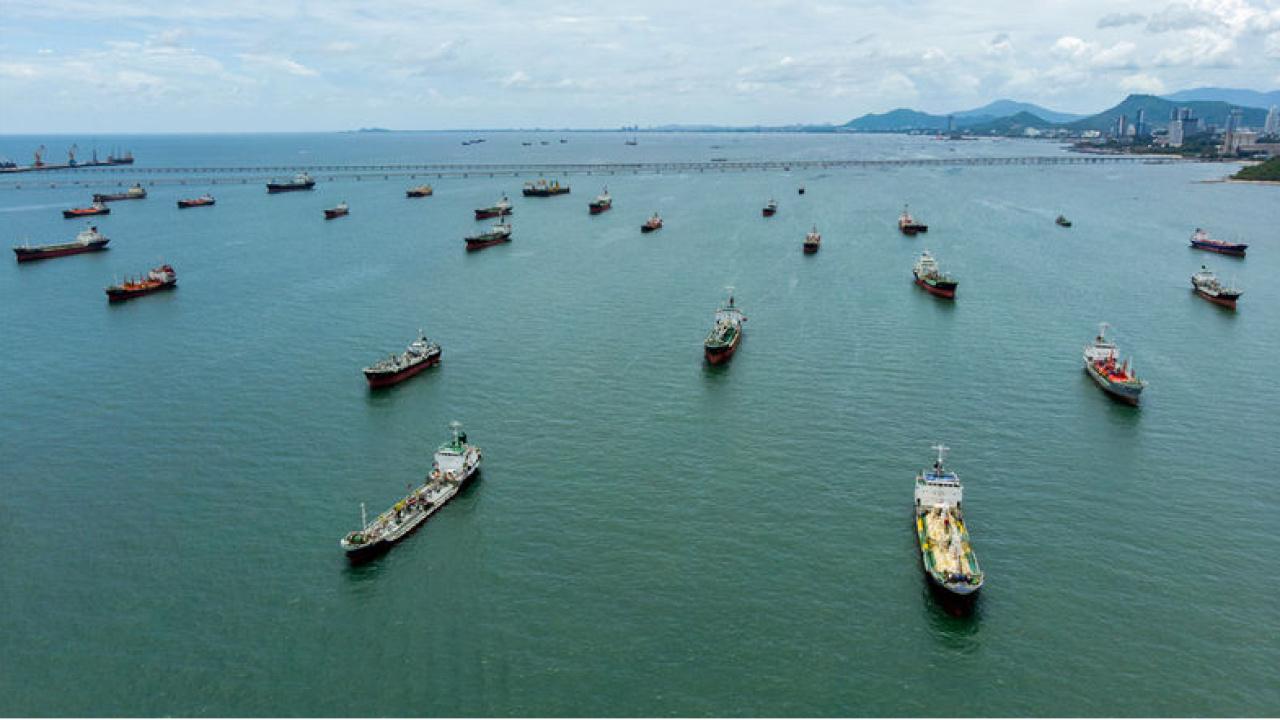
Increased Gulf tanker demand has pushed second-hand prices above newbuild costs, with older VLCCs now selling for at least $150 million.
The increase in tanker demand in the Gulf has pushed second-hand ship prices above newbuilding prices. Some older VLCCs that can be delivered immediately are being sold for at least $150 million, while the average price of a new ship is around $135 million.
According to a report published by EnterpriseAM on October 1, citing the Financial Times, some very large crude carriers (VLCCs) built before 2016 have changed hands for at least $150 million in the past week.
The daily freight rates on the Middle East-Asia route have risen to as high as $1.2 million, prompting buyers to seek vessels that can be put into operation immediately. While weeks of sales negotiations have concluded in days, it has been reported that tanker values have increased by approximately one-third compared to last year.
The reluctance of shipowners to sell their vessels in order to benefit from high revenues is also constraining the available tonnage for sale.
The transshipment model in Hormuz is increasing the need for vessels.
The practice of Gulf producers transferring oil from Hormuz via shuttle operations to another VLCC off the coast of Oman is leading to the use of two vessels for the transportation of the same cargo.
National oil companies are looking to expand their fleets in the face of high charter rates and the reluctance of some shipowners to enter the Gulf.
ADNOC is acquiring transport capacity.
ADNOC Logistics & Services, based in the United Arab Emirates, announced a purchase of approximately $1.3 billion for six second-hand VLCCs and five very large gas carriers in August.
The company has also chartered about 15 crude oil tankers to maintain shuttle operations and deliveries to customers during disruptions in the Red Sea and Hormuz. Ship-to-ship transfers around Fujairah and Sohar have been among the options used to deliver oil to buyers.
Asyad is not delivering the tankers it sold immediately.
The sales of Oman-based Asyad Shipping indicate that shipowners continue to benefit from the strong market until delivery.
The company sold two VLCCs named Seeb and Samail, built in 2011, for a total of $160.2 million, while continuing to operate the vessels for some time. One of the tankers is expected to be delivered in October or November, while the other is projected for delivery by mid-January 2027.
Asyad is expected to add four new VLCCs to its fleet by the end of the year. Additionally, the company ordered six MR product tankers of 50,000 dwt to be delivered starting in 2029 in July.
New ship orders have reached 38% of the existing fleet.
The rise in the second-hand market is accompanied by growth in new ship orders. According to a report dated September 21 by Seatrade Maritime, based on Veson Nautical data, the ratio of VLCC orders to the existing fleet has increased from 15% to 38% in one year.
Matthew Freeman, Vice President of Valuation and Analytics at Veson Nautical, noted that major shipyards in Japan, South Korea, and China are nearing capacity limits. Factors such as delivery schedules being filled until 2030 and supply shortages in equipment like engines and piping systems have been cited as limiting additional orders.
In the same assessment, it was reported that the values of five-year-old VLCCs are 133% above the median for the period from 1992 to 2026, while resale prices for newbuild vessels have seen levels around $200 million in recent weeks.
The reopening of Hormuz could affect prices.
According to EnterpriseAM, shipowners warn that a peace agreement restoring normal transit through Hormuz could lead to a sharp decline in the market. The delivery of increasing new ship orders will also raise transport capacity during this period.
The report also mentioned that Trafigura has launched the Volare Shipping initiative, consisting of 14 VLCCs, to secure transport capacity.
Source: SeaNews Türkiye