
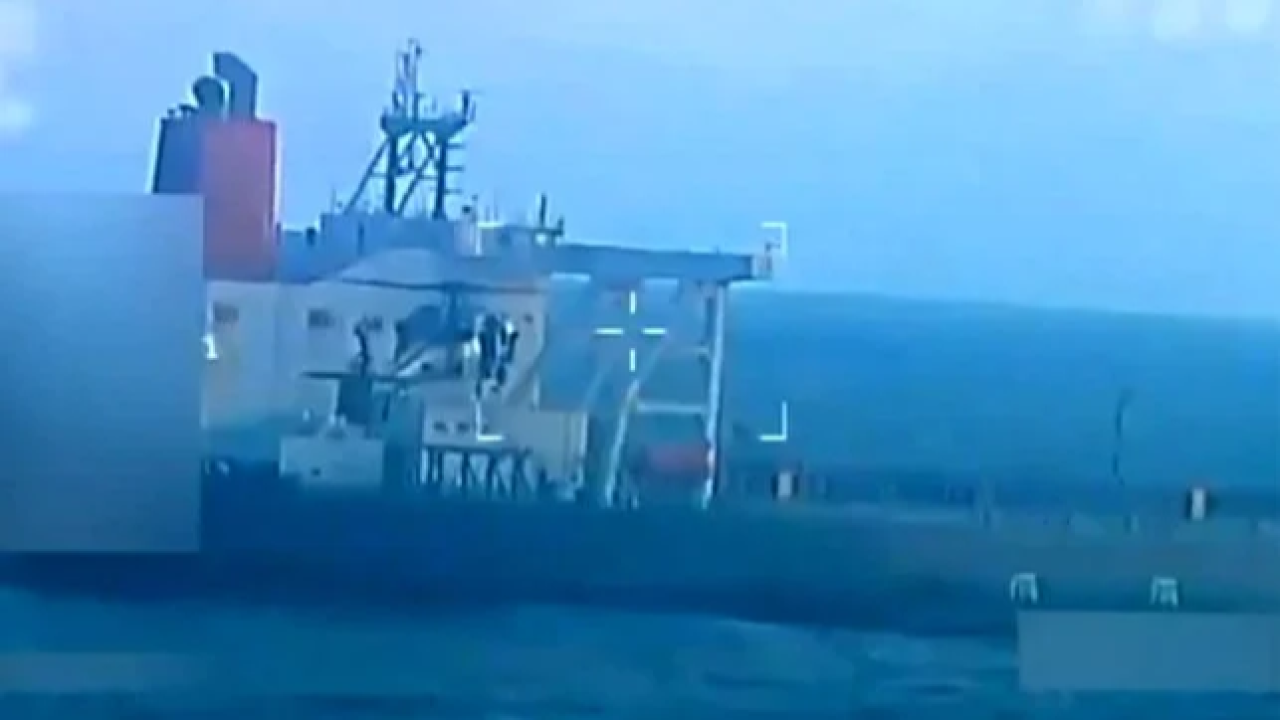
The U.S. Justice Department seeks to seize the Skipper tanker and its 1.8 million barrels of crude oil held off Galveston amid sanctions enforcement.
The United States Department of Justice has filed a legal petition for the seizure of the 310,000 dwt crude oil tanker named Skipper, which was confiscated on December 10, 2025, off the coast of Venezuela, along with approximately 1.8 million barrels of crude oil on board. Since December, the Skipper has been held in the waters off Galveston, Texas.
The Department submitted the petition for the seizure of the vessel and the oil to the Federal District Court in Washington, attempting to provide a legal basis for the confiscation of the Skipper and its cargo. This move is seen as part of the U.S. efforts to tighten sanctions on oil shipments linked to Iran and Venezuela.
Claims Regarding the Vessel and Cargo
U.S. authorities have alleged that the Skipper has long been transporting oil from Iran and Venezuela to evade sanctions, and that this trade has provided revenue to organizations listed on the sanctions list, such as Iran's Islamic Revolutionary Guard Corps. Additionally, it was noted that the vessel allegedly used international registration and signaling systems misleadingly to conceal its location and operated under false flags.
The Skipper was seized by U.S. forces while carrying crude oil loaded by the Venezuelan state oil company Petróleos de Venezuela, S.A. The U.S. administration claims that part of the confiscated oil was intended to be transported to Cuba.
International Reactions and Developments
The Venezuelan government had previously harshly criticized the seizure as 'international piracy and outright theft.' This situation has heightened diplomatic tensions between the two countries.
The U.S. administration argues that the enforcement of sanctions and the prevention of illegal oil trade are in accordance with international law. The seizure case of the Skipper is seen as a significant step towards solidifying the legal foundation of the U.S. sanction policies in the region.
Source: SeaNews Türkiye


