
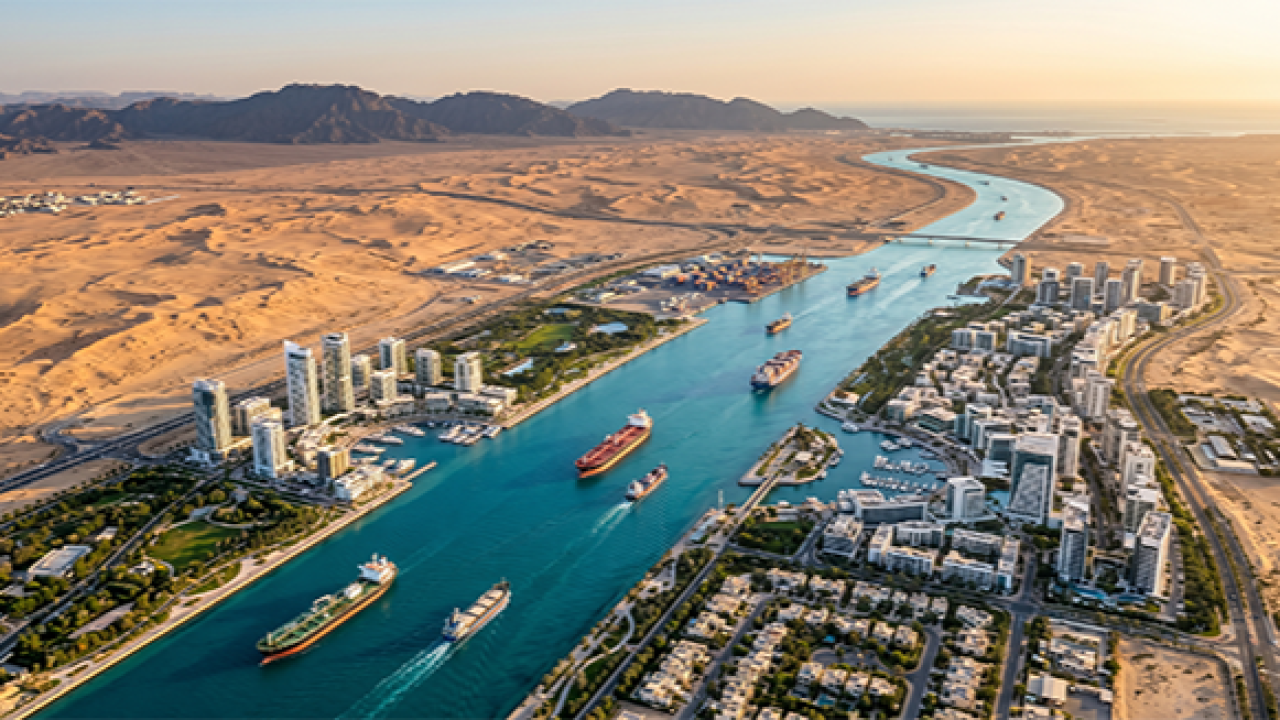
A Dubai firm proposes the Union Strait canal to bypass Hormuz, aiming to reshape UAE's energy landscape and reduce geopolitical risks.
A Dubai-based architecture firm has captured the attention of global energy markets with the idea of a canal that would bypass the Strait of Hormuz. This concept, prepared by a company named Znera and called the 'Union Strait,' was proposed to mitigate the geopolitical risks that have escalated in the region in recent years. The proposal currently serves more as a bold vision for the strategic future of the United Arab Emirates rather than a concrete construction plan.
A Fragile Energy Corridor in the Persian Gulf
The Strait of Hormuz functions almost as the sole passage point when it comes to global energy supply. This waterway, which connects the Persian Gulf to the Gulf of Oman and thus to open seas, witnesses about one-fifth of global oil trade. In the first six months of 2025, an average of 20.9 million barrels of oil passed through this narrow corridor daily. However, military movements in the Middle East, nuclear tensions with Iran, and the occasional threats to close the strait serve as constant reminders of how fragile this excessive dependency on the route can be.
Znera’s Vision: More Than Just a Waterway
As emphasized by Nils Remess, one of Znera's founding partners, the company does not view architecture merely as building design. The proposal for the Union Strait is a direct reflection of this understanding. The designers describe the canal as the 'national backbone' of the UAE. The idea is not limited to charting a new route for oil tankers; the project also aims to completely transform the country’s east-west axis with smart cities, logistics hubs, and trade zones to be built from scratch along the waterway. In this sense, the project can be interpreted more as a nation-building strategy rather than an engineering achievement akin to the Suez Canal.
Technical and Financial Barriers Ahead of the Project
Like any major vision, the Union Strait raises serious questions. Considering the geographical line where the canal is planned to pass, the excavation costs are expected to reach hundreds of billions of dollars. Although the UAE is inclined towards large infrastructure projects, the financing model for a construction of this scale remains uncertain. Critics frequently point out that the construction process could take decades, during which the dynamics of energy markets could change completely.
Additionally, the security aspect of the project is also on the table. The risk of such a strategic and expensive infrastructure being threatened by drones or asymmetric attacks is a matter that defense planners need to consider. Many experts argue that enhancing the capacity of existing land pipelines could be a much more economical and quicker solution than digging a new canal from scratch. The Abu Dhabi Crude Oil Pipeline, which currently transports oil to Fujairah Port and bypasses Hormuz, is cited as an existing example that strengthens this argument.
The UAE's Move in the Global Energy Equation
The concept of the Union Strait coincides with a period of redrawing global trade routes. The uncertainties in the Strait of Hormuz have led to increased reliance on Saudi Arabia's east-west pipelines, Iraq's efforts to open up to the Mediterranean through Ceyhan, and even mega-projects like the Development Road, which centers around Turkey. Znera's initiative indicates that the UAE wants to sit at the table not only as an oil exporter but also as an owner of alternative logistics corridors in the coming decades.
Initial Reactions from the Sector and Future Expectations
Currently, the Union Strait is not an active construction project. However, it has already sparked heated discussions within architecture and urban planning circles. Some circles describe the project as the 'Suez of the 21st century,' while others consider it a futuristic fantasy detached from reality. Whether Znera's proposal comes to fruition or remains on the shelves, it clearly demonstrates that the search for alternatives to the Strait of Hormuz will continue to remain at the top of the regional agenda.
Source: SeaNews Türkiye


