
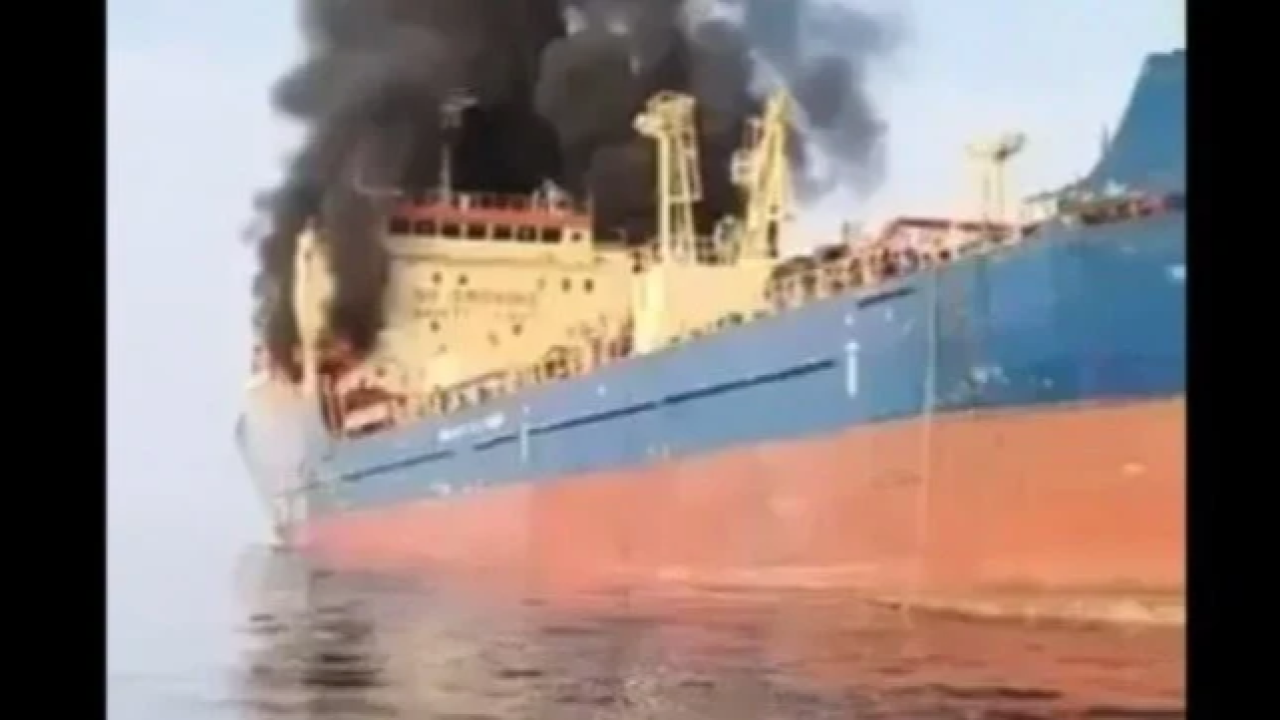
Trump calls on foreign tankers to transit Hormuz despite risks as oil prices soar above $100, emphasizing courage and safety for mariners.
After Brent crude oil prices briefly rose above $100 per barrel on Monday, U.S. President Donald Trump called on the crews of foreign-flagged tankers to continue their passage through the Strait of Hormuz.
In an interview with Fox News host Brian Kilmeade over the weekend, Trump stated that tankers should continue to navigate despite the risks.
'These commercial vessels must pass through the Strait of Hormuz and show a little courage. There’s nothing to be afraid of. Iran has no navy; we have sunk all their ships,' he said.
Kilmeade pointed out that there are approximately 150 Iranian missile launchers that could threaten ship traffic in the region and claimed that the U.S. has the capacity to respond quickly to any attacks.
Iran's Threat, Losses for Mariners
Iran has threatened to 'set fire' to tankers passing through the strait in retaliation for U.S. attacks. According to data from the International Maritime Organization (IMO), at least seven sailors have lost their lives due to Iranian attacks so far.
Under normal circumstances, about one-fifth of the global oil supply passes through the Strait of Hormuz. More than 90% of the oil transported through the strait is consumed by Asian economies, primarily China. However, since oil is a global commodity, any supply disruption in Asia directly affects energy prices and gasoline costs in the U.S.
Foreign-Flagged Tankers in the Midst of Risk
The majority of crude oil exiting from Hormuz is transported by foreign-crewed and foreign-flagged tankers. U.S.-flagged and U.S.-crewed tankers make up only 0.6% of the global tanker fleet, most of which consists of product tankers carrying refined products.
So far, Greek and Iranian tankers have been among the most active vessels in transiting the strait. The Iranian fleet, on the other hand, faces relatively lower risks and has largely conducted its passages smoothly.
Iran has effectively begun to enforce the blockade using its coastal bases. Following its announcement last week that it had closed the strait, at least three vessels were attacked with drones or missiles, resulting in damage to the ships.
In light of these developments, maritime companies have begun to act cautiously. A significant number of large tankers are accumulating in the anchorage areas on both sides of Hormuz, awaiting safe passage.
IMO's Call to 'Protect Mariners'
IMO Secretary-General Arsenio Dominguez reiterated the call for parties to respect the safety of mariners.
'Any attack on innocent sailors or civilian vessels is unacceptable. These mariners are merely doing their jobs and providing a vital service for the continuity of global trade,' he stated.
Dominguez also emphasized that all parties must respect the principle of freedom of navigation, which is one of the fundamental principles of international maritime law.
Tankers Freight Rates Hit Record Highs
The crisis in the region has created extraordinary profits in the tanker market. According to Clarksons data:
Daily earnings for VLCC tankers on the Middle East-Gulf route have reached $480,000.
On voyages departing from the U.S. Gulf or West Africa, rates have climbed up to $220,000.
Suezmax tankers have approached daily levels of $300,000 in the spot market.
However, analysts at Poten & Partners indicate that these levels cannot be sustained for long.
'The freight rates have reached record highs due to geopolitical risk premiums and a significant decrease in effective vessel supply. However, this situation is not sustainable. If it lasts long, tankers may shift to other regions, and Middle Eastern producers may have to cut production. This would reduce ton-mile demand, creating downward pressure on freight rates,' they assessed.
G7 Intervention Pulls Oil Prices Down
The G7 countries announced on Monday that they are ready to release crude oil from their strategic reserves into the market.
Following this message, oil prices quickly retreated. Prices, which approached $120 in the morning, fell by approximately 20%, dropping back below $100 in the afternoon.
Source: SeaNews Türkiye


