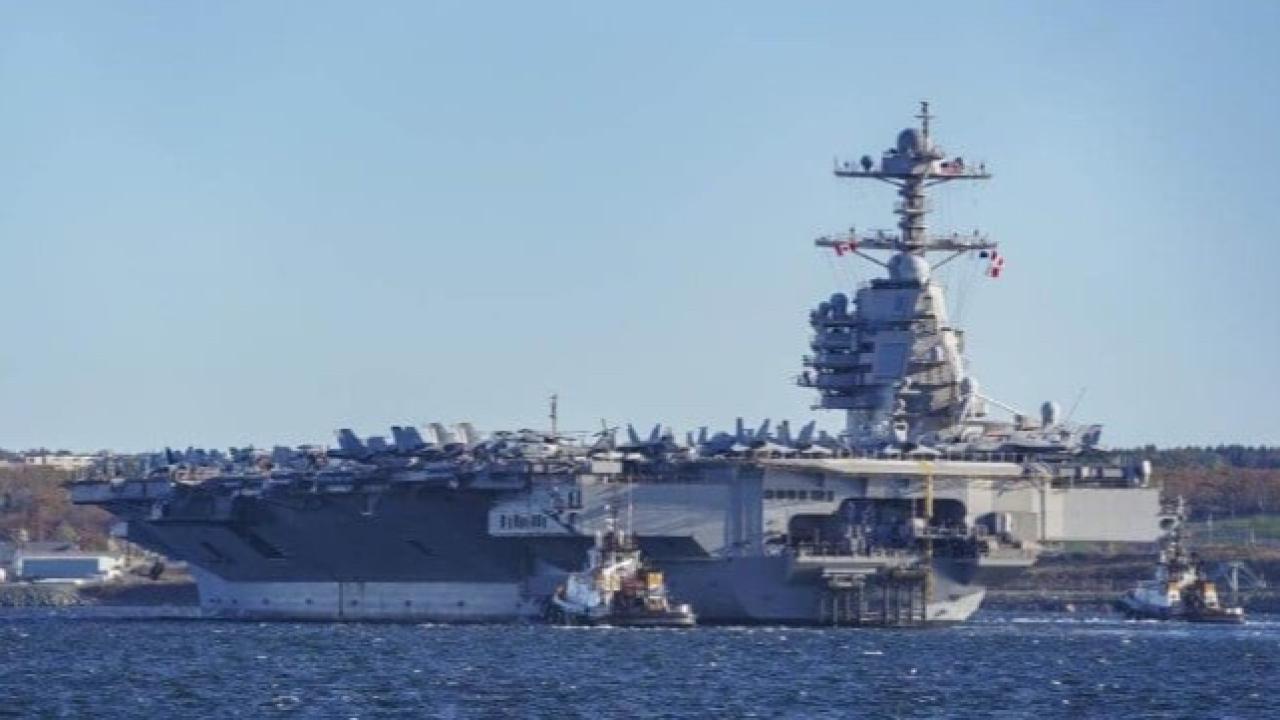
The USS Gerald R. Ford, a $13 billion aircraft carrier, struggles with sewage system issues, impacting sailors during deployments.
The USS Gerald R. Ford, the first ship of its class with a budget of 13 billion dollars, has made headlines due to clogged water pumps.
Since its delivery to the Navy in 2017, the USS Gerald R. Ford, the first aircraft carrier of its class, has continued to be in the spotlight due to serious technical issues. The ship was commissioned without fully operational aircraft launch systems, landing systems, and weapon elevators at the time of its delivery.
Over the years, the Ford has transformed into a more capable and respected combat platform operationally. However, some structural and technical problems have not been completely resolved. Among these, the ship's sewage system stands out.
Sewage System Challenges Operations
According to a local radio station based in Norfolk, sailors serving on the USS Gerald R. Ford report experiencing serious issues with toilets during prolonged deployments in the Caribbean. The sewage system does not always function simultaneously and smoothly throughout the ship, complicating daily life.
The sewage infrastructure of the Ford operates on a vacuum flushing principle similar to systems used in the aviation sector. However, it has been noted that this design struggles to adapt to the harsh conditions of heavy usage and naval service.
"Unexpected and Frequent" Clogs
The U.S. Government Accountability Office revealed in a report published in March 2020 that the ship's engineering team has been continuously battling "unexpected and frequent" clogs in the toilets and narrow sewage pipes.
This situation has occasionally led to unhealthy conditions aboard the USS Gerald R. Ford during duty. It has been reported that toilet overflows have become routine, especially during deployments in 2024 and 2025.
Navy: The Problem Arises from User Errors
A spokesperson for the Sixth Fleet stated in an interview with public broadcaster WHRV that one of the root causes of the problem is the disposal of inappropriate materials into the sewage system. According to the statement, the system cannot handle "foreign materials" such as t-shirts and mop heads. Officials claim that the crew makes such errors an average of twice a day.
Resolving each clog can take up to two hours, which results in toilets being completely out of service in some parts of the ship.
Regional System, High Costs
According to Navy officials, another reason for the escalation of the problem is that the sewage system is divided into regions. A clog occurring at a single point often affects an entire region.
To combat this issue, the Navy regularly cleans the sewage lines with acidic chemical treatments. According to the Government Accountability Office, each comprehensive cleaning operation of the system costs approximately 400,000 dollars.
Source: SeaNews Türkiye