
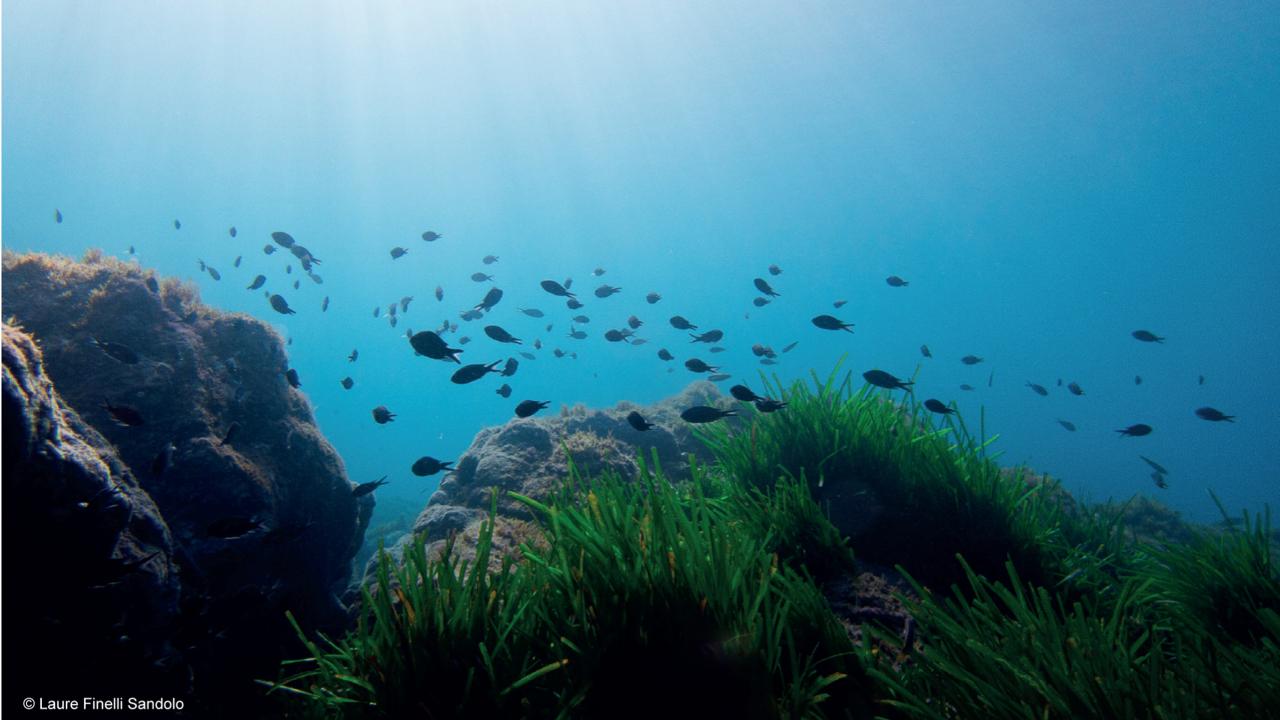
WWF-Turkey's report reveals over 179,000 ships threaten vital Mediterranean seagrass meadows, urging immediate conservation measures.
WWF-Turkey presented a report titled 'Protecting the Blue Forests of Mediterranean Seagrass from Anchoring Impacts,' prepared by the WWF Mediterranean Marine Initiative (WWF MMI), on March 1st, World Seagrass Day. According to the report, over 179,000 ships anchored over seagrass beds in the Mediterranean in 2024. These vital 'blue forests,' which protect coastlines, provide breeding grounds for fish, and store large amounts of carbon, are under serious threat, particularly due to increased yacht traffic during the summer months.
The report prepared by WWF-MMI reveals the impact of anchoring activities on seagrass in the Mediterranean with striking data.
In coordination with WWF-Turkey (the Foundation for the Protection of Natural Life), WWF-France, WWF-Greece, WWF-North Africa, LINKS Foundation, ITHACA srl., the French Office for Biodiversity (Office Français de la Biodiversité), and Global Fishing Watch, the report analyzes Automatic Identification System (AIS) data from 2024 to highlight the situation of seagrass.
Silent danger in the Mediterranean: More than 50,000 hectares may be affected.
According to the report, over 179,000 ships anchored in areas where seagrass may potentially exist throughout 2024. Approximately half of these anchorages were carried out by ships larger than 24 meters.
The analyses indicate that more than 50,000 hectares of Posidonia oceanica seagrass may have been affected by anchoring activities across the Mediterranean. It is noted that over 30,000 hectares of this damage is attributed to large vessels.
Posidonia oceanica, a species of seagrass endemic to the Mediterranean, is considered one of the most critical habitats for coastal ecosystems. Spanning an area of over 20,000 km², these 'blue forests' provide breeding and nursery grounds for fish, protect coastlines from erosion, and create a natural coastal defense by reducing wave energy.
However, the most critical role of these habitats is their capacity for 'blue carbon' storage. According to the report, Posidonia meadows in the Mediterranean store approximately 540 million tons of carbon. This amount equates to the carbon retention capacity of about 430 million vehicles' annual CO₂ emissions. In contrast, it is estimated that around 34% of the seagrass in the Mediterranean has been lost over the last 50 years.
The report emphasizes that anchoring leads to direct physical damage and habitat fragmentation. It states that traditional anchor chains can drag across the seabed, uprooting seagrass and causing habitat fragmentation of between 20% and 50%.
In damaged meadows, the carbon retention capacity has decreased by approximately 30%, and species richness has experienced losses of up to 40%. Considering that Posidonia oceanica grows on average 1-6 centimeters per year, the natural recovery of the damage can take 10 to 15 years.
The report also mentions a 25-40% decrease in catch yields in fishing activities dependent on Posidonia habitats; it states that the degradation of seagrass has negative impacts on diving tourism and ecotourism.
Hot Spot in Turkey: Datça–Bodrum.
According to the findings of the report, Croatia, France, Greece, Italy, and Turkey rank among the countries with the highest values in terms of both the area covered by Posidonia meadows and anchoring density.
Specifically in Turkey, the Datça–Bodrum region stands out. In 2024, over 13,000 anchorages were recorded in this region. Turkey ranks among the countries with the highest values in terms of anchoring density and the number of 'hot spots.' It is noted that anchoring pressure intensifies particularly during the May-September period, which is the tourism season. Increased yacht and superyacht traffic exerts significant pressure on coastal meadows.
Call for Preventive Conservation.
The report highlights that restoration efforts are both costly and long-term, indicating that preventive conservation measures must be implemented.
It states that:
- Anchoring by ships larger than 15 meters should be prohibited over seagrass,
- No-anchoring zones should be established in sensitive areas,
- Ecological buoy systems should be promoted,
- Seagrass maps should be integrated into maritime planning,
- The capacity for monitoring and enforcement should be strengthened.
The report warns that without coordinated and science-based measures, damage from anchoring will continue to increase. It emphasizes that the protection of Posidonia oceanica meadows is strategically important not only for biodiversity but also for climate resilience, carbon storage capacity, and the economic sustainability of coastal communities.
These 'blue forests,' quietly existing beneath the clear waters of the Mediterranean, stand out as critical natural capital that can be carried into the future through decisions made today.
The report titled 'Protecting the Blue Forests of Mediterranean Seagrass from Anchoring Impacts' can be downloaded from this link.
Source: SeaNews Türkiye


