
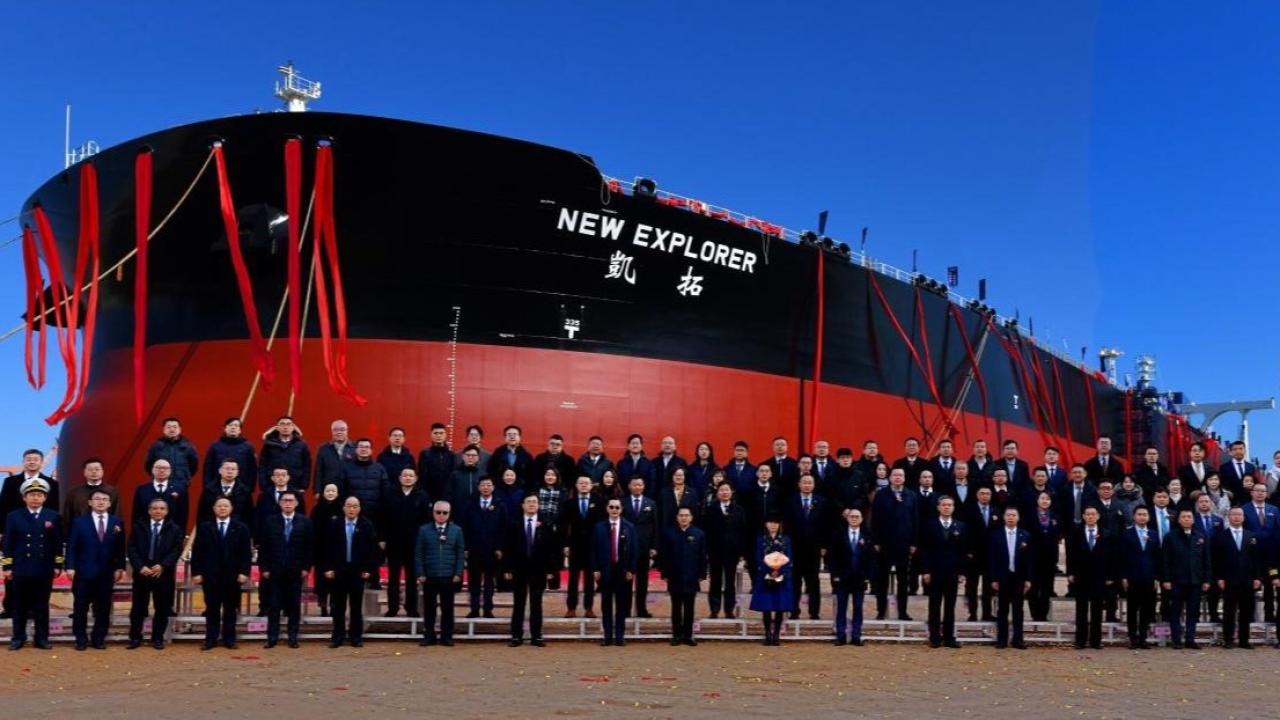
The 'New Explorer,' the first smart methanol VLCC, began service in January 2026, marking a significant advancement in eco-friendly shipping technology.
The methanol dual-fuel and smart VLCC 'New Explorer' (Kaituo), built by China's Dalian Shipbuilding (DSIC) for China Merchants Energy Shipping (CMES), was delivered four months ahead of schedule and commenced operational service in early January 2026.
Dalian Shipbuilding (DSIC), one of China's leading shipyards, has achieved a historic breakthrough in maritime history. The 'New Explorer,' which has joined the China Merchants Energy Shipping (CMES) fleet, is the world's first methanol dual-fuel and smart very large crude carrier (VLCC) to enter commercial service. The vessel was delivered early on December 22, 2025, and began its voyages in January 2026.
The 'New Explorer' stands out as the first VLCC that combines methanol dual-fuel technology with the smart ship concept. This innovation heralds a new era in long-range crude oil transportation, enhancing fuel flexibility, emission reduction, and operational efficiency.
Thanks to its domestically produced methanol dual-fuel main engine and fuel supply system, the ship significantly reduces environmental impacts, achieving approximately a 90% reduction in particulate matter emissions. This performance sets a new industry standard compared to traditional fossil fuel-powered VLCCs.
The giant tanker, measuring approximately 333 meters in length, offers a capacity of 2.1 million barrels of crude oil. Designed with a shallower draft at full load, the 'New Explorer' enhances accessibility in critical passages such as the Strait of Malacca and various ports.
Equipped with advanced digital infrastructures capable of providing self-decision support, including a smart liquid cargo control system and a smart engine room operation and maintenance platform, these systems enhance safety and operational continuity while optimizing maintenance costs.
The early delivery and entry into service of the 'New Explorer' are seen as a global milestone in the green transformation of shipping and smart ship technologies, gaining momentum by 2026. This project serves as a strong reference for the industry, demonstrating the feasibility of methanol fuel and smart solutions in the large-tonnage tanker segment.
Source: www.denizhaber.com


