Panama Canal draft restrictions lead to surcharges by major shipping lines, increasing transit costs for cargo to North America.
As water levels at Gatun Lake continue to fall, the Panama Canal Authority has imposed stricter draft restrictions for large vessels, leading to increased transit costs. In response, major shipping lines like CMA CGM, Hapag-Lloyd, and MSC have announced significant surcharges for cargo transiting the Panama Canal to North America.
Effective 10 September, CMA CGM will raise its Panama Canal surcharge for cargo from the Far East to the US East Coast and Gulf of Mexico to USD 500 per TEU. This marks a 56% increase from the previous rate of USD 320, adding USD 180 per TEU.
Starting 15 August, Hapag-Lloyd will implement a new surcharge of USD 130 per TEU for shipments from the Far East to North America via the Panama Canal.
From 12 September, MSC will revise its surcharge for cargo originating from Southeast Asia, China, South Korea, and Japan to the US East Coast and Gulf of Mexico. The new rates are USD 149 for 20-foot containers, USD 297 for 40-foot containers, and USD 376 for 45-foot containers. This reflects a 49% increase from the previous benchmark of USD 100 per TEU.
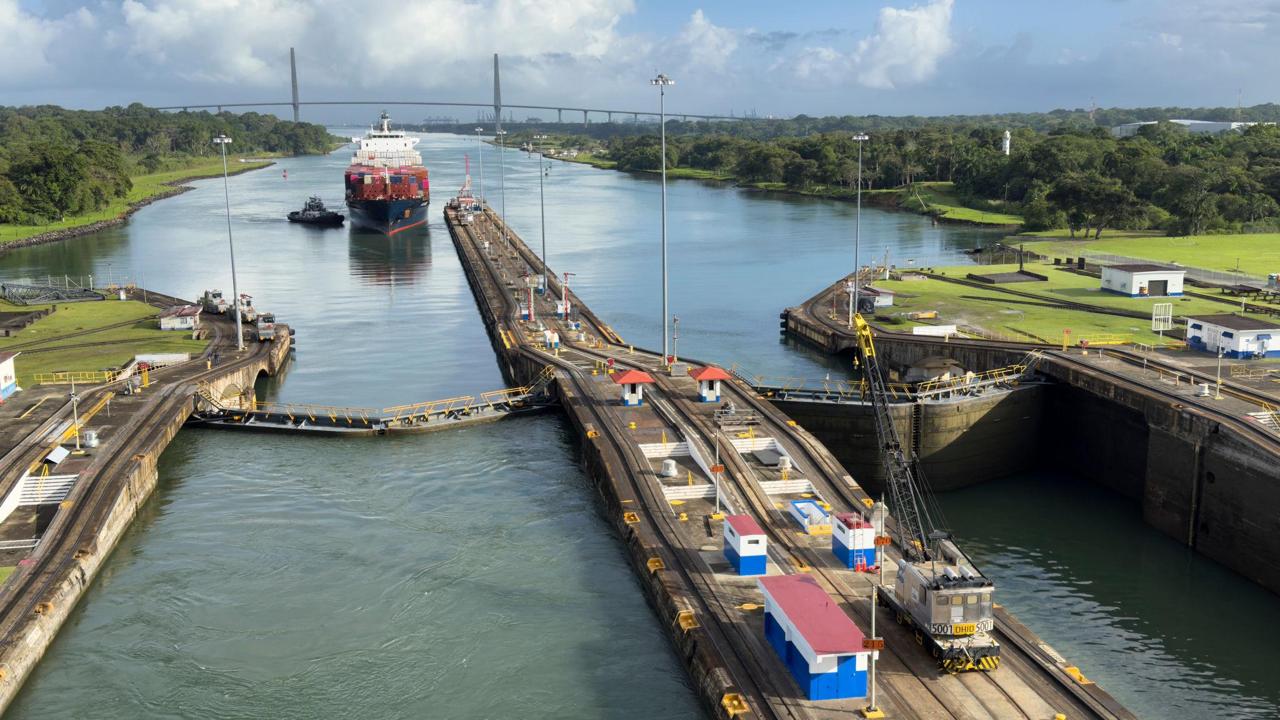
Tighter restrictions and increased demand have led to significant congestion at the Panama Canal. Waiting times for unbooked Neopanamax vessels now average 10 days in certain directions, with queues often exceeding 100 vessels. The surge in demand has been intensified by vessels rerouting from riskier regions like the Strait of Hormuz and the Red Sea.
Recent data shows transit slot auction prices hitting record highs. The owner of SEASPAN BENEFACTOR, a 10,100 TEU container vessel, paid USD 4 million for priority passage, marking one of the highest fees recorded. Panama Canal Authority figures reveal 6,288 vessel transits in the first half of fiscal year 2026, a 3.7% year-on-year increase.
Shippers and freight forwarders should closely monitor freight rates, consult up-to-date sailing schedules, and plan cargo arrangements in advance. With ongoing transit restrictions and rising costs, careful logistics planning is essential to manage expenses efficiently.