Sea Legend begins weekly Arctic container service linking China and Northern Europe, enhancing trade routes and reducing transit times.
Sea Legend has advanced its Arctic ambitions from a single demonstration voyage to a scheduled seasonal service, commencing weekly container sailings along Russia's Northern Sea Route between Ningbo-Zhoushan and four principal Northern European ports.
The service, which connects the Chinese hub with Felixstowe, Rotterdam, Hamburg, and Gdynia, represents one of the more consequential attempts to establish a viable alternative corridor between Asia and Europe.
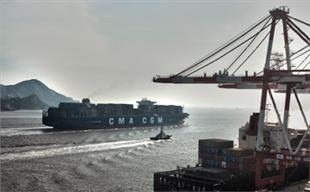
The inaugural sailing departed when the 1,740 TEU Dubai Tower left Ningbo-Zhoushan, marking the formal launch of the liner's first regular seasonal Arctic operation. The departure follows a trial voyage conducted in the previous navigation season and signals the company's transition from experimental transit to programmed, repeatable service.
According to the operator's stated schedule, eight sailings are planned between August and October, deployed across a fleet of seven ice-strengthened vessels, with departures from China occurring at approximately weekly intervals throughout the Arctic navigation window. The cadence marks a substantial escalation from 2025, when the 4,890 TEU Istanbul Bridge completed a single Arctic passage from Ningbo to Felixstowe in roughly 20 days.
The service is oriented toward high-value and time-sensitive cargo, with the operator identifying batteries, energy storage systems, solar equipment, and other new-energy products as priority commodities. For cargo owners in these categories, where product value and delivery timing carry particular weight, the routing offers a distinct proposition.
Sea Legend advertises transit times of approximately 18 to 20 days between China and Northern Europe, roughly half the time required on conventional routes via the Suez Canal. For shippers managing inventory cycles, working capital, and downstream customer commitments, a reduction of this magnitude carries measurable implications for cash flow and scheduling reliability, provided the seasonal window and ice conditions permit consistent adherence to published timetables.
The compression of transit time stems from the geographic advantage of the Northern Sea Route, which considerably shortens the maritime distance between East Asia and Northern Europe when navigable. That navigability, however, remains constrained by the Arctic season, a limitation the operator acknowledges in its longer-term planning.
Company executives have framed the service as a direct response to instability across established maritime chokepoints, citing disruption around the Red Sea and the Strait of Hormuz as evidence of the vulnerability inherent in the traditional Suez corridor. Sustained security concerns in the region have prompted numerous carriers to reroute vessels around the Cape of Good Hope, extending transit times and elevating costs, and the operator positions its Arctic service as an alternative that entirely circumvents these contested passages.
For cargo owners whose supply chains have absorbed the cost and unpredictability of Red Sea diversions, the emergence of a corridor that avoids the Middle East altogether addresses a persistent source of disruption risk, though the seasonal nature of Arctic navigation means the route functions as a complement to, rather than a wholesale replacement for, year-round southern routings.
Beyond the current program, Sea Legend has stated its intention to sustain approximately four months of reliable Arctic operations each year and to extend the navigable season progressively as operational experience accumulates. Should the operator achieve consistent seasonal reliability, the service would provide shippers of high-value and time-sensitive goods with an additional routing option during the summer and autumn months, expanding the range of corridors available to manage cost, transit duration, and exposure to geopolitical chokepoints.
The viability of the Northern Sea Route as a scheduled commercial artery will ultimately depend on the operator's capacity to maintain published schedules under variable ice conditions, secure the requisite ice-class tonnage, and demonstrate sustained reliability over multiple seasons. For now, the launch of the Dubai Tower establishes a recurring service where previously only a single voyage existed, and cargo owners evaluating alternatives to congested and contested southern routings have a further option to assess.