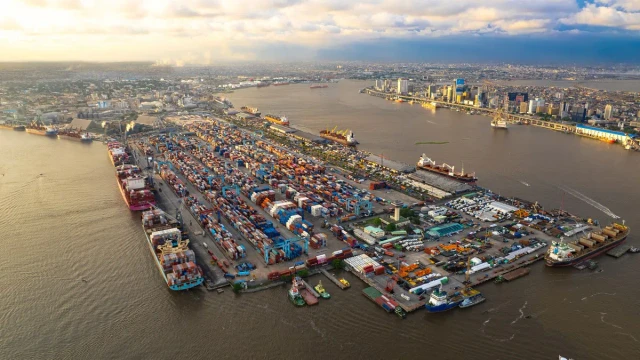
Rhenus Group is set to enhance the Trans-Caspian route with a new 150,000 TEU terminal at Aktau, boosting logistics between Asia and Europe.
Rhenus Group, one of Europe's leading logistics service providers with operations in more than 1,320 locations worldwide and a workforce of around 40,000 employees, is strengthening its position along the Trans-Caspian International Transport Route (TITR) with plans for a new trimodal container terminal at the Port of Aktau in Kazakhstan.
The company and Aktau International Sea Trade Port have signed an agreement defining the next stages of the project. In parallel, Rhenus is working with Kazakhstan Temir Zholy (KTZ), the national railway operator, on capacity development along the corridor - a combination of maritime, rail, and port partnerships intended to strengthen one of the most strategically important trade routes between Asia and Europe.
The planned terminal will connect maritime, rail, and road transport on a site covering at least 30 hectares. Under the current project design, the facility is expected to add at least 150,000 TEU of annual handling capacity at Aktau.
For freight forwarders and cargo owners routing volumes across the Middle Corridor, that additional capacity carries practical weight. The Caspian leg has long been a bottleneck on the TITR, where constrained handling slots can translate into longer transit times and reduced schedule reliability. By expanding capacity at a critical maritime interchange, the development is designed to improve throughput and support more dependable routing between China, Central Asia, and Europe.
"The next joint steps with our partners are therefore important building blocks in our long-term commitment to the region," said Tobias Bartz, CEO and Chairman of the Management Board of Rhenus Group.
The next stages will include an analysis of expected cargo flows and a further assessment of the project's technical and economic feasibility. The terminal remains at the project preparation stage, and no construction timeline or investment figure has been confirmed.
The Aktau project forms part of a wider strategy to develop an integrated logistics network along the Trans-Caspian Corridor, combining terminals, depots, rail, and maritime services with the company's established European operations.
Earlier in 2026, Rhenus expanded its presence in Kazakhstan by acquiring a rail-connected terminal near Almaty. That facility provides container depot, bonded storage, and block train handling services - capabilities that matter directly to importers managing landed costs, customs clearance, and inventory flow across long-haul routes.
Beyond Kazakhstan, the company maintains operations in other key markets along the corridor, including Uzbekistan, Azerbaijan, Georgia, and Turkiye. The aim is a connected chain of assets spanning the full length of the route, giving logistics partners fewer handoffs, clearer visibility, and more consistent service across borders.
For the forwarders and shippers who depend on the Middle Corridor as an alternative to maritime and northern rail routings, each new link adds resilience. The Aktau terminal is not simply additional capacity on the Caspian - it is a deliberate step toward a more reliable, end-to-end Trans-Caspian network linking China, Central Asia, and Europe.