
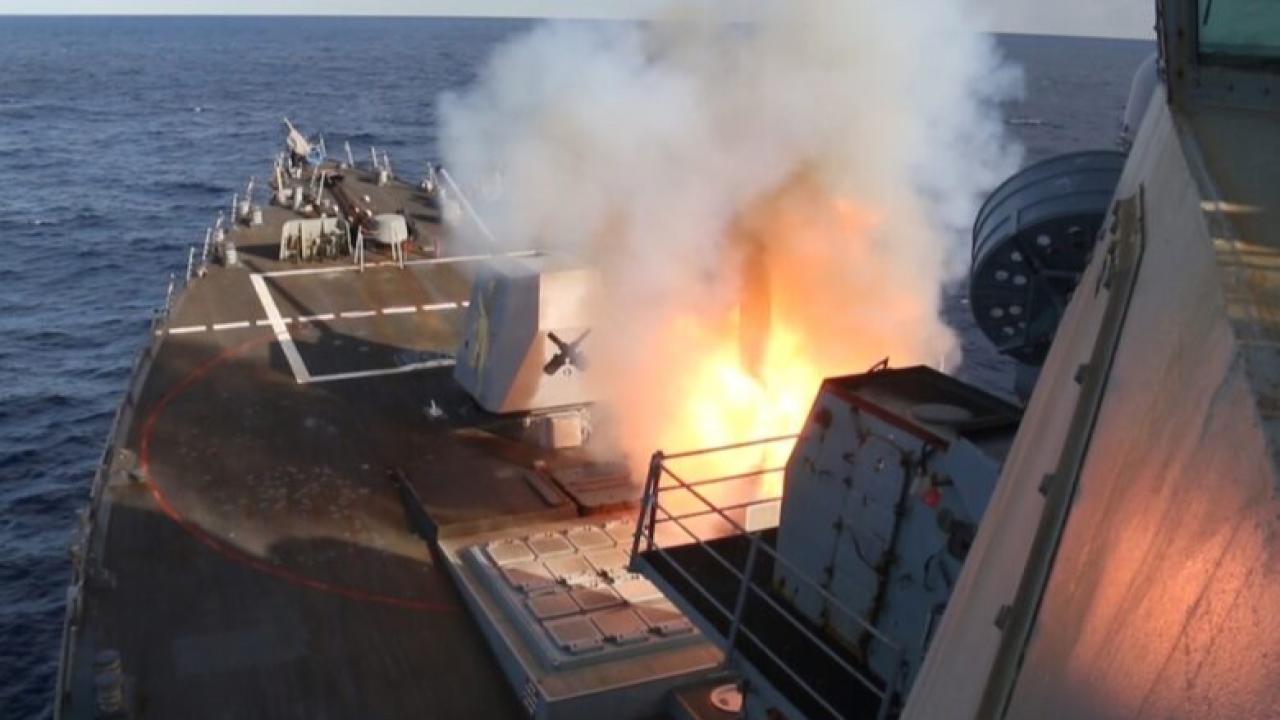
A U.S.-led coalition warns of rising sabotage risks in the Middle East, affecting tanker freight rates and commercial maritime traffic.
A maritime security coalition led by the United States has warned the maritime sector of the increasing risk of sabotage across the Middle East following an attack on a tanker linked to the Stena–Sonangol suezmax pool off the coast of Iraq. The warning emphasized that vessels, particularly those anchored in fixed positions and those navigating predictable routes, have become 'reliable targets.'
In a security notice published by the Joint Maritime Information Center (JMIC), it was stated that the risk is no longer limited to the Strait of Hormuz but has spread to a broader maritime area in the region.
Increasing GNSS Jamming and Navigation Issues
The security warning also came during a period of significant disruptions in navigation systems in the region. JMIC reported that significant GNSS (Global Navigation Satellite System) jamming continues in the approaches to the Strait of Hormuz, the Gulf of Oman, and the Arabian Gulf.
The center noted that since February 28, following attacks by the U.S. and Israel on Iran, there has been an increase in position deviations, AIS anomalies, and intermittent signal disruptions in the region. The statement indicated that this situation poses an additional risk that could lead to incorrect position data in maritime traffic, navigation errors, and potential maritime accidents.
Commercial Traffic at a Standstill in the Strait of Hormuz
Increasing security concerns and navigation issues have severely impacted commercial maritime traffic in the region. While approximately 138 vessel transits are normally recorded in a 24-hour period through the Strait of Hormuz, recent AIS data shows that daily transits have dropped to single digits.
In the last 24 hours, only two commercial vessel transits were confirmed, with reports indicating that none of these were tankers.
JMIC stated that this situation is not due to an official legal closure; rather, a de facto halt has occurred in the region due to security warnings, the withdrawal of insurance companies, and operational caution.
Record Freight Rates in the Tanker Market
The tensions have led to sharp price movements in the tanker market. According to Tankers International data, some charter rates in the VLCC segment have theoretically reached record levels.
The 300,000 dwt VLCC named Adamantios (2022), owned by Dynacom, was chartered by Reliance for a voyage to India at a record level close to $537,913 per day.
In contrast, it was reported that the VLCC named Kalamos (2010) was offered to Bharat Petroleum at a hypothetical sub-charter rate of $758,000 per day.
Earlier in the week, despite an offer of $420,000 per day for the tanker Pantanassa owned by Minerva, no agreement could be reached due to market uncertainty.
Brokers noted that a significant portion of these prices consists of offers on paper or conditional offers rather than completed contracts, stating that shipowners and charterers are acting cautiously to assess security risks.
Source: SeaNews Türkiye


