Port Houston launches its own study for Project 12 to deepen the Houston Ship Channel, enhancing container capacity and vessel access.
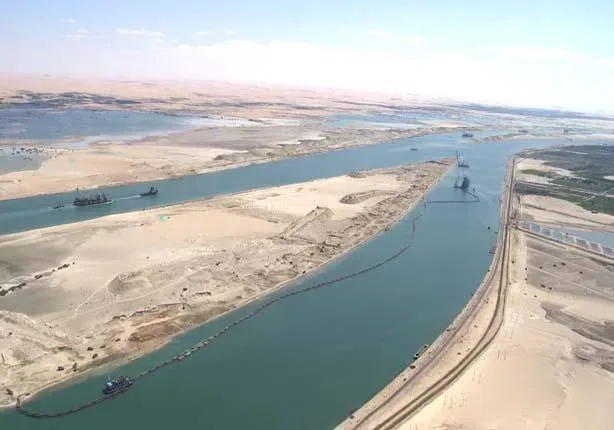
Port Houston will conduct its own study of portions of a potential Project 12 to deepen the Houston Ship Channel. The port is also continuing to assess a container terminal expansion north of Barbours Cut as it plans for container capacity needs over the next decade.
The move adds a port-led track to channel planning on one of the busiest waterways in the United States. For cargo owners routing goods through the Texas Gulf Coast, it is an early step toward longer-term changes in vessel access, terminal capacity, and supply chain reliability.
Chief Executive Charlie Jenkins announced the decision at the Port Commission meeting on October 21. He stated that the port would 'move forward with its own study for portions of a potential Project 12.' Port Houston published further details on October 29.
The port will carry out the work under Section 203 of the Water Resources Development Act of 1986. This provision allows non-federal interests, such as port authorities, to undertake feasibility studies for federal navigation projects and submit them for federal review.
The port-led study will run alongside a traditional feasibility study with the US Army Corps of Engineers. That study covers the wider Houston Ship Channel and Galveston Bay system. The dual approach allows Port Houston to advance the analysis of selected channel segments while broader system-wide work continues with its federal partner.
A Federal Interest Determination meeting between Port Houston and the Corps started a 45-day process. That process is expected to produce a recommendation on the scope of the Project 12 study.
The Project 12 study follows the completion of the port-led portions of Project 11. That program widened the Galveston Bay reach of the Houston Ship Channel from 530 feet to 700 feet. The Corps remains responsible for other elements of Project 11.
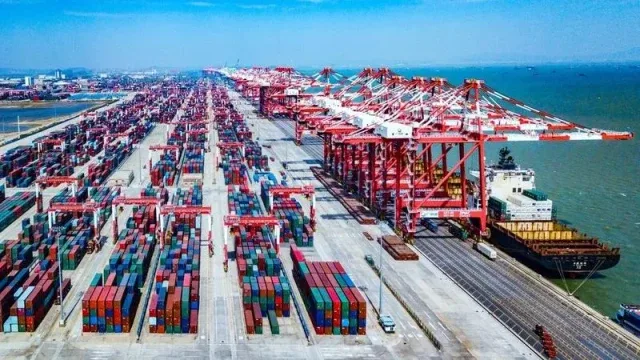
Port Houston is also evaluating options for additional container capacity. One option is the proposed Barbours Cut Northside Expansion on Spilman Island in La Porte, Harris County, Texas.
The project is under review through the Department of the Army permit SWG-2025-00640 and an Environmental Impact Statement process. Plans cover: an approximately 318-acre container terminal, two vessel berths, new wharf infrastructure, dredging and an expanded turning basin, and road and dredged-material infrastructure.
Phased construction is expected to begin no later than 2032, with capacity potentially available around 2036.
The timeline is significant. Port Houston expects its existing container terminals to reach maximum throughput capacity by 2033. Barbours Cut remains one of several options under consideration. Any move forward would require a Final Investment Decision by the Port Commission.
Recent cargo figures show rising demand at the port. Port Houston handled 376,419 TEU (twenty-foot equivalent units, the standard measure of container volume) in September. That is an 11% increase year on year. Throughput for the first nine months of 2026 reached about 3.35 million TEU, up 2%. Loaded imports rose 16%.
The wider Houston Ship Channel region handled 22.3 million tons of foreign cargo in August, up 18% year on year. Exports increased 24%.
For shippers, importers, and the forwarders who manage their freight, these volumes help explain the port's planning horizon. Steady import growth, combined with a projected capacity ceiling in 2033, gives Port Houston a clear reason to advance channel and terminal studies now rather than later.
Port Houston is formally the Port of Houston Authority of Harris County, Texas, and is a political subdivision of the State of Texas. The wider Houston Ship Channel complex includes more than 200 private terminals and eight public terminals.
Port activity supports nearly 1.5 million jobs in Texas and 3.37 million jobs nationwide. The Project 12 study and the Barbours Cut evaluation are early-stage steps, and both remain subject to federal review and Port Commission decisions. Together, they show a port planning for the vessel access and container capacity that its cargo growth will demand in the coming decade.