Ningbo Zhoushan Port surpasses 40 million TEUs by November 10, achieving this milestone 22 days earlier than last year.
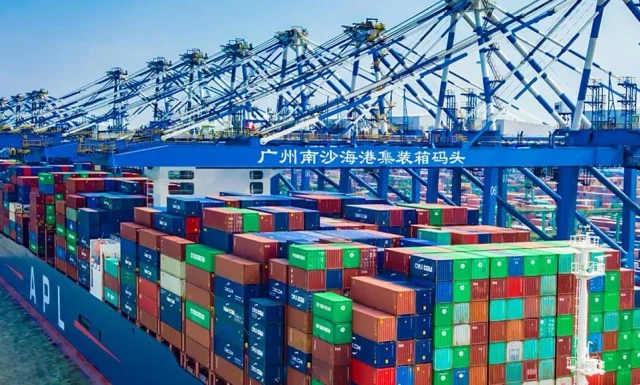
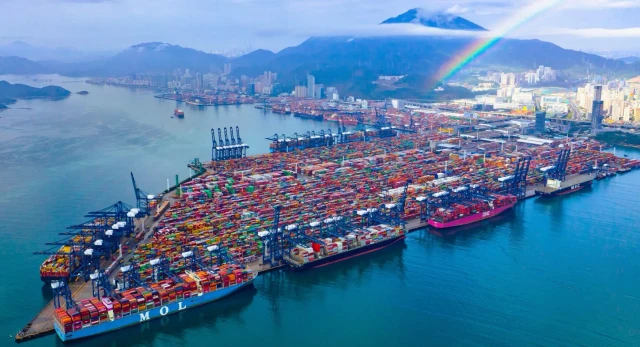
As of November 10, Ningbo Zhoushan Port recorded annual container throughput exceeding 40 million twenty-foot equivalent units (TEUs). This marks the second consecutive year the port has reached this milestone, achieved 22 days earlier than the same threshold in the prior year, and follows the port's historic first crossing of the 40 million TEU mark in 2025. Against a backdrop of profound shifts in global trade patterns and the accelerating restructuring of international supply chains, the figure reflects a sustained elevation in the port's operational scale and strategic positioning.
An expanding foreign trade base and an export mix shifting toward higher-value and emerging-sector goods have delivered a broadening cargo pipeline to the port. Ningbo Zhoushan Port has extended its service network steadily into the Chinese interior: sea-rail intermodal routes across the port now total 115, reaching 16 provinces and 71 prefecture-level cities nationwide, with annual sea-rail intermodal volume surpassing 1.8 million TEUs. In Yiwu, new-energy vehicle components move via sea-rail express connections, compressing the journey from dispatch to ocean departure to as little as eight hours. In July of this year, a dedicated rail service from Aksu in Xinjiang completed a 4,910-kilometre journey to Ningbo Zhoushan Port, establishing a stable eastward ocean outlet for inland cargo through a single-box direct transit model. Inland waterway services added five new routes this year, bringing the total network touch-points to 48 and driving river transport volume above one million TEUs, with sea-rail and river-sea intermodal operations working in coordinated tandem.
Ningbo Zhoushan Port now operates more than 310 container shipping routes, connecting over 700 ports across more than 200 countries and territories, with the port's connectivity index ranked second globally. This year, the China-Europe Arctic Express entered regular scheduled operations, completing eight voyages during the navigation season and carrying high-value-added cargo including energy storage containers, traction batteries, and photovoltaic modules; the single-leg transit of approximately 20 days to Europe represents a voyage reduction of nearly half compared with the traditional Suez Canal route. Express ocean services have grown to 28 routes, and 'Zhejiang e-Port Connect' service locations have expanded to 28 points. The thickening route matrix provides supply chains with substantially greater room to maneuver in the face of corridor disruptions.
The foundation of the port's development rests on a core of advanced physical infrastructure. Ningbo Zhoushan Port holds more than 220 deep-water berths capable of accommodating vessels of 10,000 tonnes or above, and operates the world's only dual 'ten-million-TEU-class' single-entity container terminal cluster. Construction is underway on Phase One of the Fodu Container Terminal in the Liuheng port zone, comprising two 200,000-tonne-class berths, in support of a third 'ten-million-TEU-class' berth group. Intelligent transformation is simultaneously pushing the boundaries of operational efficiency: at the Meishan port zone, an unmanned smart gate identifies vehicles in just two seconds, while a remote-operations centre works in coordinated deployment with more than 130 intelligent container trucks, with full-process intelligent scheduling delivered through the port's independently developed 'dual-core brain' system. In the third quarter of this year, vessel berth efficiency improved 4.5 percent year-on-year; in September, daily container handling across the port exceeded 140,000 TEUs, with the month's total reaching 4.27 million TEUs - the highest level in the port's history.
Each successive 40-million-TEU milestone marks a distinct coordinate in Ningbo Zhoushan Port's continuing ascent. Looking ahead, the port advances steadily toward its goal of becoming a world-leading port of strength, navigating its course in service of national strategy and the dual circulation of domestic and international economies.