
Cargo diversions to Mersin Port due to Strait of Hormuz restrictions lead to 20-day wait times, straining logistics and operations.
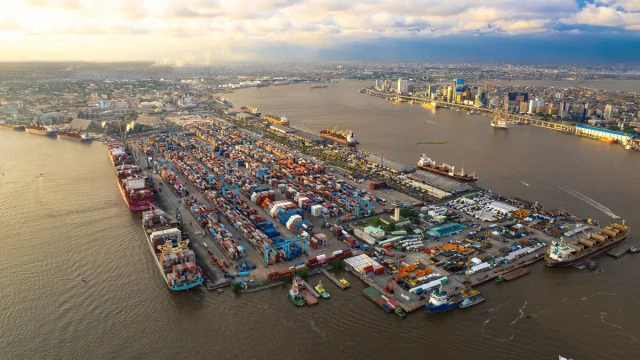
As reported by international media on 23 November, restrictions on transit through the Strait of Hormuz and shifting conditions across the Middle East are driving a substantial volume of Iranian import and export cargo toward Turkey's Port of Mersin and the Port of Iskenderun. The concentrated redirection of cargo flows has placed the local logistics infrastructure under considerable strain, with vessel berthing, container discharge, and onward shipment all experiencing measurable delays.
The head of Iran's International Transport Association disclosed that over the past seven to eight months, a significant proportion of Iranian international cargo has been rerouted through these two ports. At Mersin, waiting times have extended to as long as 20 days in peak cases, with operational volumes running 30 to 40 percent above normal handling capacity. The disruption has visibly altered the rhythm of port operations, requiring a comprehensive reassessment of dwell times, yard turnover, and landside transport connections.
The head of the Mersin Chamber of Commerce and Industry also acknowledged the operational pressure the port is facing. Following restrictions on Strait of Hormuz transits, vessel calls at Mersin have increased markedly, with capacity utilization sustained at approximately 90 percent over an extended period and stevedoring space becoming progressively constrained. For cargo owners relying on Mersin as a transshipment point, the congestion carries consequences that extend beyond individual shipments, with potential knock-on effects for regional transshipment arrangements and landside connectivity.
In response to the current situation, the Mersin Chamber of Commerce and Industry has convened relevant authorities this week to discuss measures aimed at accelerating cargo clearance, including streamlined inspection procedures and extended operational hours. Whether these arrangements will relieve queuing pressure will ultimately depend on the trajectory of incoming cargo volumes, berth turnover, and the pace at which inspection efficiency is restored.
On the capacity development front, Mersin Port has initiated an expansion program of considerable scale. The East Med Hub 2 project, representing a total investment of USD 455 million, is designed to increase annual container handling capacity from 2.6 million TEU to 3.6 million TEU and to accommodate two ultra-large container vessels simultaneously. Until this expanded capacity becomes operational, however, existing berths and storage yards will continue to absorb substantial pressure. Cargo owners and freight forwarders are advised to monitor port operational notices, vessel schedule changes, and inspection arrangements closely, and to build adequate delay contingency into booking and delivery planning.