Manila Port congestion worsens as 100,000 empty containers backlog prompts government to propose temporary depot solution.
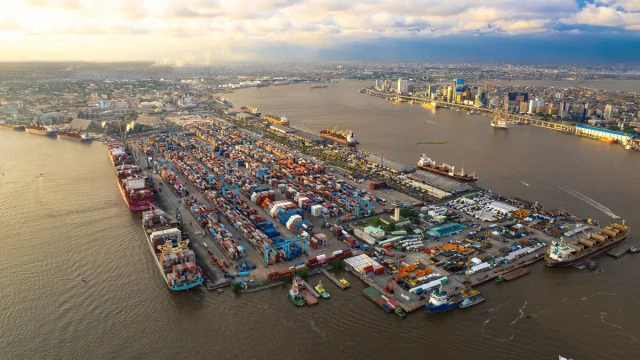
Congestion at the Port of Manila continues to intensify, with empty container accumulation emerging as a critical bottleneck in cargo throughput. On November 20, five of the Philippines' leading business organizations issued a joint statement endorsing the government's proposal to establish a temporary empty container depot near Manila Port, a measure intended to relieve the mounting pressure on port logistics and haulage operations.
Industry estimates suggest that the volume of empty containers accumulated across the Philippines may have reached 100,000 TEUs. The imbalance between inbound laden imports and outbound laden exports has compelled shipping lines to reposition large quantities of empty units to other regions; however, insufficient off-dock storage capacity has slowed the return and evacuation of these containers, leaving significant numbers stranded within terminal and peri-port areas. A portion of these units remains staged on trucking chassis for extended periods, effectively immobilizing equipment that would otherwise be deployed for the inland movement of import cargo. The continued accumulation of empties compounds yard congestion, extends dwell times, escalates costs across transportation and warehousing, and transmits pressure downstream to importers, businesses, and end consumers. Empty container evacuation has evolved beyond an equipment management issue between shipping lines and depot operators - it now constitutes a systemic constraint on the overall efficiency of port landside operations.
The Philippine government is advancing a temporary depot solution. Cabinet Secretary Benhur Abalos confirmed that the Philippine Reclamation Authority has committed to allocating approximately five to ten hectares of reclaimed land to serve as a temporary storage site for empty containers. The proposed site is situated along the reclaimed foreshore of Manila Bay, in proximity to the North Harbor facility. On November 13, government officials and private sector representatives conducted an on-site inspection of the proposed location.
The five business organizations identified two principal operational advantages associated with the selected site. First, the relocation of empty containers that cannot be accommodated within existing depot facilities would free up trucking chassis, returning haulage capacity to the movement of import cargo. Second, the proximity of the temporary depot to port terminals would reduce the distance required to transfer empty units to export vessels awaiting loading. Consideration is also being given to the use of barges or dedicated feeder vessels to collect empties directly from the reclaimed area; however, this modality remains subject to facility readiness and regulatory approval and has not yet been confirmed.
Abalos stated that the temporary depot would provide immediate relief to current supply chain constraints, while emphasizing that a durable resolution would require sustained collaboration between government and the private sector to establish long-term port space management frameworks. The empty container depot initiative represents one element of a broader set of measures that Philippine authorities have pursued in recent weeks to address port congestion. In early November, stakeholders discussed the deployment of temporary storage facilities and additional empty container vessels as part of congestion mitigation efforts. On November 4, the Philippine Chamber of Commerce and Industry reported that relevant parties had committed to removing approximately 1,000 long-dwelling containers from Manila Port within two weeks to recover terminal and yard space. The Bureau of Customs separately disclosed that the private sector had proposed the provision of approximately 100 hectares in Bulacan province, as well as an additional site in Cavite province, for government evaluation as potential temporary depot locations.
These proposals remain subject to further coordination and implementation. The timeline for activating the temporary depot and the pace at which empty container evacuation improves await confirmation through subsequent official arrangements. For freight forwarders and cargo owners with shipments transiting Manila Port in the near term, close attention to empty container return conditions, chassis availability, and demurrage and detention charges is warranted. Coordination with shipping lines, terminal operators, and local agents to confirm equipment pick-up and return arrangements - with contingency allowances built in for potential delays - is strongly advised.