The report suggests pilotage may be required for Western Anchorage departures after OS 35’s misjudged maneuver led to collision.
One of the most significant findings from the official “Report on the investigation of the collision of OS 35 and ADAM LNG and the subsequent grounding of OS 35 on 29 AUGUST 2022” is the potential need for compulsory pilotage for ships departing Gibraltar’s Western Anchorage. According to the report, the collision between OS 35 and ADAM LNG underscores a gap in current pilotage practices, revealing that while pilotage is mandatory on arrival at the anchorage, it is not required on departure.
Current Situation and the Role of Pilotage
Under existing regulations in Gibraltar, all commercial vessels entering the Western Anchorage must employ a pilot. However, as the report makes clear, there is no such obligation when leaving the anchorage. In the case of OS 35, the master opted to navigate away from the anchorage without a pilot. Typically, local pilots possess extensive knowledge of Gibraltar Bay’s challenging currents and traffic patterns. Their expertise is critical in planning an efficient and safe departure route.
The report emphasizes that, even in seemingly mild conditions—such as light wind and weak tidal flow—vessels may encounter unforeseen difficulties. This was the case with OS 35, where the captain believed the vessel was being set onto another ship and reacted with a full-ahead maneuver while under a hard-to-port rudder, ultimately causing the stern to swing into ADAM LNG’s bow.
Need and Expectations
According to the report, instituting a compulsory pilotage requirement for large vessels departing from the Western Anchorage could be an effective measure to prevent similar incidents. “Raporda belirtildiğine göre,” while this change could lead to increased operational costs and higher traffic for Gibraltar’s pilots—who already handle approximately 8,700 pilotage acts annually—those costs may be outweighed by the potential reductions in accidents, environmental damage, and financial losses.
Currently, the Gibraltar Pilots’ official website explains arrival and anchoring procedures but does not provide equally detailed guidance about requesting a pilot upon departure. This lack of clarity leaves room for masters—particularly those unfamiliar with local conditions—to decide that they can handle short-distance maneuvers on their own.
The OS 35 Incident as a Case Study
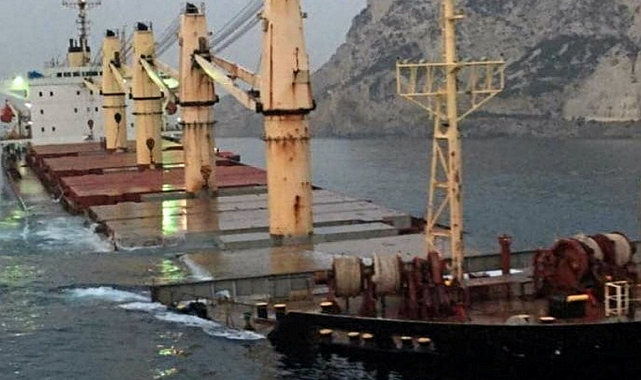
After the OS 35 collision, the Gibraltar Port Authority held discussions with various shipping operators and insurers. The final report points out that ADAM LNG emerged with only minor bow damage, while OS 35 suffered multiple hull breaches. Holds 1, 2, and 3 flooded, and the ship had to be run aground on Gibraltar’s eastern side to prevent sinking in deeper waters. This quick action averted a potentially significant environmental crisis.
Investigations revealed that the collision stemmed from the OS 35 master’s last-minute decision to switch to full-ahead propulsion and from inadequate bridge team monitoring. With compulsory pilotage, an experienced pilot might have intervened earlier in the maneuvering process, possibly preventing the collision.
Possible Regulatory Changes and Future Plans
The official report strongly recommends that Gibraltar’s authorities consider expanding the pilotage requirement to cover departing vessels as well. Beyond simply advising ships to sail westward before turning south, the port authorities could require captains to present a written or verbal departure plan. This would give Gibraltar’s Vessel Traffic Services (VTS) better insight into each vessel’s intentions, enabling swifter intervention if the plan appears unsafe.
Additionally, the report emphasizes the importance of ensuring that Voyage Data Recorder (VDR) systems are fully operational. Gaps in the VDR data from both OS 35 and ADAM LNG hampered the investigation by limiting information on engine commands, heading changes, and precise movements leading up to the collision.
Conclusion
The OS 35 incident illustrates an urgent need to reevaluate Gibraltar’s pilotage policies. As outlined in the report, the risks posed by vessels departing the Western Anchorage should not be underestimated. Authorities, insurers, and shipping companies are now deliberating on new regulations, possibly including mandatory departure pilotage and improved VTS coordination. Such measures aim to significantly reduce accident risks in Gibraltar’s busy waters and ensure both maritime safety and environmental protection.