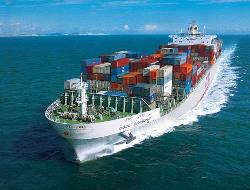
Maersk adjusts its Asia-Australia Qilin service due to Shanghai port congestion and weather disruptions, adding Hong Kong as a port of call.
Maersk has announced a series of temporary operational adjustments to its Asia-Australia Qilin service, effective across voyages 641S through 650S, citing prolonged vessel waiting times at Shanghai and ongoing weather-related disruptions as the principal drivers of the change. Hong Kong has been introduced as an additional port of call under the revised structure.
Under the adjusted rotation, the Qilin service will operate on a Shanghai-Hong Kong-Melbourne/Sydney sequence. Melbourne and Sydney will no longer be called consecutively within the same voyage; instead, the two ports will alternate across successive sailings, with each individual voyage serving only one of the two destinations. Hong Kong will function as a connecting hub, enabling cargo to be transshipped between the Qilin and Dragon services to sustain coverage of both Australian ports.
The first five adjusted voyages are scheduled as follows:
641S - GSL ELIZABETH: arriving Shanghai 9 October, Hong Kong 14 October, Melbourne 28 October
642S - CAPE SERRAT: arriving Shanghai 16 October, Hong Kong 21 October, Sydney 7 November
643S - AS CAMELLIA: arriving Shanghai 23 October, Hong Kong 28 October, Melbourne 11 November
644S - CAPITAINE BARET: arriving Shanghai 30 October, Hong Kong 4 November, Sydney 21 November
645S - DELOS WAVE: arriving Shanghai 6 November, Hong Kong 11 November, Melbourne 25 November
Port monitoring data compiled by Kuehne+Nagel indicates that the seven-day average vessel waiting time at Shanghai stood at 4.42 days for the period 9-15 September, a marginal improvement from the preceding week's 4.72 days. Nonetheless, congestion at Yangshan and Waigaoqiao terminals remains elevated, with individual vessel waiting times reaching seven to eight days in certain instances. Berth pressure at Yangshan Port is particularly pronounced, and yard utilization rates continue to hold at high levels across the port complex.
Shippers and freight forwarders are strongly advised to monitor vessel schedules closely and to plan cargo movements and customs clearance arrangements in advance, ensuring that these operational adjustments do not adversely affect delivery timelines.