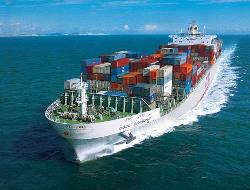
Maersk's CEO highlights port congestion as a lasting issue, impacting global supply chains and prompting a shift in earnings guidance.
Maersk CEO Vincent Clerc has highlighted port congestion as a structural challenge embedded within global supply chains, shifting from a temporary disruption to a lasting issue.
Speaking during Maersk's second-quarter earnings call, Clerc noted that the main supply chain bottleneck has moved from sea to land. He emphasized that growing trade volumes and imbalances are straining ports and inland infrastructure, with terminal throughput now growing faster than container cargo volumes due to the increasing need to reposition empty containers. Clerc warned that existing terminal capacity is approaching its limit.
Despite these challenges, Maersk has benefited financially from landside congestion. The company recently raised its 2026 earnings guidance by 25%, now projecting full-year EBITDA between USD 10 billion and USD 12.5 billion, up from the previous target of USD 8 billion to USD 10 billion. EBIT guidance has also been increased to USD 4.5 billion to USD 6.5 billion, compared to the earlier range of USD 2 billion to USD 4 billion.
Maersk's Q2 performance showed strong results across all key metrics. Revenue grew 20% year-on-year to USD 15.8 billion, while net profit doubled to USD 1.31 billion. EBITDA rose 23% to USD 3 billion, and EBIT doubled to USD 1.6 billion. Average revenue per FFE climbed 22% year-on-year to USD 2,746 per FFE, with container volumes increasing by 4% to 3.36 million FFE. The Ocean segment delivered robust growth, with revenue rising 30% to USD 10.5 billion, and EBIT tripling to USD 935 million. Gains from higher freight rates offset rising fuel costs and congestion expenses. Logistics and Services saw a 15% revenue increase to USD 4.2 billion, while the Terminals segment grew revenue by 11% to USD 1.4 billion, with container throughput up 2.2% to 3.6 million FFE.
Clerc stressed the growing pressure on terminal infrastructure, noting that Asia's outbound cargo volumes have risen by 25% over three years, compared to a 10% increase in global terminal capacity. Chronic underinvestment and the slow pace of new capacity development, coupled with resilient demand, are driving market volatility. Clerc predicted that sharp freight rate spikes will become increasingly common, signaling a structural reconfiguration of global trade where Maersk is well-positioned to navigate.