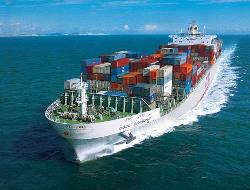
Japan's six main container ports saw a slight increase in May, driven by imports, while exports faced declines, highlighting operational challenges.
Japan's six principal container ports handled 1.18 million TEU in May, up just 0.1 percent year-on-year as stronger imports offset weaker exports, reports Amsterdam's BreakBulk News.
The transport ministry data showed imports rising 3 percent to 615,498 TEU, while exports fell 2.9 percent to 562,219 TEU. This divergence highlights operational challenges for carriers as equipment imbalances grow across Northeast Asian trade lanes.
Tokyo remained the largest gateway, processing 367,332 TEU, which is an increase of 0.1 percent. Exports fell 2.9 percent to 160,049 TEU, while imports rose 2.5 percent to 207,283 TEU.
Yokohama recorded the strongest growth, with throughput up 3 percent to 235,939 TEU. Exports declined 3.9 percent to 119,510 TEU, but imports surged 11.3 percent to 116,429 TEU.
Kobe handled 174,728 TEU, marking an increase of 0.7 percent. Exports dropped 2.8 percent to 89,454 TEU, while imports rose 4.6 percent to 85,274 TEU.
Nagoya's throughput edged down 0.8 percent to 219,152 TEU. Exports slipped 0.1 percent to 111,697 TEU, and imports fell 1.5 percent to 107,455 TEU.
Osaka processed 173,631 TEU, down 2.6 percent. Exports fell 5.2 percent to 77,754 TEU, while imports declined 0.5 percent to 95,877 TEU.
Kawasaki posted the steepest decline, with throughput down 7.1 percent to 6,935 TEU. Exports fell 5.9 percent to 3,755 TEU, and imports dropped 8.5 percent to 3,180 TEU.
Analysts said the widening gap between inbound and outbound volumes raises questions about Japan's export competitiveness and complicates container repositioning as empty boxes accumulate at terminals.